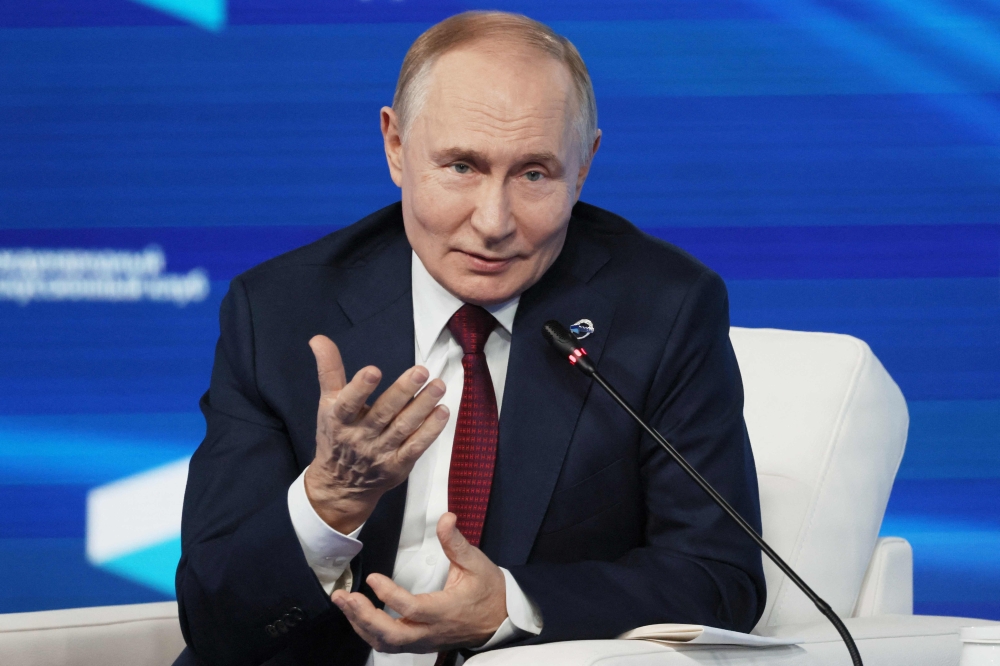
Ukrainian President Volodymyr Zelenskyy categorically denied Moscow's accusations that Kyiv launched a large-scale nighttime march attack on the residence of Russian President Vladimir Putin in the Novgorod region.
Zelensky described the Russian narrative as a fabricated “lie” aimed at creating a pretext for launching new and violent missile attacks on the capital, Kyiv, as well as attempting to undermine the delicate diplomatic efforts currently underway between Ukraine and the United States, especially since these accusations came the day after his meeting with US President-elect Donald Trump in Florida.
Trump enters the fray
In a related development, Donald Trump commented on the incident, explaining that Putin had contacted him and “angrily” informed him of the details of the attack that morning. Trump indicated that “this is not the time to do something like this,” alluding to the sensitivity of the transitional period and the efforts to reach a de-escalation. These mutual accusations raise serious doubts about the course of the intensive diplomatic negotiations that began in November, aimed at ending the deadliest war in Europe since World War II.
Moscow threatens and hints at halting negotiations
For its part, Moscow escalated its rhetoric on Monday, accusing Kyiv of launching a terrorist attack using 91 drones targeting Putin's residence in Novgorod, located between Moscow and St. Petersburg. Russia announced it was completely reviewing its position in the ongoing negotiations, arguing that the attack undermines settlement efforts.
Russian Foreign Minister Sergey Lavrov confirmed via Telegram that air defenses intercepted all the drones, but stressed that the attack was “deliberately carried out during intensive negotiations between Russia and the United States,” vowing that this action would not go unanswered. Zelensky responded immediately at a press conference, asserting that Russia’s behavior proves it “does not want to end the war” but is instead seeking justifications for its continuation.
Context of tension and history of mutual accusations
This incident brings to mind previous scenarios, such as Russia's accusation in May 2023 that Ukraine attempted to assassinate Putin by attacking the Kremlin with two drones—an accusation Kyiv denied at the time. Observers note that Moscow often announces such "symbolic" attacks on high command centers before launching large-scale strategic missile strikes on Ukrainian infrastructure, putting Kyiv on high alert in anticipation of retaliation.
Repercussions on the diplomatic track
This escalation is particularly dangerous given its critical timing, as international attention is focused on the new US administration and the possibility of it imposing a negotiated solution to the conflict. Political analysts believe that accusing Ukraine of targeting the Russian political leadership could be used by the Kremlin to raise its negotiating demands or to pressure Washington to reduce military support to Kyiv, under the pretext that Western weapons are being used in "terrorist operations" targeting the Russian leadership. This would further complicate the political and military landscape in the coming weeks.