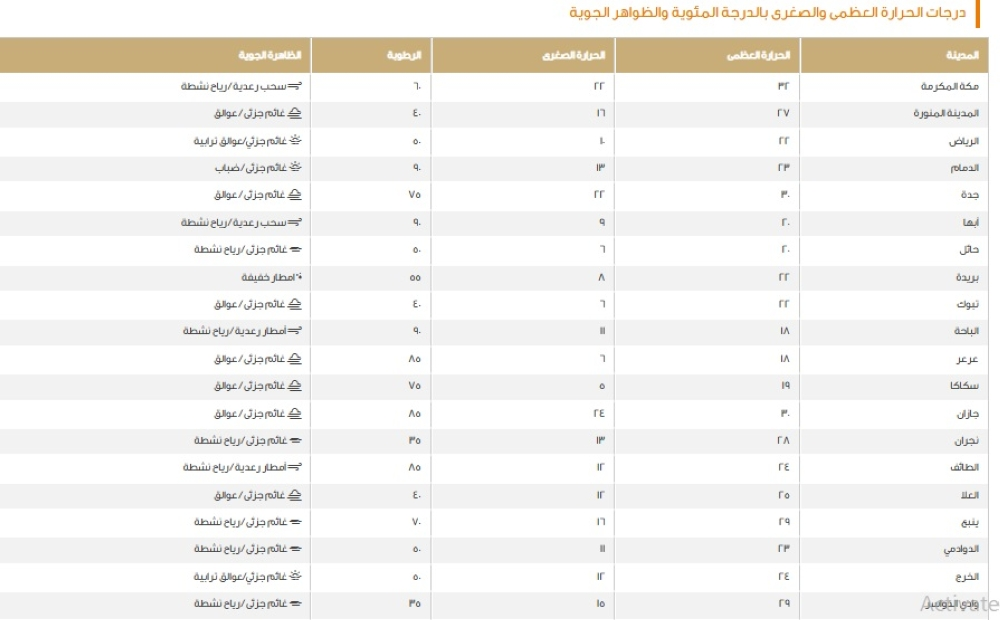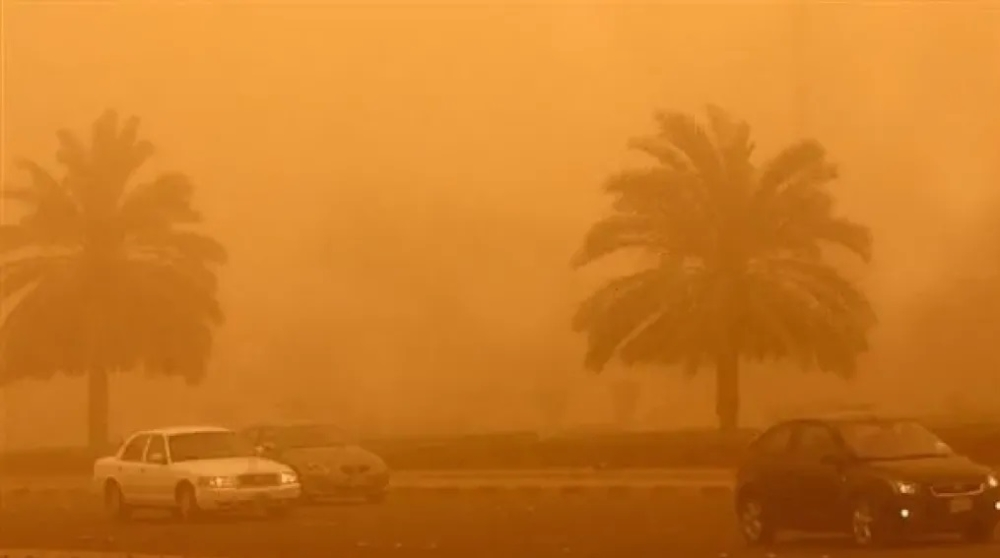
The National Center for Meteorology in Saudi Arabia issued an advanced warning today, Thursday, labeling it a "yellow alert," cautioning against a dust storm and strong winds that will affect large parts of the Riyadh region. The center explained that this weather phenomenon will begin at 9:00 AM and continue until 7:00 PM, urging residents to take precautions.
Details of the alert and affected areas in Riyadh
The alert for the Riyadh region includes the governorates of Al-Aflaj, As-Sulayyil, Wadi Ad-Dawasir, Ad-Dawadmi, Afif, Ar-Rayn, and Al-Quway'iyah. The effects of this weather system include active surface winds that may stir up dust and sand, significantly reducing horizontal visibility to between 3 and 5 kilometers. Authorities advise drivers on highways to exercise caution and reduce speed due to the expected decrease in visibility.
The eastern region is also affected by winds and dust
The warning wasn't limited to the Riyadh region; the center issued a similar alert for the Eastern Province, warning of strong winds and blowing dust that began this morning. The strong wind alert included the cities of Jubail, Khobar, Dammam, Dhahran, Qatif, and Ras Tanura, with wind speeds expected to reach between 40 and 49 kilometers per hour, potentially affecting maritime traffic in the Arabian Gulf. The blowing dust alert covered the governorates of Al-Ahsa, Al-Udayd, and Abqaiq, with similar effects including reduced horizontal visibility.
Climate context: Dust storms in Saudi Arabia
Sand and dust storms are a common weather phenomenon in Saudi Arabia, given its geographical location and desert landscape, which includes vast deserts such as the Empty Quarter and the Great Nafud. These storms are particularly active during seasonal transitions, especially in spring and summer, due to the passage of low-pressure systems that generate strong winds capable of carrying enormous quantities of sand and dust over long distances. While these storms play a role in the desert ecosystem, they also pose a significant challenge to daily life and infrastructure.
Expected effects and safety guidelines
Dust storms have multiple impacts, most notably health effects. Those with asthma, respiratory problems, and allergies are advised to avoid going out in such conditions unless absolutely necessary, and to wear protective masks. These phenomena also directly affect the transportation sector, as reduced visibility increases the risk of traffic accidents and, in severe cases, can lead to flight delays or cancellations. The Civil Defense Directorate urges citizens and residents to follow weather reports issued by the National Center of Meteorology, adhere to instructions, and secure any loose objects on rooftops to prevent them from falling.