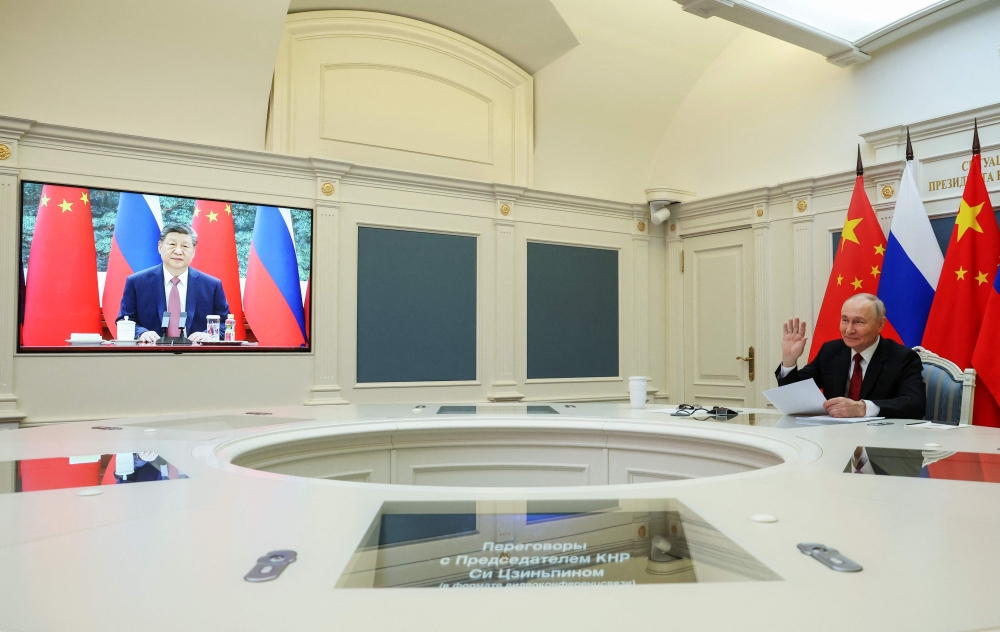
In a video conference, Russian President Vladimir Putin assured his Chinese counterpart Xi Jinping that the strategic alliance between Moscow and Beijing is a crucial “stabilizing factor” amid escalating geopolitical tensions worldwide. Putin described bilateral relations as a model of cooperation between major powers in the 21st century, emphasizing the two countries’ readiness to continue close coordination on global and regional issues to address shared challenges.
Historical background of a growing partnership
Russian-Chinese relations have not always been this close. After decades of ideological rivalry during the Cold War, known as the Sino-Soviet split, the two countries began rebuilding bridges of trust following the collapse of the Soviet Union. The 2001 Charter of Good Neighborliness and Friendly Cooperation marked a turning point, establishing the legal framework for a long-term strategic partnership. This rapprochement accelerated significantly in the last decade, driven by a shared vision of challenging what they perceive as Western hegemony, culminating in the declaration of a “partnership without borders” just weeks before Russia launched its military operation in Ukraine in 2022.
The importance of the alliance and its multidimensional impact
The significance of this alliance extends far beyond bilateral relations, casting a long shadow over the entire international arena. Economically, China has become a lifeline for the Russian economy in the face of Western sanctions, with trade between the two countries reaching record levels, particularly in the energy sector. In return, China guarantees a stable supply of natural resources from its northern neighbor. Both countries are also actively working to promote the use of their local currencies (rubles and yuan) in bilateral trade, a move aimed at reducing dependence on the US dollar and weakening its dominance in the global financial system.
On the military and security fronts, the partnership is evident in regular joint military exercises and coordinated positions within international organizations such as the Shanghai Cooperation Organisation, which serves as a counterweight to US-led alliances in Asia. From a geopolitical perspective, the Russian-Chinese alliance clearly aims to promote a multipolar world order, ending the unipolar era that prevailed after the Cold War. Both countries see themselves as a bulwark against what they perceive as interventionist Western policies, making them attractive to other nations that share this view.