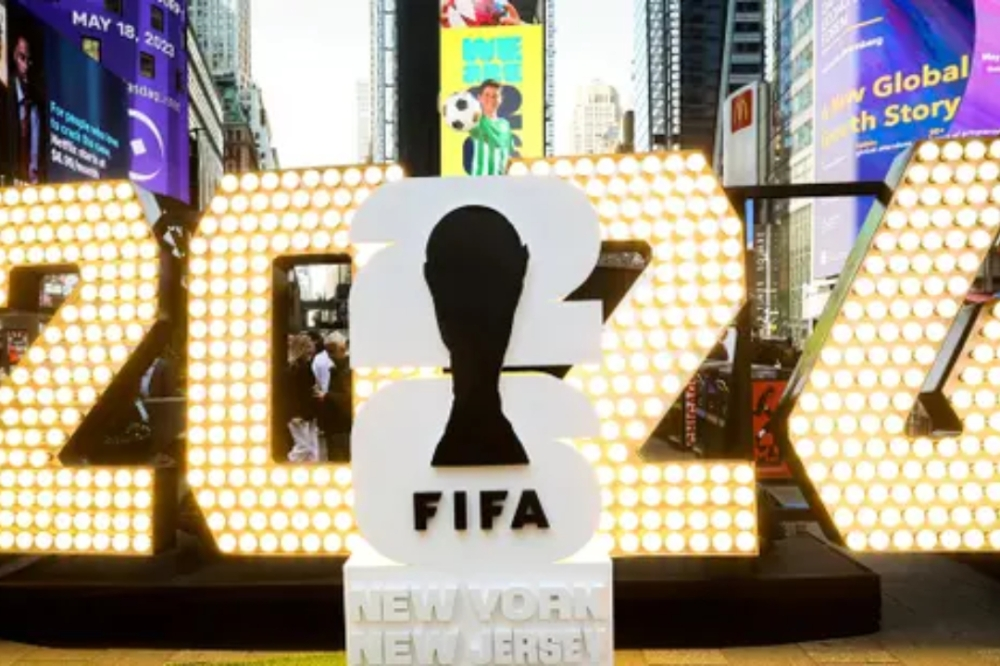
The eyes of football fans around the world are turning to Washington, D.C., as the city prepares to host an extraordinary football event that marks a turning point in the history of the sport. At the iconic Kennedy Center, the draw for the 2026 FIFA World Cup will take place, an edition described as the largest and most complex since the tournament's inception, with millions eagerly awaiting the opportunity to discover their national teams' paths in the quest for the coveted title.
A new historical era: from 32 to 48 national teams
This edition is not just an ordinary tournament; it marks the beginning of a new era in the World Cup. After many years of adhering to the 32-team format that began in France in 1998, FIFA decided to expand participation to 48 teams for the first time in history. This expansion not only means an increase in the number of matches but also represents a strategic shift aimed at giving greater opportunities to teams from continents that previously had limited representation, such as Africa and Asia, thus enhancing the global reach and popularity of the game.
National team rankings: complex equations and a notable Arab presence
According to the official mechanism, the teams were divided into four pots, with each pot containing 12 teams. The resulting rankings produced some interesting distributions:
- Pot 1 (Elite): Includes the host countries (United States, Mexico, Canada) along with giants of the game such as Brazil, Argentina, France, Germany, England, Spain, Portugal, and the Netherlands.
- The second pot (balance): includes strong teams such as Morocco, Croatia, Uruguay, and Japan.
- The third pot (the Arab contingent): It features a strong Arab presence including Saudi Arabia, Egypt, Algeria, Tunisia, and Qatar, which puts these teams in front of potential challenges with elite teams.
- Pot 4 (The Mystery): It contains lower-ranked teams, but it holds ticking time bombs waiting for the qualifiers from the European and continental play-offs.
Horror scenarios: Italy and the Death Clique
Despite the theoretical simplicity of the draw, reality presents complexities that could result in some truly explosive groups. The most striking paradox lies with Italy, four-time world champions, who could find themselves in Pot 4 due to their qualification via the playoffs (should they advance). This situation could create a historic "group of death," with analysts predicting a terrifying scenario involving Argentina (Pot 1), Morocco (Pot 2), and Italy (Pot 4), meaning early, high-profile clashes that could eliminate some big names in the first round.
The economic and geopolitical impact of the tournament
The importance of the 2026 World Cup extends far beyond the pitch; the joint hosting of the tournament by the United States, Mexico, and Canada carries profound economic and political implications. The tournament is expected to generate record revenues and boost tourism and infrastructure in North America. Furthermore, FIFA's slogan, "Football Unites the World," will be put to the test through the ability of these nations to organize an event that brings together diverse peoples and cultures across a vast geographical area.
The decisive moment
While some teams await their fate in heated European and continental playoffs, such as potential matches against Ukraine or Iraq's path in the continental playoffs, the draw on Friday remains the decisive event. At noon Washington time, the clock will stop, and the story of the 2026 World Cup will effectively begin before the scheduled kickoff in June, as small glass balls will determine the destinies of entire nations.