In a notable development in the course of the Russian-Ukrainian crisis, Steve Wittkopf, envoy of US President Donald Trump, revealed substantial progress in talks aimed at ending the ongoing war, indicating that the differences between Moscow and Kyiv are now limited to "one issue" only.
Details of progress in negotiations
Witkopf's remarks came on Thursday on the sidelines of the World Economic Forum in Davos, Switzerland, ahead of his planned visit to Moscow with Jared Kushner, the US president's son-in-law. The US envoy explained that the discussions had progressed significantly, saying, "I think it's now down to one issue, and we've discussed formulations for this issue, which means it's possible to resolve it. If both sides want to settle it, we will settle it." Despite his optimism, Witkopf did not disclose the nature of this remaining issue or the specific details of the proposals under consideration.
Trump's vision: Europe and NATO first
In parallel with the diplomatic efforts, US President Donald Trump reiterated his explicit stance on burden-sharing in the conflict. In his address to political and economic elites in Davos, Trump emphasized that NATO and European countries should bear the primary responsibility for the Ukraine issue, rather than the United States.
Trump asked rhetorically, "What does the United States gain from all this work, from all this money, except death, destruction, and enormous sums of money that go to people who don't appreciate what we do?" He added, emphasizing geography as a determining factor in American policy, "They should be handling Ukraine, not us. The United States is very far away; there's a vast ocean separating us, and we have nothing to do with any of this.".
The context of the conflict and its global effects
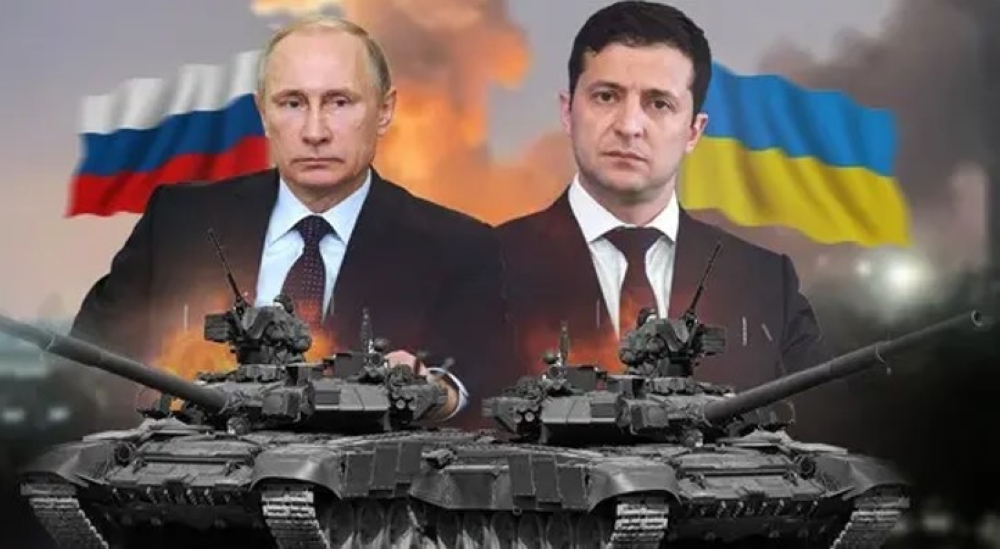
These statements come at a highly sensitive time, as the Russian-Ukrainian war enters its third year, leaving behind enormous geopolitical and economic repercussions that have affected global supply chains and energy prices. Since the outbreak of military operations in February 2022, numerous international actors have sought to propose peace initiatives, but the gap between Moscow's and Kyiv's demands remains wide, particularly regarding borders and security arrangements.
Observers suggest that Witkoff's talk of a "single issue" may reflect a shift in political dynamics, driven by the current US administration's desire to close this chapter and focus on domestic issues and other international challenges. Furthermore, Trump's pressure on European partners is reshaping the transatlantic relationship, presenting the continent with a genuine test of its ability to manage its regional security more independently of the traditional US security umbrella.