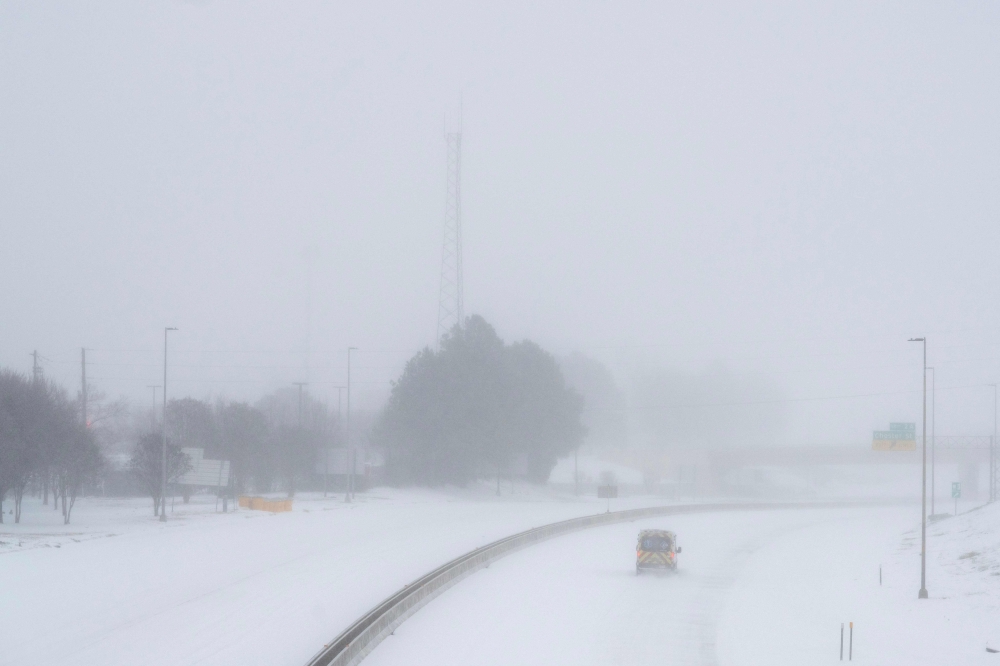
The United States is facing one of its fiercest cold spells of the season, as winter storm the southern and midwestern states, extending into the northeast, causing near-total paralysis of transportation and prompting the declaration of a state of emergency in large areas.
Storm details and its geographical impact
The storm began battering New Mexico and Texas on Saturday, bringing a dangerous mix of heavy snow and freezing rain. The storm's impact didn't stop there; it extended to pose a direct threat to tens of millions of residents in the Northeast, with serious warnings of power outages and widespread infrastructure disruption.
The National Weather Service has warned that this storm could lead to “catastrophic” ice accumulations, especially with temperatures dropping to record lows, with Dallas recording -6 degrees Celsius, while states such as Oklahoma and Arkansas saw snowfall of up to 15 centimeters.
Paralysis in air and land transport
Bad weather has cast a heavy shadow over the aviation sector, with FlightAware, a website specializing in monitoring air traffic, reporting the cancellation of more than 3,400 flights to and from the United States, in addition to the delay of more than 1,100 other flights, disrupting the travel schedules of hundreds of thousands of passengers.
In a related context, Transportation Secretary Sean Duffy warned that the storm's effects could reach nearly 240 million Americans, prompting the declaration of a state of emergency in at least 16 states, in addition to the capital, Washington, as a precautionary measure to address the potential repercussions.
Fears of a repeat of the "Texas" scenario and safety measures
This storm brings back memories of the energy crisis that struck Texas five years ago, when the power grid collapsed, leaving millions in darkness and freezing cold. Despite assurances from government officials that Texas's power grid is now in better and more stable condition, authorities have urged residents to remain vigilant.
Houston Mayor John Whitmayer urged residents to stay in their homes and avoid travel except for essential reasons during the next 72 hours, announcing the opening of shelters for those in need.
Official response and ongoing warnings
At the federal level, the government announced the closure of its offices on Monday as a precautionary measure. President Donald Trump, speaking via TruthSocial, affirmed that monitoring and communication with the governors of the affected states were ongoing to ensure the safety of citizens.
Forecasts indicate that the extremely cold air mass will settle over the densely populated states on the East Coast, meaning the risks of slippery roads and frozen surfaces will continue into next week, requiring the utmost caution from residents.