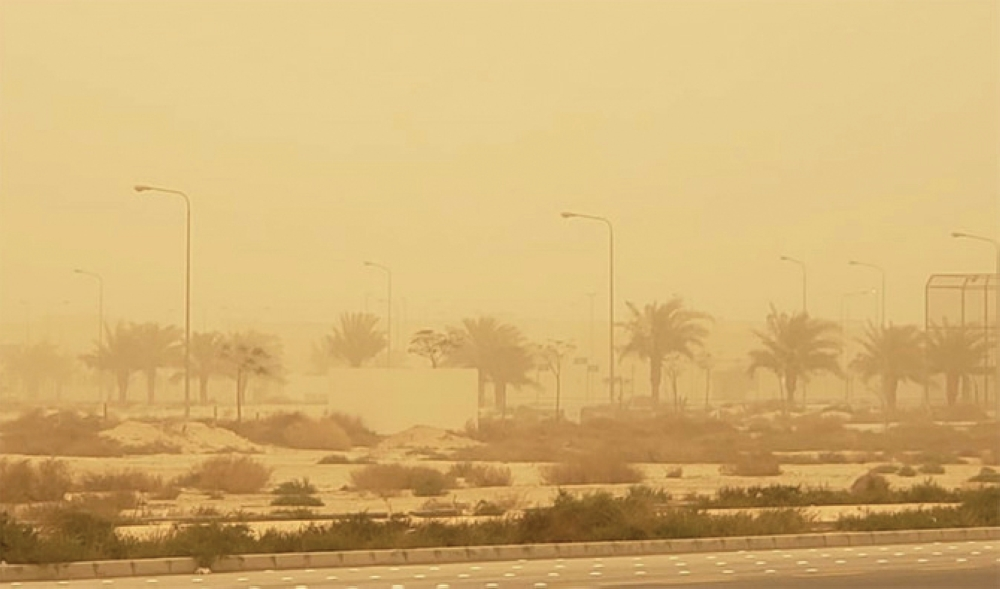
The National Center for Meteorology issued important warnings to citizens and residents regarding significant weather fluctuations, specifically alerting them to strong winds and dust storms in Sakaka and several other governorates in the Al-Jawf region. These warnings are part of the relevant authorities' commitment to public safety, particularly given the rapid changes in weather conditions during this period, which necessitate caution while traveling and engaging in daily activities outdoors.
Details of the warning and the impact of winds and dust on Sakaka and Al-Jawf governorates
The National Center for Meteorology explained in its detailed report that the expected weather conditions include significant surface wind activity, leading to widespread dust and sandstorms. The impact of these winds and dust will not be limited to Sakaka, but will extend to three other major governorates in the Al-Jawf region: Dumat Al-Jandal, Tabarjal, and Al-Qurayyat. The center indicated that this condition will result in near-zero horizontal visibility, with visibility expected to range between one and three kilometers. The report specified the timeframe for this weather phenomenon, noting that it will begin at 9:00 AM on Saturday and continue until 6:00 PM that same day, necessitating vigilance throughout the daytime.
Climatic characteristics of the northern regions of Saudi Arabia
The northern regions of Saudi Arabia, particularly Al-Jawf, are characterized by a unique geography and climate that make them susceptible to constant weather fluctuations, especially during seasonal transitions. Historically, this region has served as a corridor for air masses originating from the Mediterranean basin and the Levant, explaining the frequent dust storms and strong winds. The open terrain and vast desert expanses play a significant role in the rapid movement of dust and the widest possible impact. These climatic characteristics are not a recent phenomenon but rather part of the natural weather cycle in northern Arabia. Meteorological records annually document similar events that vary in intensity and duration, contributing to the shaping of the region's environmental features and the renewal of its soil.
The direct repercussions of weather fluctuations on public life
These weather changes have tangible effects on several local and regional levels. From a traffic perspective, the dust storms and reduced visibility pose a significant challenge for motorists on highways, especially since the Al-Jawf region includes border crossings and vital international routes connecting the Kingdom with neighboring countries such as the Hashemite Kingdom of Jordan. Therefore, traffic departments and the Special Forces for Highway Security consistently emphasize the need to reduce speeds, maintain safe distances between vehicles, and use hazard lights to avoid traffic accidents.
On the health front, dust storms directly affect those with respiratory illnesses and asthma, prompting the Ministry of Health and medical authorities to issue preventative guidelines urging people to stay indoors, keep windows tightly closed, and wear face masks when absolutely necessary to go out. The impact also extends to the commercial sector and open-air markets, which may experience a temporary decline in foot traffic during the peak hours of the dust storm. This underscores the critical importance of monitoring weather forecasts and their continuous updates to ensure the continuation of daily life with minimal risk.