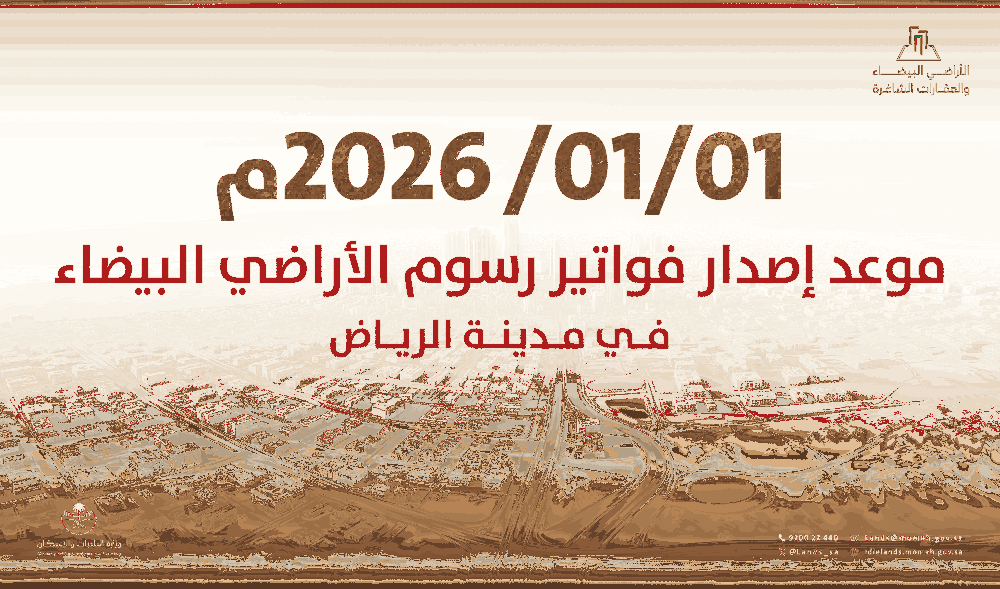
The Ministry of Municipalities and Housing announced a crucial step in regulating the real estate market in the capital, confirming that the White Land and Vacant Properties Fees Program will officially begin issuing the first fee invoices for lands located within the targeted geographical areas in the city of Riyadh, starting tomorrow, January 1, 2026. This step comes within a comprehensive strategy aimed at stimulating the supply of real estate and reducing monopolistic land practices within the urban area.
Program context and strategic objectives
The White Land Tax program is a key pillar adopted by the Kingdom to achieve balance in the real estate market. The system primarily aims to combat the hoarding of undeveloped land within urban areas where public services are available. Through this program, the Ministry seeks to increase the supply of developed land to meet growing demand, thereby contributing to the provision of affordable housing for citizens, while also protecting fair competition and curbing monopolies.
Details of the tiers and approved fee rates
In a detailed explanation of the financial mechanism applied, the ministry clarified that the fees will include landowners whose land area exceeds 5,000 square meters within the announced zones. The land has been classified into five different categories based on the priority of urban development, and the percentages are as follows:
- The first category (highest priority): It is subject to an annual fee of 10% of the land value.
- The second tier (high priority): The fee rate is 7.5%.
- Third segment (medium priority): set at 5%.
- The fourth tier (low priority): is charged a fee of 2.5%.
- The fifth segment: It is currently outside the scope of priorities and no fees are imposed on it, but it is counted within the total lands owned by the taxpayer.
Taxpayer rights and objection mechanism
To ensure fairness and transparency, the Ministry affirmed that the system guarantees taxpayers the right to appeal issued invoices. Taxpayers can submit a grievance to the relevant committee within a maximum of 60 days from the date they are notified of the invoice. The committee is obligated to resolve this grievance within a similar period (60 days) in accordance with established procedures. The system also allows taxpayers to request an extension for land development upon invoice issuance. If the request is approved and the development is not completed within the extension, the fee is due for the entire period.
Economic impact and the role of the “Itmam” center
This measure is expected to generate revenue that will be fully redirected towards developing infrastructure projects and delivering services to residential developments, thereby enhancing quality of life and supporting market stability. In this context, the Ministry noted that the Developers Services Center “Etmam” is ready to provide direct support to landowners wishing to develop their properties, by expediting licensing and approval procedures and removing obstacles in cooperation with relevant government and service agencies.