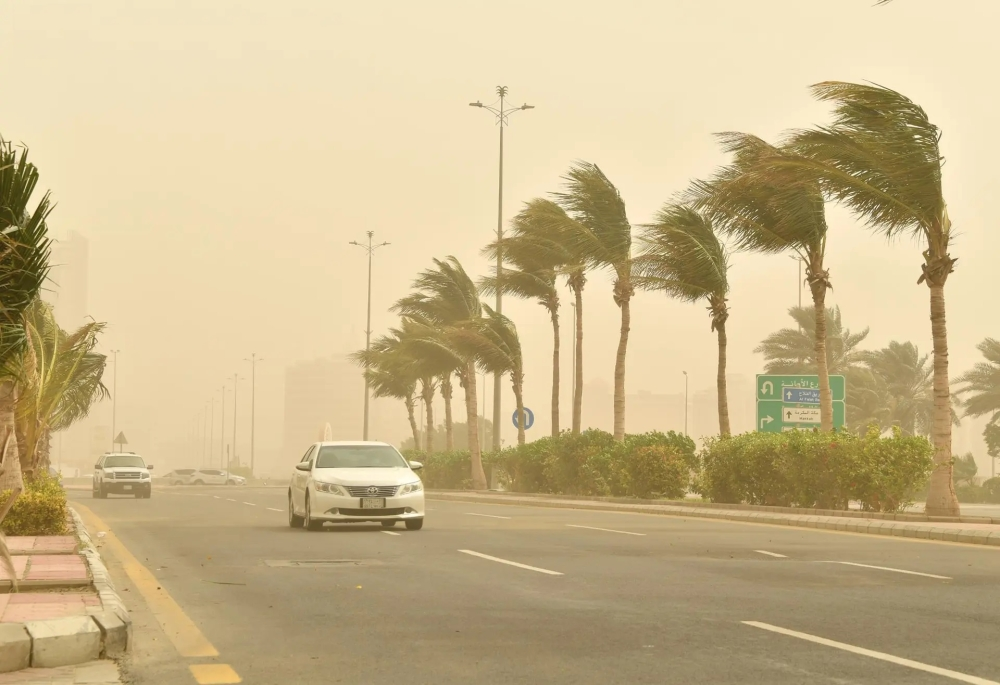
The National Center for Meteorology in Saudi Arabia issued an advanced weather alert on Friday for the Makkah region, warning of strong winds stirring up dust and sand in the holy city and Al-Jumum governorate. The center explained in its report that these weather conditions will lead to a sharp decrease in horizontal visibility, potentially reaching near-zero (between 1 and 3 kilometers), necessitating caution. The report indicated that this weather condition is expected to continue, God willing, until 7:00 PM this evening.
The climatic context of the region
These warnings are issued in light of the climatic conditions of the Kingdom of Saudi Arabia, characterized by its vast desert environment. Dust and sandstorms are a recurring weather phenomenon, particularly during seasonal transitions, when surface winds become active due to variations in atmospheric pressure. These winds carry large quantities of dust and sand from open desert areas, directly impacting air quality and visibility in affected cities and provinces. The National Center for Meteorology continuously monitors these phenomena and issues early warnings to mitigate their negative effects.
Importance and expected effects
This warning is particularly important given the religious significance of the holy city of Mecca, which receives millions of pilgrims and visitors throughout the year. Reduced visibility poses a direct threat to traffic safety on the highways and main roads connecting Mecca to Jeddah, Medina, and other regions. Authorities, such as the General Directorate of Traffic and Civil Defense, typically issue recommendations to drivers to exercise extreme caution, reduce speed, maintain a safe following distance, and, in some cases, stop driving altogether until visibility improves.
Health effects and preventive measures
From a health perspective, dust storms can cause respiratory problems, especially for the elderly, children, and those with asthma and allergies. Health authorities advise staying indoors as much as possible, keeping windows tightly closed, and wearing protective masks when going out. Experts emphasize that these preventative measures significantly contribute to protecting the health of citizens, residents, and visitors from the harmful effects of dust. Coordination between the National Center of Meteorology and health and security authorities is a cornerstone of managing such weather events to ensure everyone's safety.