The National Center for Meteorology in Saudi Arabia issued an important weather alert for Tuesday, indicating that large parts of the Riyadh and Makkah regions will be affected by strong surface winds and dust storms. This report is part of the center's ongoing monitoring of weather fluctuations to ensure the safety of citizens and residents.
Weather details and affected areas
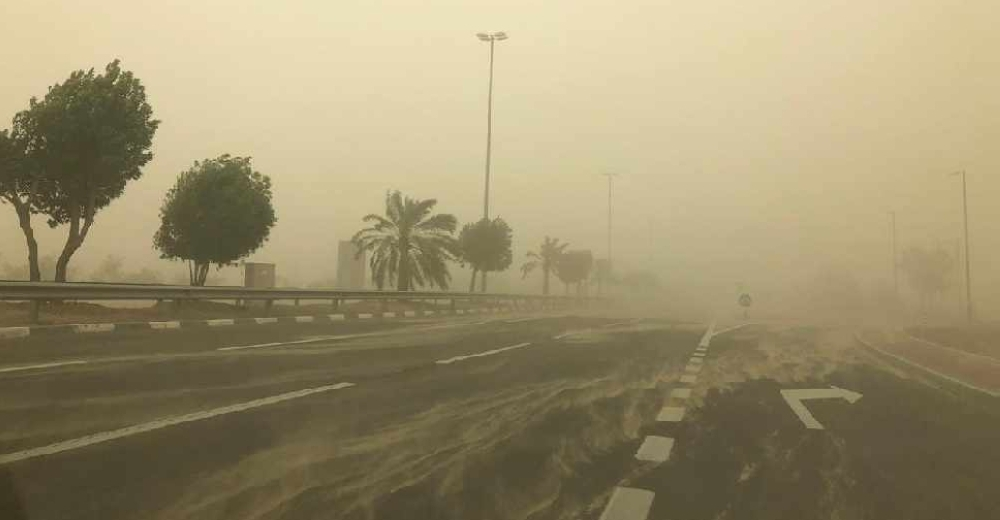
The weather report indicated that the conditions would be characterized by strong winds and blowing dust, leading to a significant decrease in horizontal visibility. The center precisely identified the affected areas, with the conditions beginning in Wadi Al-Dawasir at 9:00 AM and continuing until 6:00 PM. Wind speeds in these areas are expected to reach between 40 and 49 kilometers per hour, necessitating caution while driving on highways.
The alert also included other parts of the Riyadh region, specifically the governorates of Dawadmi, Al-Rayn, Al-Quway'iyah, and Afif . In the Makkah region, some areas are experiencing similar dust storms, beginning and ending within the same timeframe (from 9:00 AM to 6:00 PM), with horizontal visibility reduced to between 3 and 5 kilometers.
The climatic context and nature of the atmosphere in the Kingdom
These weather fluctuations are part of the Arabian Peninsula's climatic nature, especially during seasonal transitions. The Kingdom's desert and open regions are characterized by their rapid response to changes in atmospheric pressure, generating strong winds capable of carrying dust and sand over long distances. The areas mentioned in the report (such as Afif, Dawadmi, and Wadi al-Dawasir) are geographically open, making them more susceptible to the effects of surface winds compared to densely populated urban areas.
The importance of warnings and their effects
These warnings are of paramount importance at both the local and regional levels for several reasons:
- Traffic safety: The highways passing through the governorates of Al-Quway'iyah, Afif, and Al-Dawadmi connect the capital, Riyadh, with the western regions (Makkah and Madinah). Therefore, reduced horizontal visibility poses a real danger to travelers and commercial transport trucks, necessitating adherence to speed limits and compliance with road safety guidelines.
- Public health: Dust storms directly affect those with respiratory conditions, asthma, and allergies. These warnings are a crucial reminder to take preventative measures, such as avoiding outdoor spaces and wearing face masks when necessary.
- The agricultural and pastoral sector: Wind speed and dust affect agricultural and pastoral activities in Wadi Al-Dawasir and the surrounding areas, requiring farmers to take precautions to protect crops and livestock.
The National Center for Meteorology calls on everyone to follow the daily reports and adhere to the instructions of the relevant authorities to ensure public safety during periods of weather fluctuations.