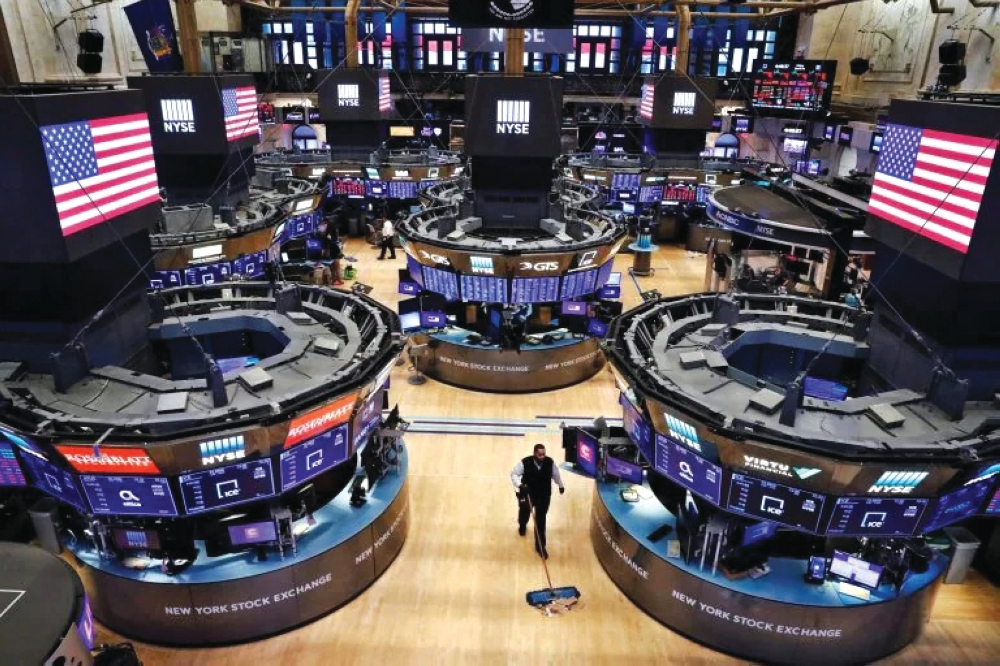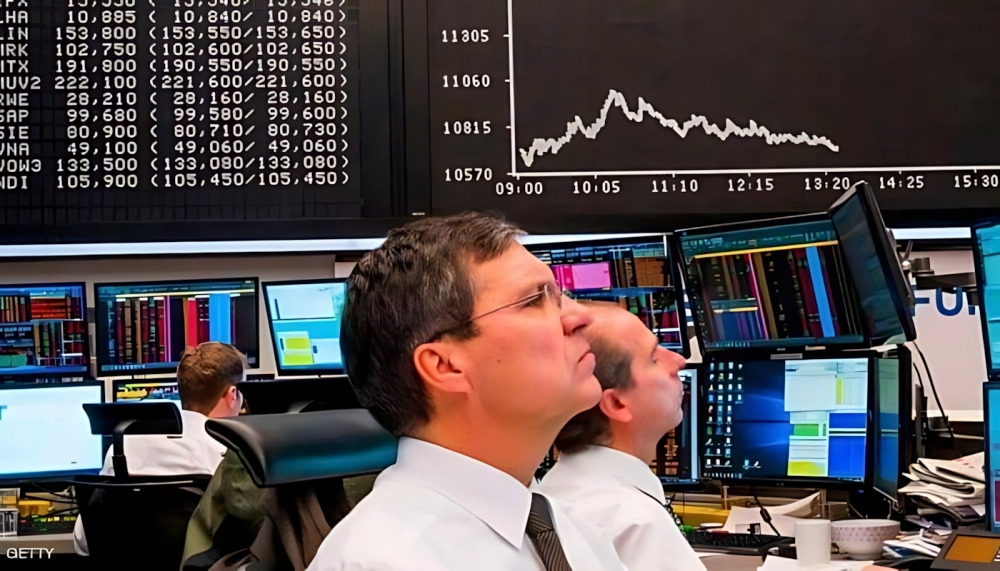
US financial markets closed mixed on Wall Street in New York, with a slight downward bias, as profit-taking and anticipation of new economic data weighed on investor sentiment. This marginal decline reflects a cautious market sentiment, a common behavior among traders after periods of gains or when awaiting key economic indicators.
Details of closing of key indices
According to data recorded at the close of trading, the S&P 500, the broadest measure of performance of US stocks and major companies, fell by 9.50 points, or 0.1%, to close at 6894.24. Similarly, the Dow Jones Industrial Average, which includes a selection of the largest US industrial companies, declined by 94.87 points, or 0.2%, to reach 48367.06. The Nasdaq Composite, dominated by technology companies, was not immune to this decline, falling by 55.27 points, or 0.2%, to close at 23419.08.
Market movement indicators and economic context
These movements on Wall Street are particularly significant because they serve as a key indicator of the health of the global economy, not just the US economy. Economic analysts typically view such minor dips as healthy "corrective movements" that prevent markets from reaching unjustified levels of inflation. These indicators are directly influenced by monetary policies, inflation rates, and interest rates set by the Federal Reserve, as investors constantly strive to balance risk and return amidst economic fluctuations.
Global and local impact
Structurally, the Nasdaq is highly sensitive to interest rates due to the nature of technology companies, which rely on financing for growth, while the Dow Jones reflects the strength of the traditional, industrialized economy. Any volatility on Wall Street sends ripples through financial markets in Asia, Europe, and the Middle East, as many economies are tied to the US dollar and trade with the United States. Investors worldwide monitor these market closes to formulate their investment strategies, and the relative stability of US stocks, even with a slight decline, offers reassurance compared to the sharp fluctuations that can occur in other markets.