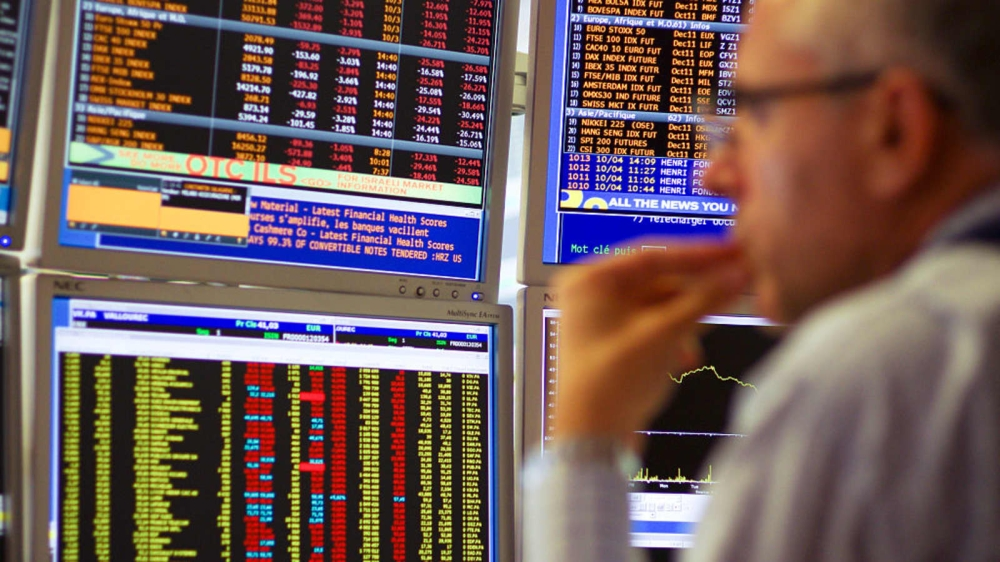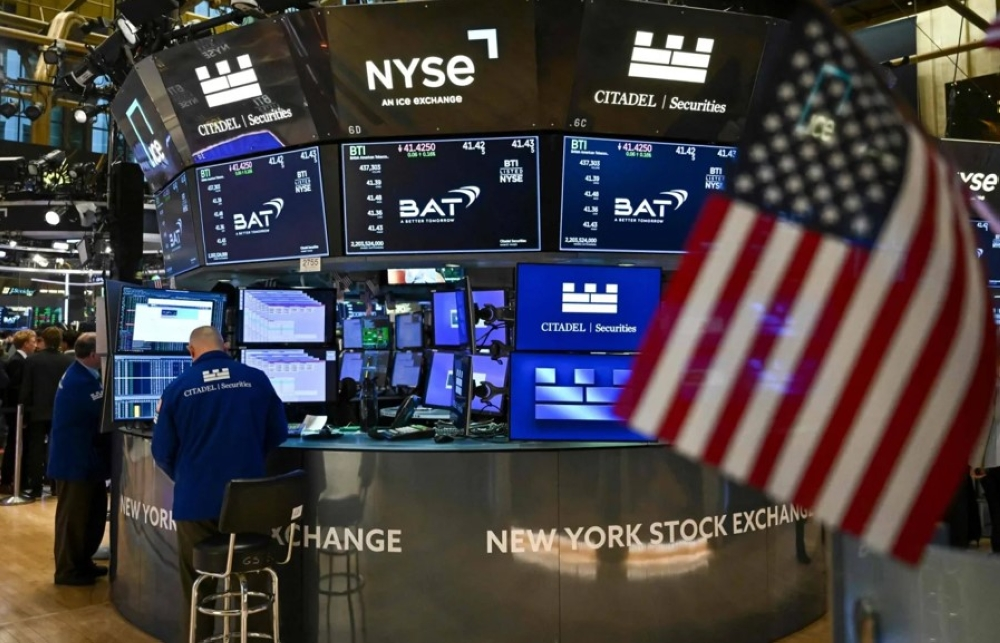
on Wall Street was notably mixed, with the Dow Jones and Standard & Poor's 500 indices in the green, while the Nasdaq index recorded a slight decline, reflecting a state of anticipation and a rearrangement of investment portfolios among different sectors.
Details of the closing of US indices
In session details, the S&P 500 posted gains, rising 12.52 points, or 0.18%, to close at 6858.02. This index is a key benchmark for measuring the performance of large-cap U.S. stocks, and its rise reflects investor confidence in major companies outside the pure technology sector.
Dow Jones Average led the gains in this session, rising 311.99 points, or 0.67%, to close at a record high of 48,383.22 points. This strong performance reflects an investment trend toward large, traditional industrial companies that form the backbone of the American economy.
On the other hand, the Nasdaq the trend, declining slightly by 5.30 points, or 0.02%, to close at 23,236.69. Despite the small drop, it suggests limited profit-taking or a relative lull in the technology sector, which dominates the index.
Indicators of divergent performance in financial markets
The divergence in performance among the three major indices is a healthy phenomenon in financial markets, often indicating a sector rotation of capital from high-growth sectors like technology (represented by the Nasdaq) to more stable value and industrial sectors (represented by the Dow Jones). This behavior typically reflects investors' strategies to hedge against market volatility or to capitalize on economic data that supports traditional sectors.
The economic importance of the Wall Street stock exchange
The movements of the Wall Street stock exchange are of paramount importance not only to the United States but to the global economy as a whole. As the world's largest stock market by market capitalization, the trends set by New York's indices directly influence European and Asian markets and play a pivotal role in shaping investor sentiment worldwide.
This performance also has direct implications for emerging economies and regional markets, as many currencies and strategic commodities (such as oil and gold) are linked to the movement of the US dollar and the economic performance of the United States. Analysts typically view the stability or rise of the Dow Jones and S&P 500 indices as indicators of macroeconomic strength, sending reassuring messages to international markets about the continuation of global economic growth.