Deep historical roots: from ancient settlement to the cradle of the state
Wadi Hanifa, formerly known as Wadi al-Ardh, is a vital natural and historical artery in the heart of the Arabian Peninsula, its name inextricably linked to the epic founding of the first Saudi state. On its fertile banks arose the city of Diriyah, which was not merely a political capital, but a beacon of civilization from which a new dawn emerged, unifying the region. Its magnificent remains, such as the historic At-Turaif district, a UNESCO World Heritage Site, still tell the story of a deep-rooted connection between people and place, and underscore the pivotal role the valley played in shaping the identity of the Saudi state.
The geographical and strategic importance of Wadi Hanifa
Wadi Hanifa is one of the most important valleys in the Najd plateau, stretching over 120 kilometers and traversing the present-day city of Riyadh from northwest to southeast. Its significance was not limited to being a source of groundwater and surface water, fed by several tributaries such as Wadi al-Batha and Wadi Laban. Its fertile nature was a major reason for attracting human settlement since pre-Islamic times. The Banu Hanifa tribe settled along its banks, giving it its name, and practiced agriculture, relying on the abundance of water and the quality of the soil, thus transforming it into an agricultural oasis in a harsh desert environment. This strategic location also made it a vital stop on trade routes and pilgrimage caravans crossing the heart of the Arabian Peninsula, giving it significant economic and social importance.
The founding of Diriyah: a turning point in the history of Najd
The banks of Wadi Hanifa witnessed the most significant event in its history in 850 AH (1446 CE), when Prince Mani' ibn Rabi'ah al-Muraydi, the ancestor of the ruling Al Saud family, arrived with his tribe from eastern Arabia. His cousin, Ibn Dara', the ruler of Hajar al-Yamamah (present-day Riyadh), granted him two locations on the banks of the wadi, al-Mulaybid and Ghusaybah, where he founded the city of Diriyah. This establishment was not merely the beginning of a new settlement, but the nucleus of an ambitious political project. Over time, Diriyah grew and expanded to become an influential regional power, reaching its zenith when Imam Muhammad ibn Saud made it the capital of the First Saudi State on February 22, 1727 CE, thus beginning the journey of unifying most of the Arabian Peninsula under one banner.
Local and regional impact of the first Saudi state
The establishment of the first Saudi state in Diriyah had a profound impact, transforming the political and social landscape of the region. Domestically, the state successfully ended centuries of tribal fragmentation and conflict in Najd, establishing security and stability, and fostering scholarship and trade. Regionally, it emerged as a major political power in the Arabian Peninsula, challenging the existing power structures and presenting a model of a strong, centralized state. This great historical legacy, which originated in Wadi Hanifa, is what the Kingdom of Saudi Arabia celebrates today on its "Founding Day," reaffirming the state's deep historical and cultural roots.
Wadi Hanifa today: A renewed heritage
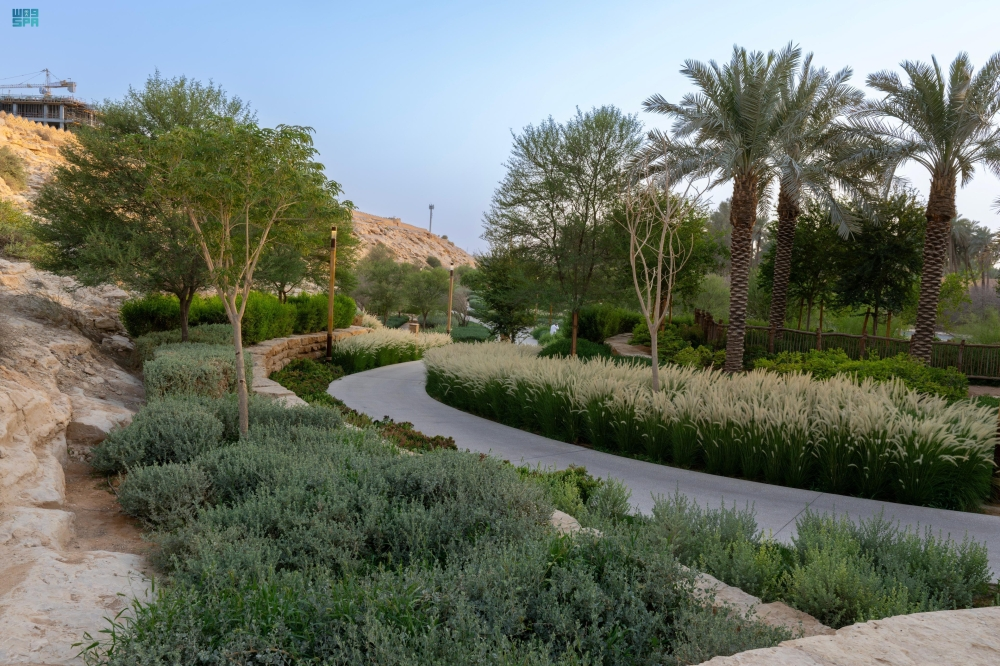
The importance of Wadi Hanifa has not been limited to history, but has extended to become a vital part of the present of the capital, Riyadh. After suffering from neglect and environmental degradation for decades, the valley witnessed one of the largest environmental rehabilitation projects in the region, which transformed it into an open natural park stretching for tens of kilometers, a green lung for the city, and a destination for residents and visitors to enjoy nature, so that the valley remains a living witness linking the country's rich past with its bright future.