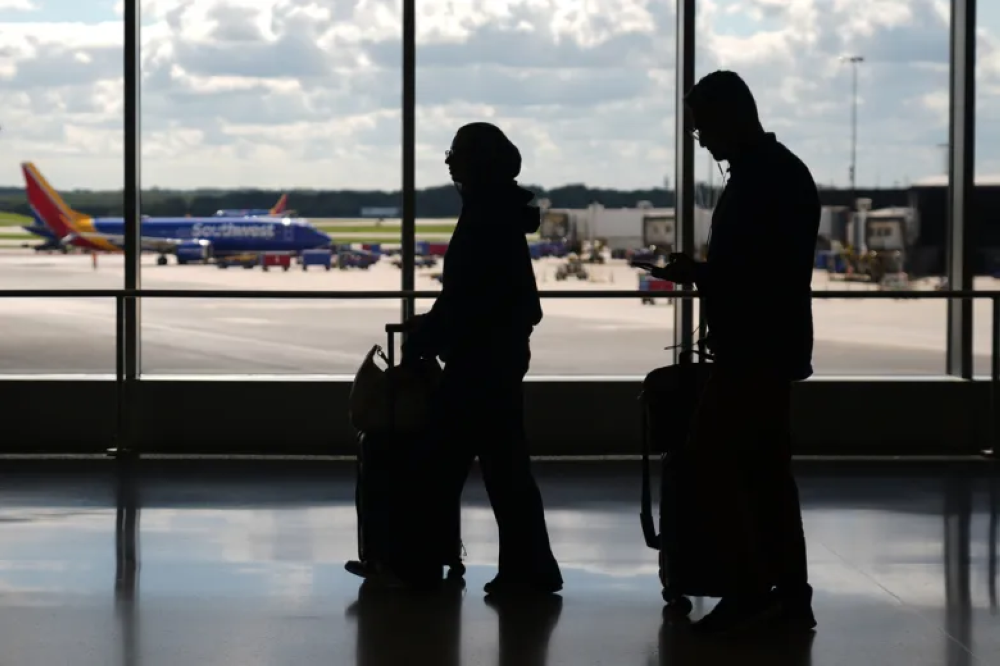
Lithuanian authorities announced today the closure of Vilnius International Airport and the temporary suspension of all air operations, the latest in a series of disruptions to the country's airspace since last October. This urgent decision followed the detection of unidentified flying objects, suspected to be balloons, flying within restricted airspace, prompting immediate intervention from the National Crisis Management Center to ensure the safety of civil aviation.
The Lithuanian National Crisis Management Center confirmed that the suspension of air traffic continued until 7:05 PM GMT, stating that these precautionary measures were necessary to avoid any catastrophic accidents that could result from aircraft colliding with these objects. Security reports indicate that these balloons, often carrying shipments of smuggled cigarettes, are launched from neighboring Belarusian territory, taking advantage of wind patterns to cross the border into Lithuania.
Background to the tension: “Hybrid warfare” and political dimensions
Today's incident cannot be separated from the tense geopolitical context between Lithuania and Belarus. For years, particularly since the 2020 Belarusian elections and the subsequent European sanctions, relations between the two countries have been steadily deteriorating. Vilnius accuses its neighbor Minsk of waging what it calls a multifaceted "hybrid offensive," which began with the migrant crisis on the border and has recently extended to the use of balloons as a means of pressure and provocation, as well as for illicit economic smuggling.
Observers believe that the repeated sending of these balloons is not just a criminal activity by individual smugglers, but is done with the tacit approval or perhaps coordination of the Belarusian border guards, which Lithuania considers a violation of its sovereignty and a direct threat to national security and the safety of air transport in a NATO and EU member state.
Aviation risks and economic impacts
From a technical standpoint, these balloons, despite their simple construction, pose a significant threat to commercial aircraft. The entry of any foreign object into jet engines or its collision with the aircraft during takeoff or landing could lead to serious air disasters. Therefore, aviation authorities adhere to strict standards that mandate the immediate closure of airspace upon detection of any unauthorized object, regardless of its size.
This repeated closure has disrupted flight schedules, delayed thousands of passengers, and caused financial losses for airlines due to diversions and cancellations. Experts fear that the continuation of this phenomenon could negatively impact the reputation of air transport in the Baltic region, necessitating broader international action to pressure Belarus to cease these practices, which go beyond mere smuggling and pose a threat to public safety.