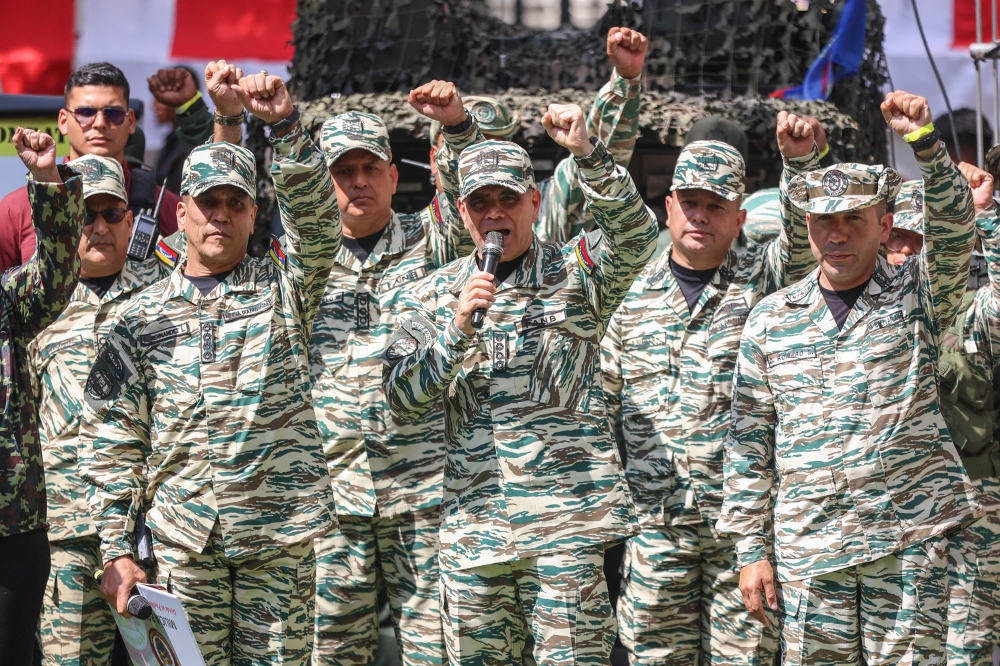
In a dramatic development in the political scene in Caracas, Venezuelan Defense Minister General Vladimir Padrino Lopez announced on Sunday the military establishment's firm stance of recognizing Vice President Delcy Rodriguez as the country's interim president.
This pivotal announcement came a day after a high-profile military operation by US special forces, which included airstrikes and resulted in the capture of President Nicolás Maduro—an unprecedented move that sparked widespread reactions. In a televised statement, the defense minister explained that this action was in compliance with a Supreme Court ruling issued late Saturday night, which mandated that Rodríguez assume executive power for a 90-day interim period to ensure the continued functioning of state institutions and prevent a constitutional vacuum.
Context of historical tensions and relations with Washington
This momentous event cannot be separated from the context of years of escalating tension between Washington and Caracas. Venezuela, which possesses the world's largest proven oil reserves, has been living for years under the weight of crippling US economic sanctions and a stifling political and economic crisis that has led to hyperinflation and the emigration of millions of its citizens. The United States and other Western countries have long questioned the legitimacy of the Maduro government, particularly after the 2018 elections, and have supported the opposition in previous attempts to change the regime. This direct military intervention represents the culmination of the escalation in US policy toward Venezuela, shifting the conflict from a phase of diplomatic and economic pressure to direct military intervention.
The military situation and the future of stability
The Venezuelan military has long been the most powerful player and the primary guarantor of the country's political system. General Padrino López's statement and his swift recognition of Rodríguez are interpreted as a strategic attempt to maintain the cohesion of the armed forces and prevent a security breakdown that could lead to widespread chaos or civil war. Despite accepting the new constitutional reality, the defense minister did not shy away from strongly condemning the US operation, demanding Maduro's immediate release and sharply referring to the "cold-blooded" killing of several members of the presidential guard during the arrest, reflecting the anger and resentment within the military leadership.
Calls to resume normal life and anticipated repercussions
Amid these rapidly unfolding events and the prevailing uncertainty, the Minister of Defense sought to reassure the Venezuelan public, attempting to contain any public panic that might arise from the airstrikes and the ground operation. López urged citizens not to be drawn into chaos and to resume their normal lives, stating in his address: "I call upon the Venezuelan people to resume all their activities—economic, professional, and educational—in the coming days.".
International observers believe that the coming period will be crucial in determining Venezuela’s geopolitical future, as attention will be focused on international reactions, particularly from Venezuela’s strategic allies such as Russia and China, and how the interim administration led by Delcy Rodriguez deals with the enormous economic challenges, as well as putting the internal house in order in preparation for what the ninety-day transitional period may produce in terms of elections or radical political changes.