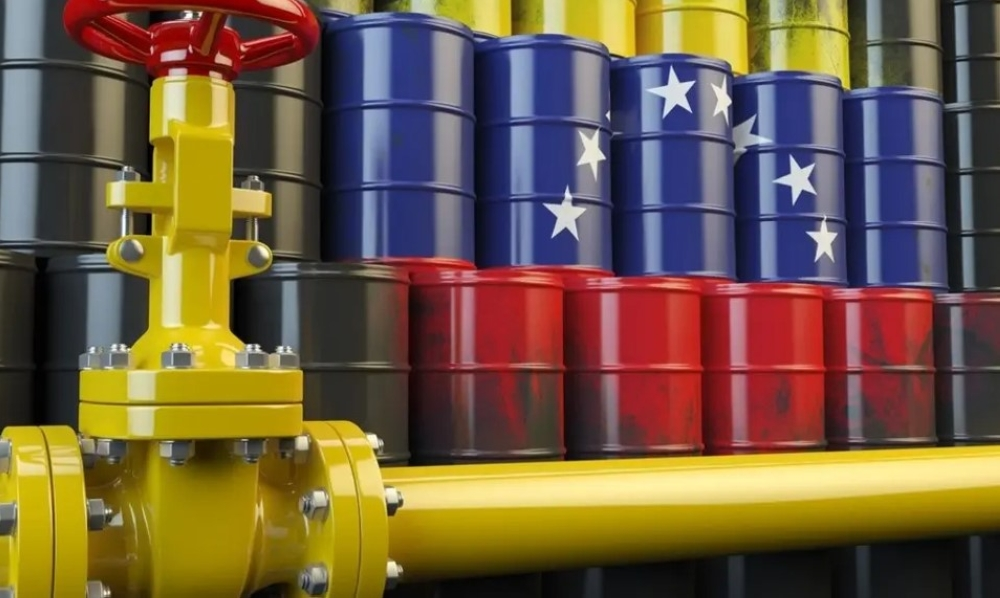
The dramatic political shift in Venezuela, marked by the ouster of President Nicolás Maduro, has refocused global attention on Caracas, not just as a political event, but as a potential seismic shift in global energy markets. This transformation has forced investors and major players in the oil sector to reassess the landscape: Who controls the world's largest proven oil reserves? And can this ailing industry be revived after decades of decline?
Historical context: From peak to collapse
To understand the depth of the current crisis, we must look back a little. Venezuela, a founding member of OPEC, produced more than 3 million barrels per day in the 1990s and early 2000s. However, a combination of mismanagement, chronic underinvestment, and crippling international sanctions caused production to plummet to historically low levels, leaving the sector's infrastructure in a deplorable state.
Who actually controls the industry now?
Amid the current uncertainty, the most important question is who controls the situation. Andy Lipow, president of Lipow Oil Associates, explains: "Theoretically, Venezuela's state-owned oil company (PDVSA) controls most of the oil reserves and production phases. But the reality is more complex, with the American energy company Chevron operating through vital joint ventures, while Russian and Chinese companies wield influence through strategic partnerships and past sovereign debt.".
For his part, Saul Kavonic, head of energy research at MST Financial, believes the future may hold shifts in alliances. He points out that if a new government is formed that is more inclined to cooperate with the West, Chevron will be the biggest winner and will be ready to expand its role immediately. Furthermore, European giants like Spain's Repsol and Italy's Eni have a foothold that allows them to quickly capitalize on any political opening.
Immediate effects and supply concerns
In the short term, oil industry experts have warned of potential disruptions. Any power vacuum could further destabilize already fragile supply chains. Lipow adds, "Since it is currently unclear who is in charge of finances and administration, we could see a temporary halt to exports; international buyers are wary of making financial transfers to illicit or sanctioned entities.".
Although Venezuela’s current production is modest compared to its historical size, the concern is that current flows could stop completely, which could put psychological pressure on markets, although some analysts have downplayed the direct actual impact on global prices due to the abundance of supply from other sources.
The strategic importance of Venezuelan crude
Venezuela's geopolitical and economic importance lies in the quality of its oil. The country is rich in extra-heavy crude. Although difficult to extract and refine, it is the preferred choice for sophisticated refineries on the U.S. Gulf Coast, which are specifically designed to handle this type of crude. The return of this oil to the U.S. market could mean greater stability in U.S. fuel prices in the long term.
Analysts suggest that if things stabilize under the leadership of the opposition, such as Maria Corina Machado, Washington may move quickly to ease sanctions, allowing the flow of stored oil and providing urgent cash liquidity to the new government.
A long road to recovery
Despite cautious optimism, experts agree that the road back will not be easy. Venezuela's oil industry needs something akin to a "mini-Marshall Plan." Officials at international oil companies estimate that rehabilitating the country's aging wells and refineries will require investments of at least $10 billion annually for several years, provided a stable security and legislative environment is in place. This could take a long time before Venezuela regains its status as a global oil giant.