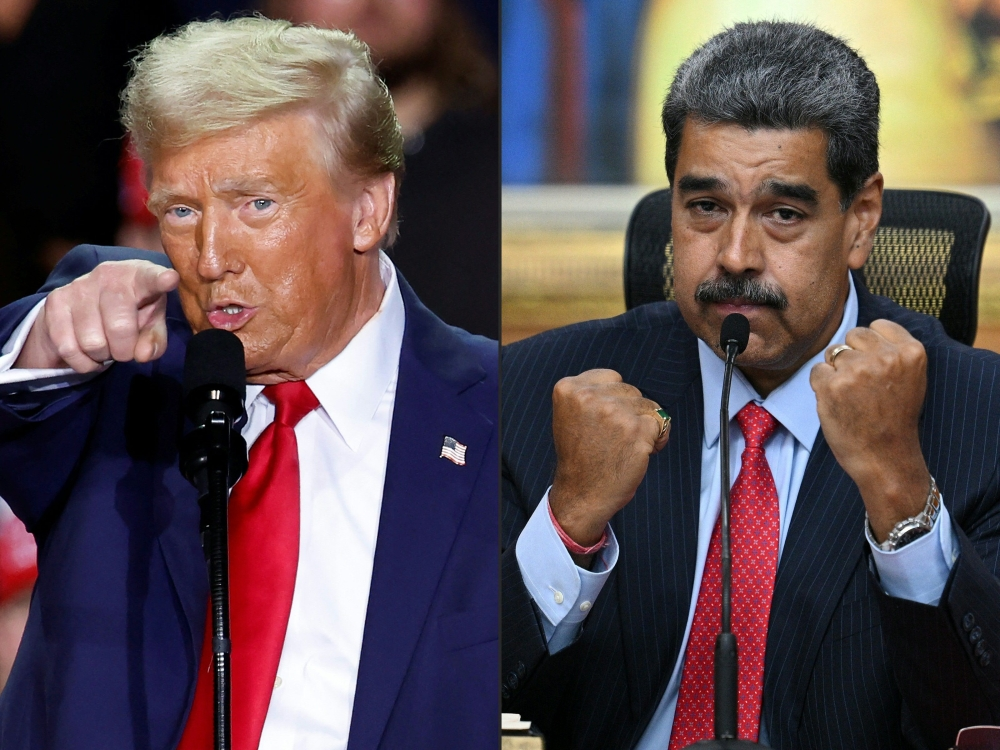
In a new escalation of tensions in Latin America, the Venezuelan government strongly condemned what it called a "very serious military aggression" by the United States, following a series of worrying security incidents in the capital, Caracas, today. This announcement further complicates the already tense geopolitical landscape in the Caribbean region.
Event details in Caracas
Field reports and local residents indicated that loud explosions shook the Venezuelan capital, causing widespread panic. These explosions coincided with a sudden power outage affecting large parts of the city, bringing to mind previous incidents linked to sabotage of infrastructure. Eyewitnesses also reported hearing sounds resembling the roar of warplanes or drones flying overhead, further supporting the theory of unusual military activity.
Agence France-Presse (AFP) reported that the precise locations of the explosions have not yet been determined, but initial indications suggest they occurred in the eastern and southern parts of the capital. Venezuelan authorities are still assessing the situation and working to determine the direct causes, amid accusations that Washington is behind the events.
The context of the historical conflict between Washington and Caracas
This event cannot be separated from the long historical context of the conflict between the United States and Venezuela, which has escalated sharply since President Nicolás Maduro came to power, and before him, the late President Hugo Chávez. Washington views the regime in Caracas as a threat to its interests in the Western Hemisphere and has imposed a series of crippling economic sanctions targeting the vital oil sector, with the aim of pressuring the Venezuelan government.
In contrast, Venezuela consistently accuses the United States of attempting to orchestrate military coups and destabilize the country, citing past attempts and political interventions to support the opposition. Caracas considers US actions in the Caribbean, including the deployment of naval vessels under the guise of combating drug trafficking, to be in reality a military blockade aimed at strangling the country.
International Dimensions and Strategic Alliances
This tension has taken on an international dimension due to the network of alliances Venezuela has forged to counter US pressure. Caracas has strengthened its ties with global powers that are rivals of the United States, specifically Russia, Iran, and China. Previous reports have indicated ongoing Russian support for Venezuela, as well as close cooperation with Tehran in the energy sector, including the supply of petroleum products and drone technology—a development that has alarmed Washington and prompted it to tighten its control over the region.
Expected impacts on regional stability
This escalation poses significant risks to regional stability in South America and the Caribbean. Any direct or indirect military confrontation could have catastrophic consequences not only for Venezuela but also for global energy markets, given Venezuela's vast oil reserves. Furthermore, the continued state of "neither war nor peace" exacerbates the humanitarian and economic crisis afflicting the Venezuelan people and fuels waves of migration and asylum-seeking in neighboring countries.