The Venezuelan government strongly condemned statements made by former US President Donald Trump, in which he suggested the possibility of closing Venezuelan airspace. Caracas described the announcement as a “colonial threat” and a new act of aggression added to the series of pressures exerted by Washington. The Venezuelan Foreign Ministry, in an official statement, affirmed that this threat constitutes a blatant violation of the country’s sovereignty and an affront to international law, deeming it a provocative and unjustified act against the Venezuelan people.
Background to the escalating conflict between Washington and Caracas
These threats come amid a deep political and economic crisis that has gripped Venezuela for years. Tensions escalated dramatically after the 2018 presidential election, in which Nicolás Maduro claimed victory for a new term—an election whose results were rejected by the opposition and many Western countries, most notably the United States. In early 2019, Juan Guaidó, then president of the National Assembly, declared himself interim president, quickly gaining recognition and support from Washington and its allies, plunging the country into a state of dual power.
Since then, the Trump administration has imposed a series of harsh economic and financial sanctions on Venezuela, specifically targeting the oil sector, the lifeblood of the Venezuelan economy, as well as imposing sanctions on senior government officials. This policy, dubbed “maximum pressure,” aims to force Maduro from power.
The importance and potential impacts of the decision
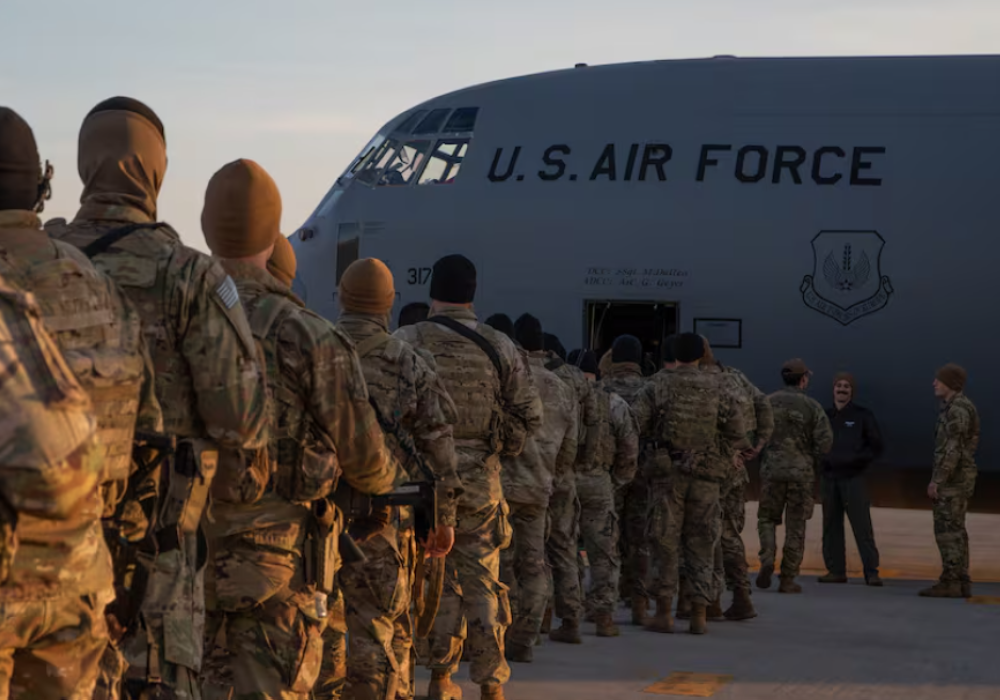
Trump’s announcement of the airspace closure, which coincided with the United States intensifying its military presence in the Caribbean under the pretext of combating drug trafficking, carries serious repercussions on various levels.
- Domestically, this measure is seen as an attempt to further isolate Venezuela from the outside world, potentially impacting already limited civil aviation and complicating the delivery of humanitarian aid and essential goods. Internally, the Maduro government uses such threats to rally public support and portray the crisis as a foreign conspiracy targeting national sovereignty.
- Regionally, this escalation exacerbates polarization in Latin America, with countries like Colombia and Brazil (then under Bolsonaro) supporting the US position, while others like Cuba and Bolivia oppose it. It also raises concerns among neighboring Caribbean nations about the potential for the region to become a battleground.
- On the international level, this threat puts the United States at odds with international powers supporting Maduro, such as Russia and China, which have significant economic and military investments in Venezuela. Both countries have repeatedly condemned US interference in Venezuelan affairs, making the Venezuelan crisis part of a broader geopolitical struggle.
In conclusion, the threat of closing the airspace represents a new chapter in the American pressure on Caracas, and reflects the continuation of the complex crisis that continues to cast its heavy shadow on the Venezuelan people and the stability of the entire region.