The latest bulletin of average commodity prices issued by the General Authority for Statistics revealed a notable variation in vegetable prices in Saudi Arabia for February 2026. Official data provided detailed insights into local market activity, showing that the list of 25 types of vegetables and legumes experienced mixed changes. Prices rose for 12 items, fell for 11, and remained stable for 3 items compared to January of the same year.
The most significant declines in vegetable prices in Saudi Arabia
Statistics revealed details of price decreases in some agricultural products. Local cucumbers saw a notable drop of 6.4%, reaching 5.2 riyals per kilogram. The price of local molokhia also fell by 6.4%, reaching 2.9 riyals per bunch, compared to 3.1 riyals in January. As for tomatoes, the price of local tomatoes decreased by 3.8% to 4.5 riyals per kilogram, while imported tomatoes fell to 5.6 riyals. In contrast, local arugula remained stable at 1.1 riyals, spinach at 1.3 riyals per bunch, and green chili peppers unchanged at 8.5 riyals per kilogram. Local round onions decreased to 3.6 riyals per kilogram, while imported onions remained stable at 4.6 riyals. Local potatoes fell to 4 riyals, a decrease of 2.5%.
Goods that saw an increase during February
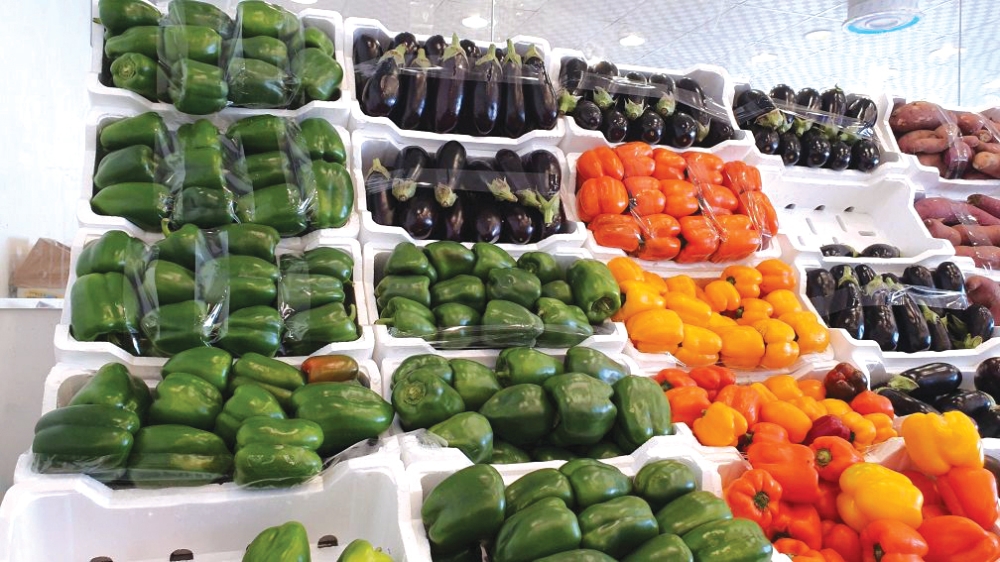
On the other hand, the list of price increases was topped by local lettuce, which reached SAR 5.8 per kilogram, a 2.9% rise, and green beans, which increased by 3.8% to SAR 10.8 per kilogram, compared to SAR 10.4 in January. White cabbage also rose by 1.1% to SAR 3.6 per kilogram. In the pepper category, local green bell peppers saw a notable increase to SAR 7.4 per kilogram, a 3.2% rise. Local black eggplant rose by approximately 3% to SAR 5.3 per kilogram. Butternut squash increased by 1.1% to SAR 5.8, and local zucchini jumped by 5.2% to SAR 6.1. Local okra also rose slightly to SAR 17.4, and local carrots increased by 2.3% to SAR 5.8. Spanish black olives rose to SAR 25.5 per kilogram, a 1.6% increase.
Price movements of legumes and canned foods
In the pulses and canned goods category, the price of lentils decreased by 1.4% during February to SAR 9.3 per kilogram, while fava beans decreased by 2.1% to SAR 4.6 per 450-gram package. Meanwhile, local tomato sauce remained stable at SAR 2 per 135-gram package, and sweet corn also remained stable at SAR 6.2 per 340-gram package, showing little change from the previous month of January.
The economic context of food commodity prices
These changes in vegetable prices in Saudi Arabia within an economic context characterized by flexibility and adaptability to global fluctuations. Historically, the Kingdom has worked to enhance its food security through comprehensive national strategies aimed at supporting local farmers and reducing reliance on imports of essential commodities. The Ministry of Environment, Water and Agriculture, along with regulatory bodies, plays a pivotal role in monitoring markets to ensure ample supply and prevent any monopolistic practices that could lead to unjustified price volatility. This approach aligns with the objectives of Saudi Vision 2030, which prioritizes quality of life and market stability, thus explaining the noticeable balance between commodities that have seen price increases and those that have decreased or remained stable.
The local and regional impact of market stability
The moderate fluctuations in agricultural product prices carry significant implications both locally and regionally. Locally, the decline in prices of essential commodities such as tomatoes, onions, and potatoes helps alleviate the financial burden on consumers, thus supporting the purchasing power of Saudi families and residents. Regionally, the stability of supply chains in the Kingdom reflects the Saudi economy's ability to absorb the inflationary shocks affecting many countries in the region and the world. It is worth noting that the Consumer Price Index (CPI), a measure of inflation, recorded a slight and stable year-on-year increase of 1.7% in February 2026, compared to the same month of the previous year. This is among the lowest inflation rates globally, confirming the success of the monetary and economic policies implemented.