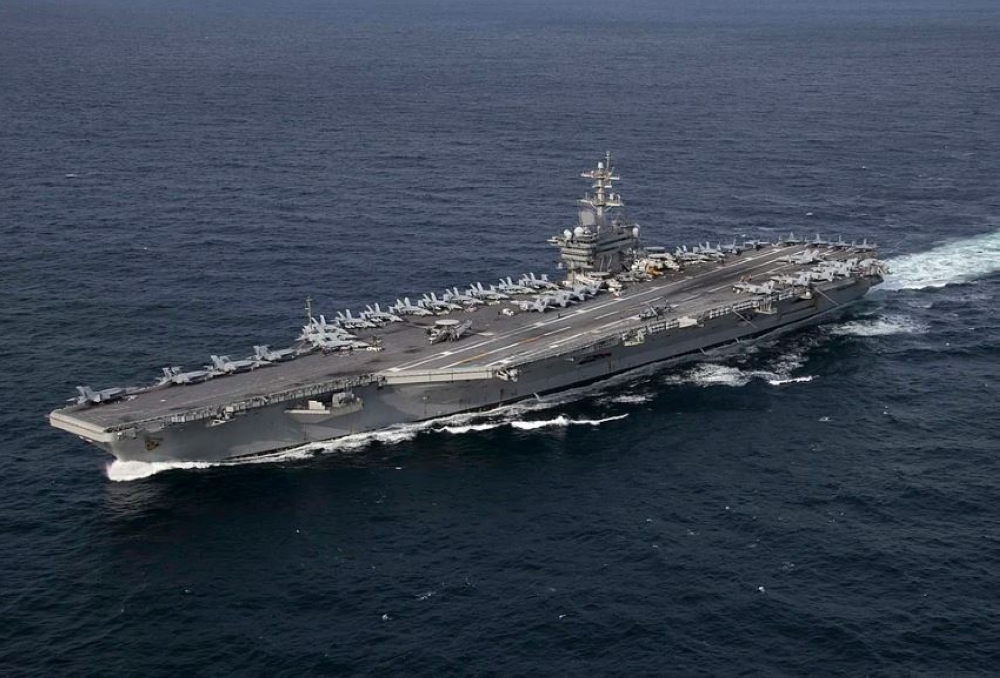
U.S. Central Command (CENTCOM) announced the arrival of the aircraft carrier USS Abraham Lincoln and its strike group in the Middle East, a show of force intended to bolster the U.S. military presence and deter any potential threats amid escalating tensions with Iran. CENTCOM confirmed in an official statement that this deployment is part of its commitment to "enhancing regional security and stability" and protecting U.S. interests and those of its allies in the region.
Context of escalation and historical background
The decision to deploy the aircraft carrier was not arbitrary; it was part of the “maximum pressure” policy adopted by the then-US administration toward Iran, particularly after the US withdrawal from the nuclear agreement (the Joint Comprehensive Plan of Action) in 2018. The decision was based on intelligence reports indicating “disturbing signs and warnings” that Iran or its proxies in the region were planning potential attacks on US forces and interests. This deployment served as a clear and direct message to Tehran that any aggression would be met with a decisive and immediate military response.
The importance of the strike force
The aircraft carrier strike group (CSG) is a key instrument in projecting U.S. naval power. The group is not limited to the aircraft carrier USS Abraham Lincoln, which carries an air wing with dozens of fighter, attack, early warning, and electronic warfare aircraft, but is also accompanied by advanced warships, including guided-missile cruisers and destroyers capable of performing multiple defensive and offensive missions, and sometimes a nuclear-powered attack submarine. This massive military formation provides formidable firepower and the ability to conduct large-scale, independent military operations anywhere in the world, making it a powerful symbol of American military dominance.
Regional and international influences
Regionally, this military deployment is seen as a message of reassurance to US allies in the Gulf region, who share Washington's concerns about Iran's influence and policies. Iran, on the other hand, views the move as a provocative act aimed at escalating tensions and waging psychological warfare. Internationally, the arrival of the strike group has raised fears of a military confrontation that could have serious consequences for regional stability and the security of global energy supplies, especially as it coincides with heightened tensions in the Strait of Hormuz, the vital waterway through which a significant portion of the world's oil passes.