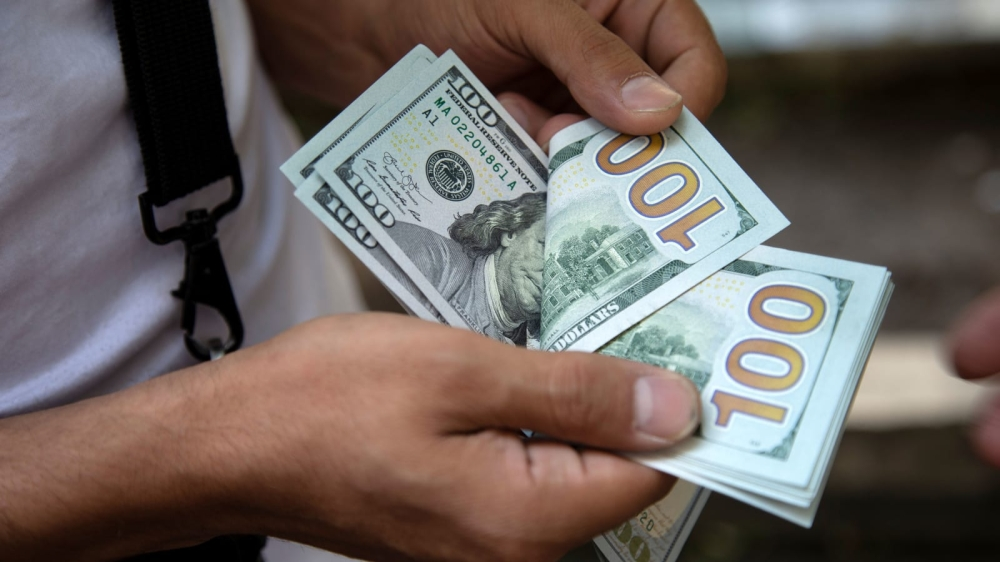
The US dollar saw a slight decline against the Egyptian pound at the close of trading on Wednesday across the network of state-owned and commercial banks operating in the Egyptian market. This minor change comes amid ongoing monitoring of foreign exchange movements, which are of great interest to both investors and citizens, given the dollar's connection to the prices of basic commodities, import costs, and domestic and international trade.
Exchange market dynamics and developments regarding the US dollar in Egypt
Historically, the Egyptian economy has passed through several pivotal stages that have directly impacted the value of the local currency. Since the implementation of flexible exchange rate policies, supply and demand forces have become the primary determinant of the value of foreign currency in the country. This structural shift was primarily aimed at eliminating the parallel market, attracting foreign direct investment, and boosting remittances from Egyptians working abroad. Consequently, any movement in exchange rates today reflects real interactions in the balance of payments and the volume of dollar liquidity available within the official banking sector, which explains the small, daily fluctuations we are witnessing.
Economic repercussions of foreign exchange movements on markets
The stability or fluctuation of foreign exchange rates carries broad economic implications. Domestically, even a slight decline in the value of the US dollar positively impacts the cost of importing strategic goods and raw materials, thus helping to curb inflation and stabilize prices for Egyptian consumers. Regionally and internationally, the stability of the Egyptian exchange market sends strong reassuring signals to international financial institutions and credit rating agencies, bolstering foreign investors' confidence in government debt instruments and the capital market, and underscoring the Egyptian economy's resilience to successive global shocks stemming from geopolitical tensions and energy market volatility.
List of dollar to pound exchange rates in Egyptian banks
The following is a detailed review of the latest figures recorded on trading screens at the close of trading on Wednesday in the most prominent banks operating in Egypt:
Central Bank of Egypt
The average price at the Central Bank of Egypt, which represents the main market indicator, recorded about 52.63 pounds for buying and 52.77 pounds for selling.
National Bank of Egypt and Bank Misr
In the two largest government banks in terms of assets and reach, the National Bank of Egypt and Banque Misr, the price stabilized at 52.54 Egyptian pounds for buying and 52.64 Egyptian pounds for selling.
Bank of Alexandria and Suez Canal
Trading screens at Bank of Alexandria showed rates of 52.57 Egyptian pounds for buying and 52.67 Egyptian pounds for selling. Meanwhile, at Suez Canal Bank, the rate was 52.66 Egyptian pounds for buying and 52.76 Egyptian pounds for selling.
Commercial International Bank (CIB) and Abu Dhabi Islamic Bank
The price reached 52.55 Egyptian pounds for buying and 52.65 Egyptian pounds for selling at Commercial International Bank (CIB), the largest private bank in Egypt, as well as at Abu Dhabi Islamic Bank.
Faisal Islamic Bank and Qatar National Bank (QNB)
Transactions at Faisal Islamic Bank and Qatar National Bank (QNB) recorded identical figures at the close of trading, with the price reaching 52.56 pounds for buying and 52.66 pounds for selling.
National Bank of Kuwait (NBK)
Finally, the price at the National Bank of Kuwait reached 52.65 pounds for buying and 52.75 pounds for selling, reflecting a state of relative stability at the end of the trading day.