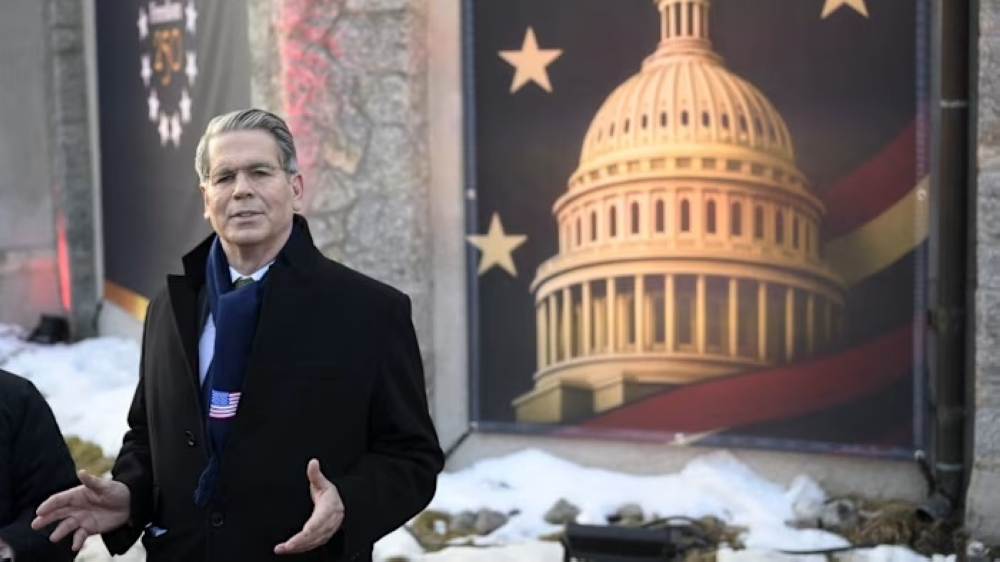
In a new escalation of transatlantic trade and geopolitical tensions, US Treasury Secretary Scott Bisnett issued a stern warning to European countries against engaging in a retaliatory tariff war with the United States. This came on the sidelines of the World Economic Forum in Davos, where attention is focused on the potential repercussions of President Donald Trump's desire to acquire the Danish island of Greenland.
Warnings from Davos: An unwise move
Bessent told reporters on the first day of the forum that any European move to impose retaliatory tariffs in response to Trump's tariff threats would be "unwise." This statement comes as the European Union considers its options for responding to US pressure aimed at forcing Denmark to relinquish control of the self-governing island.
The US Secretary of State explained that Washington views the issue from a purely national security perspective, saying: "We will not entrust the security of the Western Hemisphere to any other party," in a clear reference to the US administration's adherence to the Monroe Doctrine, which considers the American continent an area of exclusive US influence.
Historical and strategic dimensions of the island
The United States' desire to purchase Greenland is not a recent development or a mere political whim; history shows previous attempts, most notably President Harry Truman's offer to buy the island in 1946 for $100 million in gold, given its strategic location in the Arctic. The United States also previously purchased the Virgin Islands from Denmark in 1917.
In this context, Bessent cited the Panama Canal deal, asking: "How did the United States get the Panama Canal? We bought it from the French," implying that major international real estate deals are part of American history.
Greenland is gaining increasing importance in the 21st century not only for its military location but also for its vast reserves of rare earth minerals, which are vital to modern technology industries, from smartphones to batteries and missile guidance systems. Bisent clearly alluded to American concerns about growing Chinese influence there, saying, "They've let the Chinese mine in Greenland, haven't they?".
Nobel Peace Prize controversy and veiled messages
The conversation turned to President Trump's personal and political life, with Bisent being asked about a controversial letter Trump sent to the Norwegian prime minister, in which he implicitly linked his claims to Greenland with his failure to win the Nobel Peace Prize. While Bisent denied any knowledge of the letter, he described the connection as "absurd.".
In his letter, Trump indicated that the world would not be safe unless the United States controlled Greenland, after the Nobel Prize went to Venezuelan opposition leader Maria Corina Machado, which Trump considered a disregard for his efforts to end several wars around the world.
Expected impacts on transatlantic relations
This issue raises serious concerns about the future of relations within NATO, of which Denmark is a founding member. Observers believe that Washington's insistence on linking trade issues to regional ambitions could lead to a rift in the unified Western front, especially given the current global economic challenges.