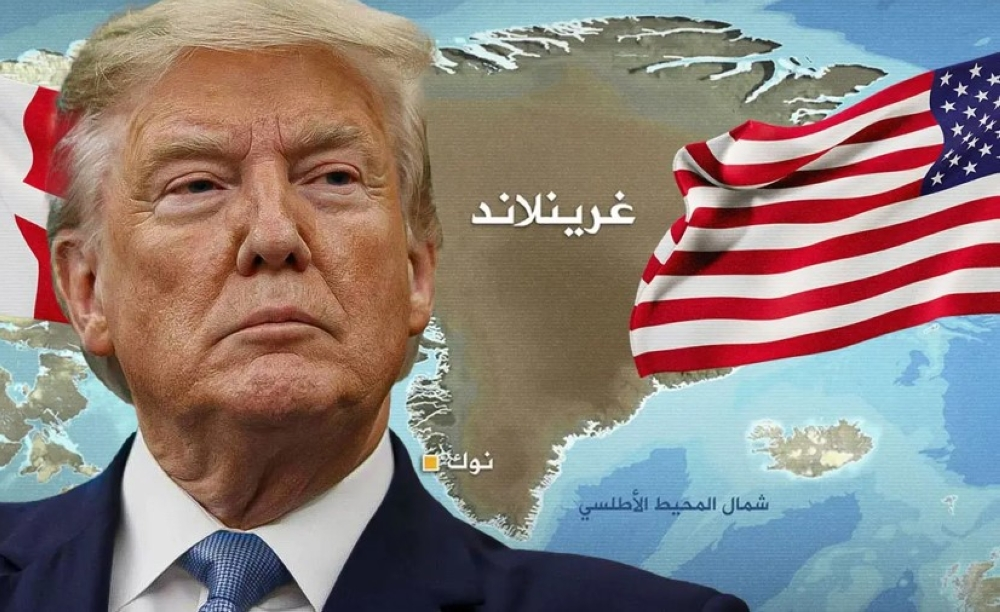
US Treasury Secretary Scott Bisnett issued a stern warning to European countries, advising them against retaliatory tariffs amid escalating tensions over President Donald Trump's interest in acquiring Greenland. Speaking on the sidelines of the World Economic Forum in Davos, Bisnett described any European move to impose tariffs on the United States as "a very unwise step.".
Bisset told reporters that the US administration views the matter from a national security and strategic perspective, noting that President Trump considers the self-governing Danish territory an indispensable "strategic asset." The US Secretary of State added a statement with profound geopolitical implications, saying, "We will not outsource the security of the Western Hemisphere to anyone else," a clear indication of Washington's intention to strengthen its influence in the Arctic region.
The strategic importance of Greenland
To understand the US administration's insistence on this move, one must consider Greenland's geopolitical location. The world's largest island is a vital gateway to the Arctic, a region witnessing increasing international competition among major powers, especially as melting ice opens new shipping lanes and facilitates access to natural resources. Greenland possesses vast reserves of rare earth minerals essential for modern technological and military industries, making control of it a significant economic and security advantage.
Furthermore, the island hosts the U.S. Thule Air Base, the northernmost U.S. military base, which plays a pivotal role in the ballistic missile early warning system and space surveillance, making the U.S. presence there a non-negotiable national security issue for Washington.
A history of American interest and European response
It is worth noting that the United States' interest in purchasing Greenland is not a recent development or limited to the Trump era. The administration of President Harry Truman offered to buy the island from Denmark in 1946 for $100 million in gold, but the offer was rejected. The proposal resurfaced during Trump's first term in 2019, and the Danish Prime Minister at the time described it as "absurd," leading to a temporary diplomatic row.
In response to the current developments, European Council President António Costa announced he would convene an emergency summit of European leaders in the coming days. The meeting aims to coordinate a unified European stance in response to US threats of imposing tariffs if the acquisition is not facilitated. Costa wrote on social media: "Given the importance of current developments and in order to further coordinate, I have decided to call an emergency meeting of the European Council," signaling the potential for a trade dispute that could cast a dark shadow over the interconnected global economy.