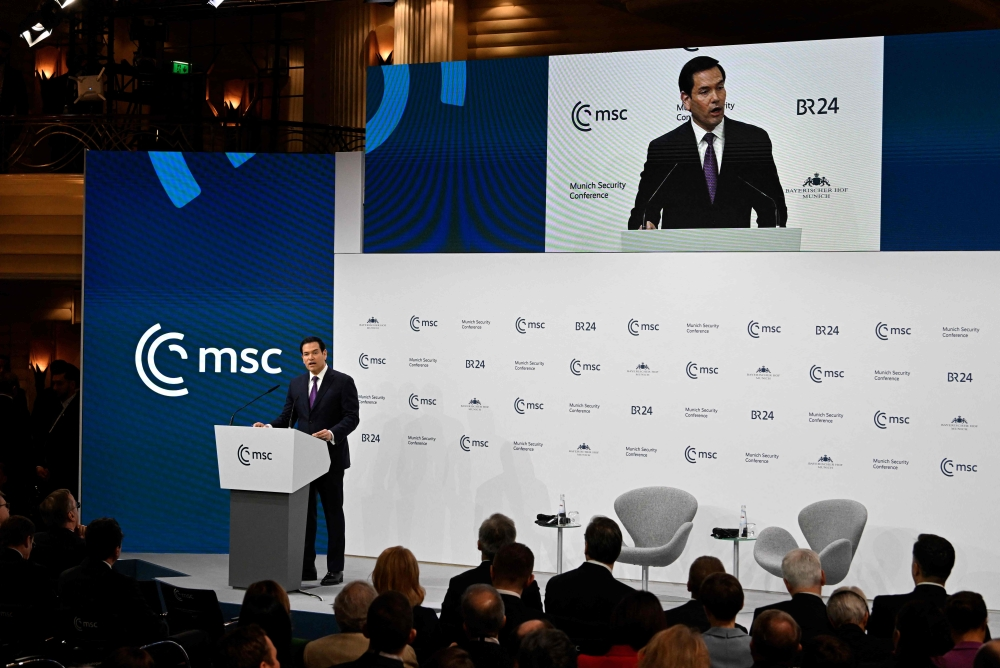
Prominent US Senator Marco Rubio asserted that the United States, under President Donald Trump, seeks to lead a process of "restoring" the global order, not undermining it. In remarks reflecting key aspects of US foreign policy during that period, Rubio emphasized that Washington aims to reshape alliances and international institutions to serve American interests and ensure a fairer distribution of burdens among allies.
The historical context of the current world order
To understand the implications of these statements, it is necessary to return to the global order that emerged after World War II. The United States spearheaded efforts to establish an infrastructure for international security and cooperation, embodied in the creation of the United Nations, the North Atlantic Treaty Organization (NATO), and the Bretton Woods institutions (the International Monetary Fund and the World Bank). The aim of this system was to prevent new global conflicts and promote liberal democracy and the open market economy. For decades, Washington played a pivotal role in maintaining this system, often referred to as the “Pax Americana.”.
The Trump administration's vision and the challenge to the status quo
The Trump administration came to power with the slogan “America First,” which directly challenged the foundations of this system. The administration criticized what it perceived as exploitation by both allies and adversaries. In this context, Rubio clarified that the goal was not to “divide” NATO, but rather to “strengthen” it, referring to repeated US demands that member states fulfill their defense commitments and increase their military spending to 2% of GDP. Rubio also criticized the limited role of the United Nations, arguing that it plays “no effective role” in resolving major international conflicts—a common criticism that focuses on the Security Council’s inability to make decisive decisions due to the use of the veto.
Importance and expected effects
The significance of this approach lies in its redefinition of American global leadership. Instead of leadership based on multilateral consensus, this vision proposes a more assertive model grounded in American bargaining power and direct national interests. Internationally, this policy has alarmed traditional allies in Europe and Asia, while simultaneously opening the door for other global powers, such as China and Russia, to attempt to fill the void and expand their influence. The idea of “restoring” the global order, as Rubio describes it, means restructuring it to reflect the new balance of power and contemporary challenges, while ensuring that the United States remains at the forefront, but under new conditions that guarantee “America and Europe together” on a more balanced and robust foundation.