In a new development in East Asia, the United States expressed deep concern over recent military movements by the People's Republic of China around Taiwan. Washington deemed these maneuvers, which included a military encirclement of the island, as unnecessarily escalating tensions, and directly called on Beijing to cease its military pressure and resort to diplomatic channels.
The US position was articulated by State Department spokesman Tommy Pigott, who issued an official statement affirming that China's military activities and escalating rhetoric toward Taiwan and other actors in the region do not serve regional stability. Pigott stated, "We urge Beijing to exercise restraint, cease its military pressure on Taiwan, and engage in constructive dialogue," emphasizing that Washington is closely monitoring the situation in coordination with its allies in the region.
Details of the military maneuvers
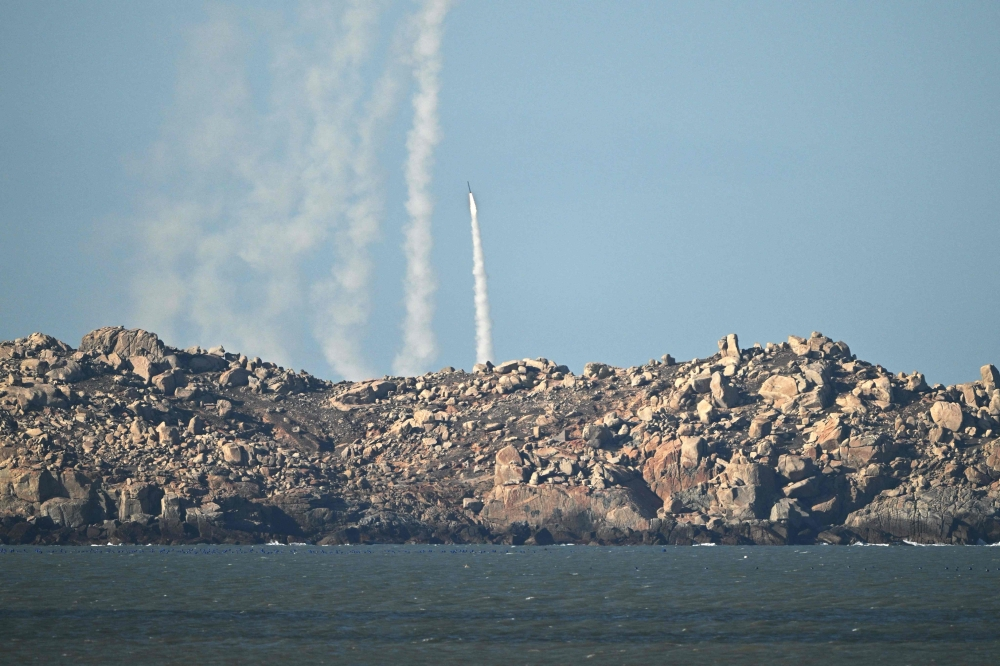
Beijing launched a series of intensive military exercises this week, including missile launches and the deployment of dozens of fighter jets, naval vessels, and coast guard ships around Taiwan. The government in Taipei described these moves as "highly provocative," stating that they threaten the status quo in the Taiwan Strait and endanger the safety of air and sea navigation.
Background of the conflict and historical roots
To understand the depth of this tension, one must examine the historical background of the relationship between the two sides. The roots of the crisis trace back to 1949, when the Chinese Civil War ended with the Nationalist government (Kuomintang) retreating to the island of Taiwan, while the Communists established the People's Republic of China on the mainland. Since then, Beijing has considered Taiwan an integral part of its territory and vowed to annex it, by force if necessary, while Taiwan enjoys democratic self-governance and maintains unofficial but strong ties with the United States.
Strategic importance and impact of the event
The significance of this escalation is not limited to the Chinese and Taiwanese sides, but extends to include wide-ranging regional and international repercussions:
- Global economic security: The Taiwan Strait is a vital waterway for international trade, with a significant percentage of the world's shipping containers passing through it. Any military instability in this region could paralyze global supply chains.
- Semiconductor manufacturing: Taiwan produces the vast majority of the world's advanced electronic chips. International powers fear that any conflict could halt this production, dealing a devastating blow to the technology, automotive, and smartphone industries worldwide.
- Geopolitical considerations: The United States views Taiwan's security as part of its commitment to maintaining stability in the Indo-Pacific region. Neighboring countries such as Japan and the Philippines view these maneuvers with great concern, fearing that China's expanding military influence could threaten their security and border interests.
The latest US call comes at a sensitive time, as Washington and Beijing try to manage their differences to prevent strategic competition from turning into open conflict, but the Taiwan issue remains the hottest and most explosive point in relations between the two superpowers.