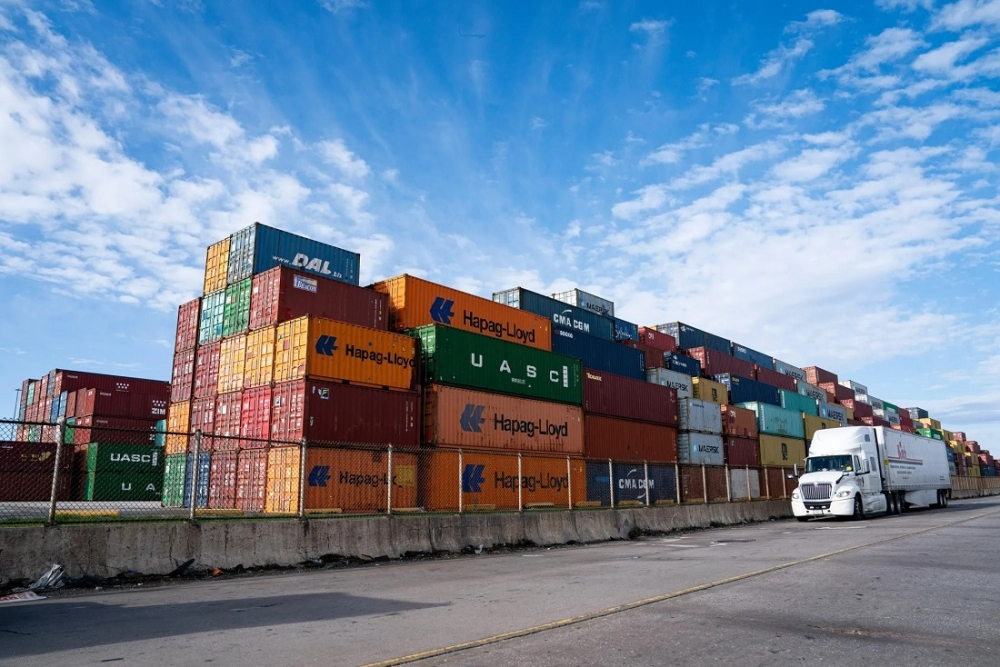
In a remarkable and unexpected economic shift, recent official data showed a sharp decline in the US trade deficit during last October, recording its lowest level since 2009. This significant decrease is mainly driven by a reduction in goods imports, coinciding with the start of the implementation of the strict tariff packages approved by the administration of President Donald Trump, which cast a shadow over international trade.
According to figures released by the U.S. Department of Commerce, the overall trade deficit saw a dramatic decrease of 39%, settling at $29.4 billion. This decline is primarily attributed to a 3.2% drop in imports, which fell by $11 billion to $331.4 billion, reflecting the market's response to new protectionist policies.
Details of export and import activity
On the other side of the trade balance, US exports saw a significant rebound, rising by $7.8 billion to reach $302 billion. This discrepancy between declining imports and increased exports directly contributed to narrowing the trade gap, a long-sought objective of the US administration's economic strategy to boost domestic production and reduce reliance on foreign goods.
Historical context and economic importance
The trade deficit reaching this low level is a rare event that has not been repeated since the fallout from the global financial crisis in 2009. At that time, the contraction in trade was the result of a global economic recession, while the current decline comes in a completely different context, namely the reshaping of trade policies and the imposition of tariffs aimed at adjusting the trade balance in favor of the United States.
Expected impacts locally and globally
From a purely economic perspective, a smaller trade deficit is a positive factor in calculating gross domestic product (GDP). When the deficit decreases (or the surplus increases), net exports contribute to higher economic growth rates for the quarter in which the decrease occurred. Therefore, this report is expected to have a positive impact on US economic growth estimates for the fourth quarter of the year.
At the international level, this decline reflects the impact of the trade war and protectionist policies on global supply chains. Continued trends could lead to structural changes in the international trade landscape, as countries exporting to the United States may be forced to seek alternative markets or make trade concessions, potentially creating uncertainty in global markets in the medium term.