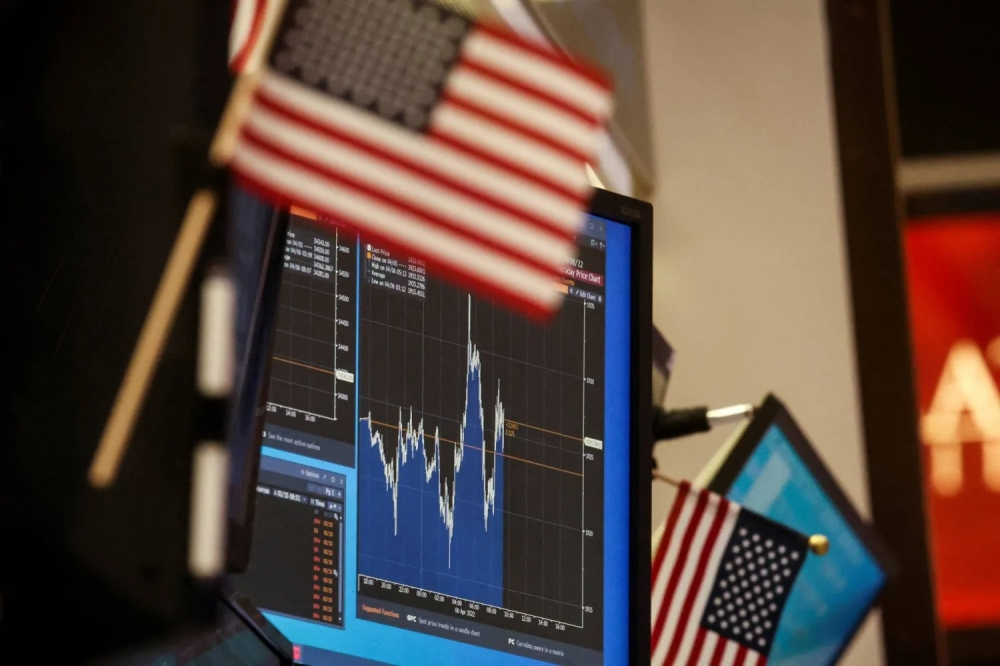
Major U.S. stock indices on Wall Street closed sharply lower on Tuesday, as a sell-off dominated market performance, leading to a collective decline in the three major indices, amid a state of anticipation among investors in global financial markets.
Details of Wall Street index closing
The broader S&P 500 index declined during the session, falling 13.97 points, or 0.2%, to close at 6963.30. This index is a key benchmark for the performance of major US stocks and reflects the overall health of the US economy.
In the technology sector, the Nasdaq Composite Index, dominated by technology stocks, edged down slightly by 0.10%, losing about 22.70 points to settle at 23,711.20. The biggest point loss, however, was suffered by the Dow Jones Industrial Average, which fell by 394.97 points, or 0.81%, to close at 49,195.23.
The importance of US indicators and their global impact
The movements of US stocks on the New York Stock Exchange (Wall Street) are of paramount importance to the global economy, as this is the world's largest and most liquid market. These movements often have repercussions for financial markets in Asia, Europe, and even emerging markets in the Middle East. When US indices decline, investors worldwide often adopt more cautious strategies, which can trigger similar sell-offs in other stock exchanges the following day.
Background on key indicators
To understand the context of this decline, it's necessary to consider the nature of these indices. The Dow Jones Industrial Average comprises 30 large, historically significant industrial companies and is considered a benchmark for blue-chip companies. The S&P 500 covers the 500 largest listed companies, making it a more accurate measure of the overall performance of the US stock market. The Nasdaq, on the other hand, is the primary home for technology and innovation giants.
Factors affecting market volatility
Financial markets are typically subject to several factors that lead to such declines, including corporate quarterly earnings reports, inflation data, and Federal Reserve (US central bank) interest rate decisions. These fluctuations are a normal part of the market cycle, as investors reassess their portfolios based on emerging economic data and potential geopolitical risks.