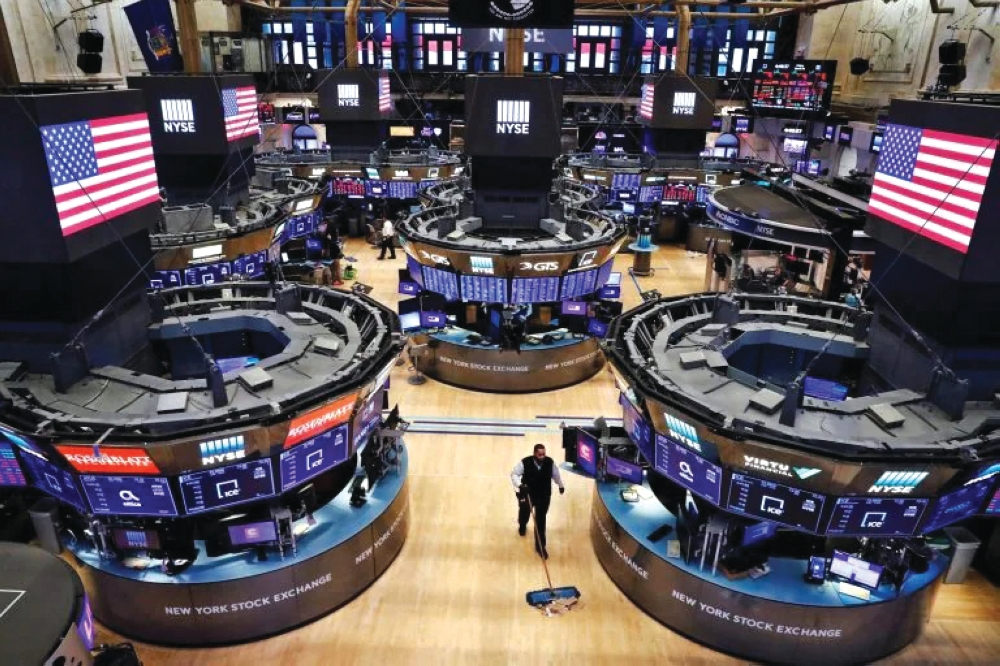
Major US stock indices fell at the close of trading
Wall Street experienced a volatile trading session on Friday, ending the week with a broad decline across its major indices. The Dow Jones Industrial Average, which tracks the 30 largest U.S. companies, suffered significant losses. The S&P 500, the broader benchmark for the market, followed suit, closing in negative territory. The Nasdaq Composite, dominated by technology stocks, fared no better, also registering a drop that reflected the cautious sentiment among investors.
General context and key influencing factors
This decline comes within a complex global economic context, as investors continue to assess a range of economic data and statements from central bank officials. Historically, financial markets are influenced by multiple factors, most notably the monetary policy pursued by the Federal Reserve (the US central bank). Any hints about future interest rates, whether raising them to combat inflation or lowering them to stimulate the economy, have a direct and immediate impact on market sentiment. Furthermore, cyclical economic data plays a crucial role, such as employment reports, consumer price indices (inflation), and GDP figures, as these provide a clear picture of the health of the US economy and influence investment decisions.
The importance of the event and its expected impact
The performance of US stocks has repercussions not only for domestic investors but also serves as a global indicator. Wall Street is the world's largest financial market, and any significant movements there, whether upward or downward, reverberate throughout global financial markets from Europe to Asia. Regionally, markets in the Middle East closely monitor the performance of their US counterparts, as a decline in US stocks can affect the risk appetite of global investors, potentially leading to capital outflows from emerging markets. Furthermore, the performance of major US companies included in these indices, which have extensive operations and investments worldwide, reflects the state of global demand and impacts international supply chains. This decline serves as a reminder that financial markets remain sensitive to uncertainty, and investors will continue to await any new indicators that may determine the future direction of the economy and markets.