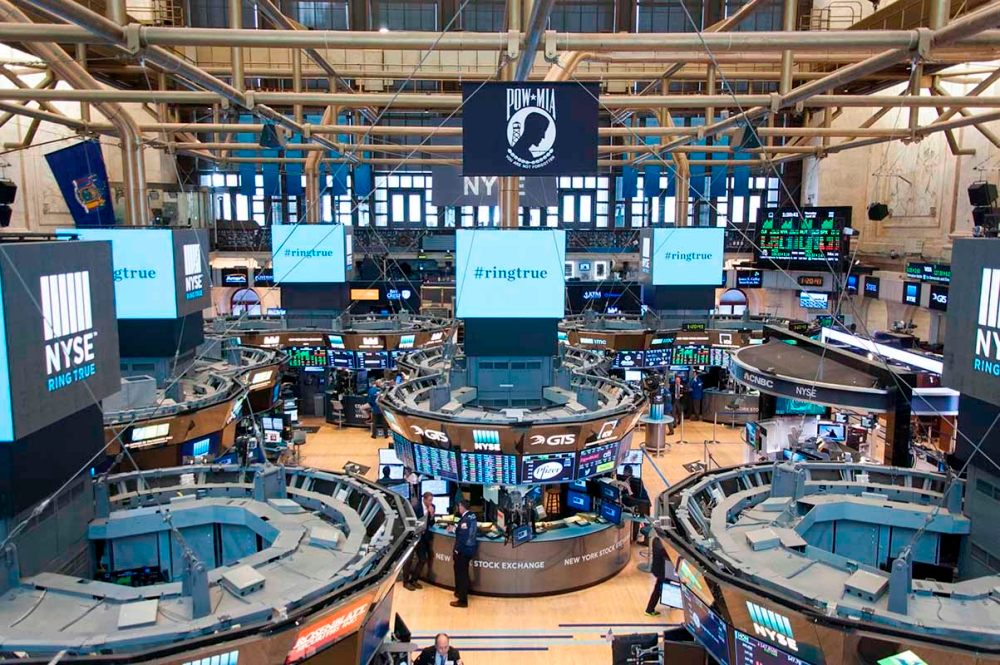
Mixed performance dominated the close of trading on US stocks
Wall Street closed mixed on Wednesday, with major U.S. stock indices reflecting a divergent picture of investor sentiment. While the Dow Jones Industrial Average managed gains, the S&P 500 and Nasdaq Composite faced selling pressure, closing in negative territory. This mixed performance underscores the cautious and watchful atmosphere prevailing in financial markets as investors assess the direction of monetary policy and upcoming economic data.
Historical background and current performance context
Historically, the three major US stock indices have represented distinct sectors of the economy. The Dow Jones Industrial Average, comprising 30 of the leading industrial and service companies in the United States, is considered a barometer of the health of traditional, established businesses. The Nasdaq Composite is predominantly technology-focused, featuring tech giants and innovative growth companies. The S&P 500, on the other hand, offers the most comprehensive view of the market, representing the 500 largest companies across various economic sectors. The divergence in their performance, as seen today, often points to a phenomenon known as "sector rotation," where investors shift their capital from growth sectors like technology to more stable value sectors, or vice versa, based on their economic outlook.
The importance and expected impact of divergent performance
This divergence in index performance carries significant implications both domestically and internationally. Domestically, the performance reflects a split in investor confidence; while some are betting on the resilience of major industrial companies and their ability to withstand economic challenges, others are concerned about the high valuations of technology stocks, particularly in an environment of rising interest rates. This decline in the technology sector may be a result of profit-taking after the sector's recent strong rally, fueled by the significant momentum surrounding artificial intelligence.
Internationally, Wall Street is considered a compass for global markets. Any sign of a slowdown in the US technology sector could negatively impact stock markets in Europe and Asia, which closely follow its movements. The strength of the Dow Jones Industrial Average also gives the impression that the US economy remains resilient, which can influence the monetary policy decisions of other central banks worldwide. Investors are now awaiting key economic data releases, such as inflation reports and labor market indicators, to gain a clearer picture of the Federal Reserve's (the US central bank) next steps regarding interest rates, which will be the primary driver of markets in the coming period.