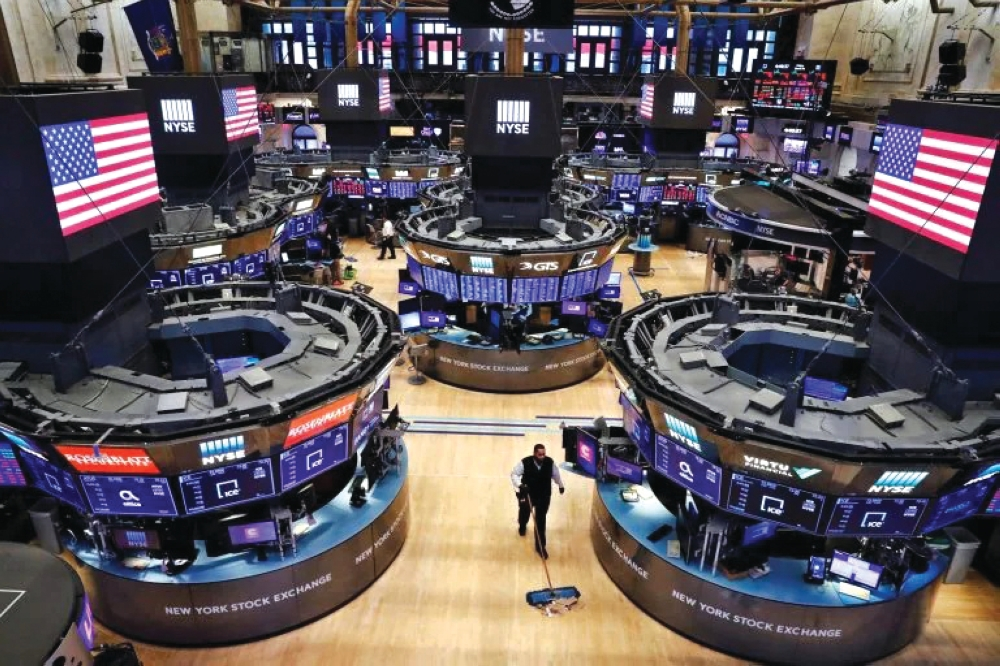
Major U.S. stock indexes on Wall Street ended Wednesday's trading session slightly lower, in a cautious and watchful environment as investors weighed upcoming economic data against the Federal Reserve's monetary policy direction. The three major indexes saw limited fluctuations before settling in negative territory at the close.
The Dow Jones Industrial Average , which tracks the stocks of 30 of the largest U.S. companies, fell 0.14%, losing 70.56 points. The S&P 500 , a broader measure of market performance, edged down 0.01%, or 0.93 points. Similarly, the Nasdaq Composite , dominated by technology stocks, closed 0.18% lower, down 41.51 points.
General context and background of market performance
This mixed performance comes at a crucial time for global financial markets. Investors are closely scrutinizing every set of economic data, such as inflation figures, labor market indicators, and GDP growth rates, in an attempt to anticipate the Federal Reserve's next moves. Historically, the Fed's interest rate decisions have a direct impact on market risk appetite. When the Fed raises interest rates to curb inflation, borrowing costs increase for businesses and consumers, potentially slowing economic growth and putting pressure on corporate profits and stock prices. Conversely, lowering interest rates stimulates the economy and drives markets higher.
The importance of the event and its expected impact
Although the declines recorded in this session were slight, they reflect a prevailing sense of uncertainty in the markets. Domestically , Wall Street's performance directly impacts American consumer confidence and equity-linked retirement savings, such as 401(k) plans. Any sustained decline could lead to a slowdown in consumer spending, which is the lifeblood of the American economy.
On both regional and international levels , Wall Street serves as a compass for global markets. Stock exchanges in Europe, Asia, and emerging markets often follow the trends of the US market. Consequently, any downturn in New York sends negative signals to investors worldwide, potentially triggering global sell-offs and capital flight to safe havens such as gold or US government bonds. The performance of the technology sector, particularly within the Nasdaq index, is closely watched globally due to the dominance of US technology companies in the global digital economy.