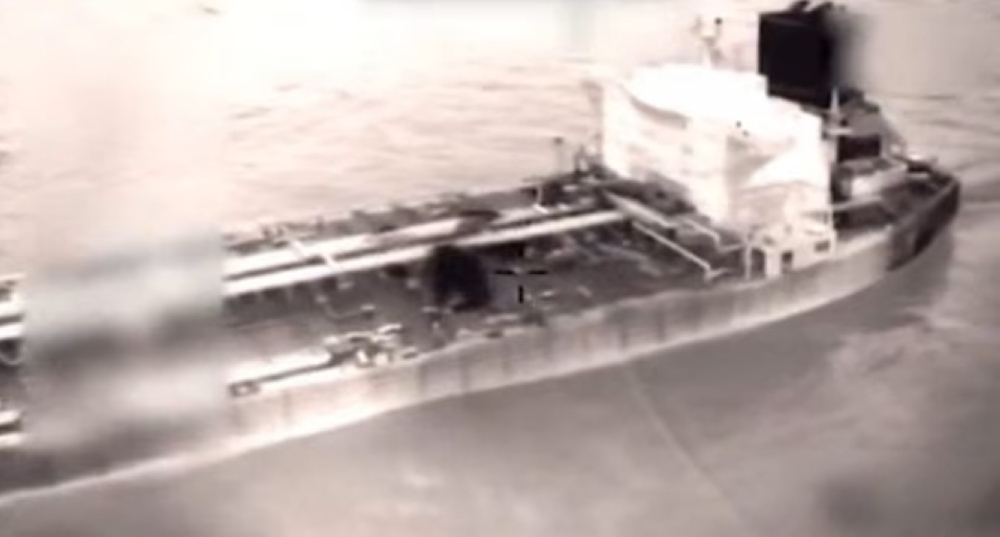
In a further escalation of its stringent economic sanctions policy, the United States announced on Friday the seizure of an additional oil tanker that had sailed from Venezuela, bringing the total number of recently detained vessels to five. This move is part of ongoing US efforts to prevent Caracas from violating the embargo on its oil exports and to cut off the Venezuelan regime's funding sources by targeting what is known as the "ghost fleet.".
Details of the confiscation operation and statements from internal security
U.S. Homeland Security Secretary Kristi Noem confirmed via her official X account that U.S. authorities had successfully seized the tanker "Olena." Noem explained that the vessel is part of a complex network of ships operating clandestinely to transport illicit oil, noting that the seizure occurred after the tanker was observed attempting to sail from Venezuelan ports and evade U.S. patrols in international waters.
Reports indicate that these operations rely on accurate intelligence and satellite surveillance to track the movement of ships that typically switch off their Automatic Identification System (AIS) tracking devices to conceal their identity and route, a tactic common among sanctioned countries.
International cooperation and the campaign against the "ghost fleet"
The United States is not acting alone in this matter, as this announcement coincides with coordinated international efforts to regulate maritime traffic that violates international law. In a related development, the British Ministry of Defence revealed that it provided crucial "operational" assistance to US forces in seizing another oil tanker, of Russian origin, in the North Atlantic.
The Russian tanker, originally named "Bella 1" and later renamed "Marinera" for disguise, was intercepted in the area between Britain, Iceland, and Greenland. The British statement explained that this intervention came in response to a US request, reflecting the high level of security coordination between Washington and London in pursuing vessels attempting to circumvent Western sanctions imposed on either Venezuela or Russia.
Background of sanctions and their economic impact
For years, the United States has imposed a crippling embargo on Venezuela's oil sector, specifically targeting the state-owned oil company PDVSA, with the aim of exerting maximum economic and political pressure on President Nicolás Maduro's government. Washington believes that oil revenues are used to consolidate Maduro's rule and undermine democracy in the country.
This embargo has forced Venezuela, which possesses the world's largest proven oil reserves, to resort to using dilapidated or unregistered tankers (a "ghost fleet") to export crude at discounted prices, primarily to Asian markets. This latest seizure underscores the US administration's determination to close the loopholes that allow these revenues to flow, further burdening the already struggling Venezuelan economy and sending a warning to global shipping and marine insurance companies against dealing with sanctioned entities.