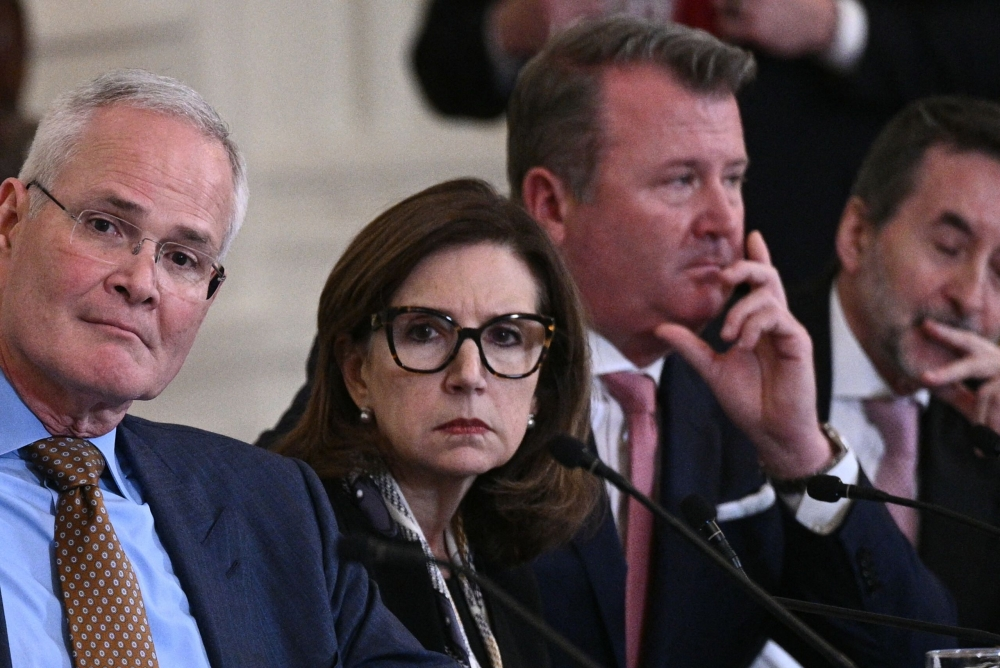
The top executives of American oil companies sent a clear and direct message to President Donald Trump during their recent meeting at the White House, stating that Venezuela’s energy sector is still far from being an attractive environment for investment and that it requires deep structural and legal reforms before any new money is injected, in response to Trump’s ambitious plans to revive the sector.
The shock of reality versus political ambitions
Despite President Trump's announcement on Friday of his expectation of investing up to $100 billion to rebuild Venezuela's crumbling oil infrastructure, backed by U.S. security guarantees, industry giants reacted very cautiously. ExxonMobil CEO Darren Woods asserted that the Venezuelan market, in its current state, is "not investable.".
Woods explained to Trump firmly, "Our assets there have been seized twice before, and a third entry would require fundamental changes to the legal and commercial frameworks, which we don't see as being in place today." He indicated that the company was only prepared to send technical teams to assess the damage and the current status of the assets, without any immediate financial commitment.
The legacy of nationalization and decades of decline
To understand the concerns of American companies, it is necessary to return to the historical context of the crisis. Venezuela’s oil sector has undergone dramatic transformations since the late President Hugo Chávez came to power, leading a sweeping nationalization campaign in 2007 that expelled foreign companies and confiscated their assets without fair compensation. This heavy legacy, compounded by years of mismanagement and neglect under President Nicolás Maduro, has transformed Venezuela’s state-owned oil company (PDVSA) from a global giant into a debt-ridden institution with crumbling infrastructure.
In this context, Ryan Lance, CEO of ConocoPhillips, stressed that the solution lies not only in injecting money, but in a "comprehensive restructuring of the Venezuelan energy system," including settling old debts and reforming the banking sector to be able to finance reconstruction.
Trump's position: No compensation for the past
For his part, Trump tried to separate the future from the past, assuring those present that his administration would not seek to recover the losses incurred by companies during the nationalization era in 2007. He stated frankly: "We will not look back. That was a mistake made under a different president. The opportunity now is to reap tremendous future profits.".
Chevron: The sole exception and the available alternatives
Chevron is the only major company that continues to operate in Venezuela through joint ventures. Vice Chairman Mark Nelson expressed cautious optimism, announcing a plan to immediately double production, with the potential for a further 50% increase within two years.
Amid the reluctance of giants like Exxon, Treasury Secretary Scott Bisent hinted at an alternative strategy based on "independent and small oil companies," describing the large companies as "slow-moving" and emphasizing that independent investors are eager to enter the Venezuelan market and seize the opportunity presented by the country's largest proven oil reserves in the world.