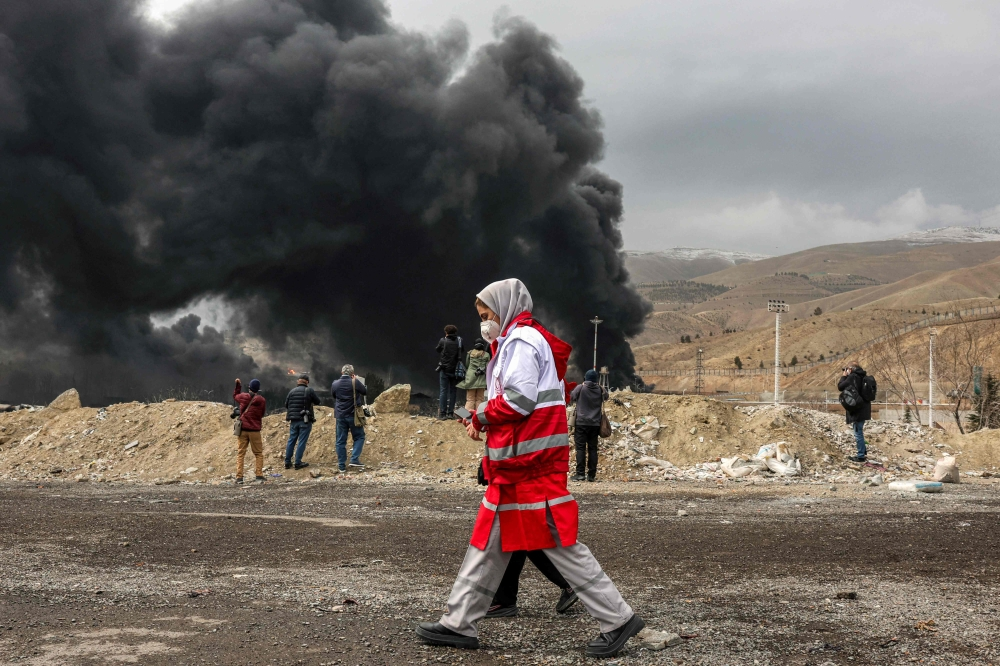
The White House announced in an official statement that the Trump administration is continuing its military operations against Iran , while simultaneously exploring new diplomatic options. This announcement comes after the revelation of preliminary talks with Tehran, amid reports of Pakistan's potential role as a mediator to bridge the gap between the two countries.
The roots of the tension and the history of military operations against Iran
The roots of tension between Washington and Tehran lie in decades of political and economic disputes, but military operations against Iran have become increasingly intense in recent times. Historically, the United States has relied on a policy of “maximum pressure,” which included crippling economic sanctions targeting vital sectors such as oil and banking, with the aim of curbing Iranian influence in the Middle East and limiting its nuclear and missile programs. As events have unfolded, the US strategy has shifted from mere economic sanctions to the threat of direct military force, as exemplified by the launch of Operation Epic Rage, which aimed to cripple Iran’s military capabilities.
In this context, White House spokeswoman Carolyn Leavitt told AFP, “While President Trump and his negotiating team explore these new diplomatic possibilities, Operation Epic Rage continues unabated.” She emphasized that the goal of this two-pronged approach is to achieve the strategic objectives set by the Commander-in-Chief and the Department of Defense (the Pentagon).
Regional and international repercussions of the escalation policy
This dual American stance carries significant weight and far-reaching implications at the local, regional, and international levels. Regionally, the continued military escalation raises concerns about a full-blown confrontation that could jeopardize maritime security in the Arabian Gulf and the Strait of Hormuz, through which a large portion of the world's energy supplies pass. Internationally, these developments place Washington's allies and partners in a delicate position as they strive to prevent a further deterioration of global security and economic conditions. At the same time, some observers believe that military pressure may compel Tehran to make substantial concessions at the negotiating table.
Escalation in order to de-escalate and end the conflict
On the other hand, striking statements emerged from US Treasury Secretary Scott Bisent, who indicated that the United States might have to escalate its attacks and operations to ensure an end to the state of war. In response to a question on NBC's "Meet the Press" about whether the US administration was seeking to end the war or escalate it, Bisent clarified that "the two are not mutually exclusive." He added, explaining the current US strategy: "Sometimes you have to escalate in order to de-escalate later," emphasizing that "this is the only language the Iranians understand." These statements reflect a firm conviction among decision-makers in Washington that military force is the most effective tool for paving the way toward a sustainable diplomatic settlement.