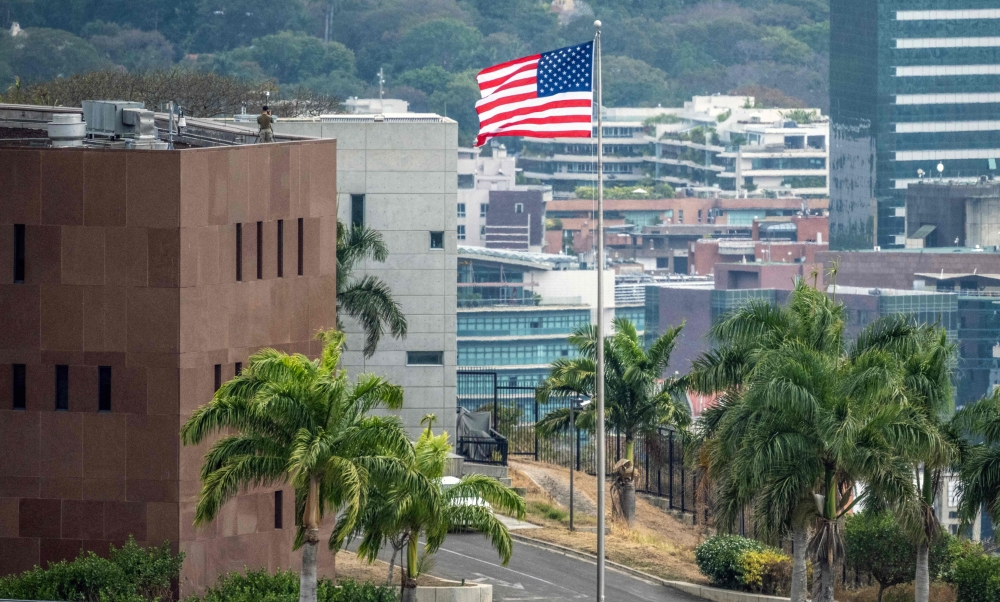
In a dramatic development that shook the international political scene, US President Donald Trump announced on Saturday that US forces had successfully carried out a large-scale military operation inside Venezuelan territory, resulting in the capture of President Nicolás Maduro and his wife, Cilia Flores. The operation coincided with a series of powerful explosions that rocked the capital, Caracas, and its suburbs at midnight, indicating the use of significant firepower to secure the target.
Details of the operation and Maduro's fate
President Trump revealed that the operation involved extracting Maduro and his wife from their hiding place via military helicopters, which transported them to a U.S. Navy ship, prior to their transfer to New York. Trump confirmed that the detained Venezuelan president would face federal charges in U.S. courts, a move described by Christopher Landau, the U.S. Deputy Secretary of State, as a "new dawn" for Venezuela.
Historical context and strained relations
This development is not a coincidence; it is the culmination of years of escalating tension between Washington and Caracas. The United States has long considered the Maduro regime illegitimate, accusing it of election fraud and repressing the opposition. The prosecution stems from previous indictments by the US Department of Justice against Maduro and his top aides for involvement in "narco-terrorism," with Washington offering substantial financial rewards for information leading to his arrest. This action represents an unprecedented escalation of the "maximum pressure" policy pursued by successive US administrations.
International reactions: A sharp global divide
The attack sparked a wave of mixed reactions reflecting global geopolitical divisions:
- Latin America: Anger and concern prevailed, with Brazil, Mexico, and Colombia strongly condemning the attack as a violation of sovereignty. Colombian President Gustavo Petro called for emergency meetings of international organizations, while his country mobilized its forces along the border.
- The Eastern Bloc: Russia and China described the operation as "armed aggression" and a flagrant violation of international law, warning of serious repercussions for world peace.
- Europe: The European stance was cautious, with Britain and the European Union calling for respect for international law, while Spain offered to mediate. Italy, on the other hand, considered intervention potentially legitimate in the face of "hybrid regimes" linked to drug trafficking.
Expected repercussions: locally and regionally
This event is expected to cast a heavy shadow on the global landscape:
- Domestically: Venezuela faces the risk of sliding into security chaos or civil war amid the presidential vacuum, despite calls from the opposition, led by Maria Corina Machado, for a peaceful handover of power.
- Economically: These developments could lead to sharp fluctuations in global oil markets, given Venezuela's enormous oil reserves, especially with reports indicating that Trump has allowed US oil companies to go there.
- Regionally: The attack threatens to destabilize Latin America, with fears of new waves of migration and strained diplomatic relations between the United States and left-wing countries on the continent.