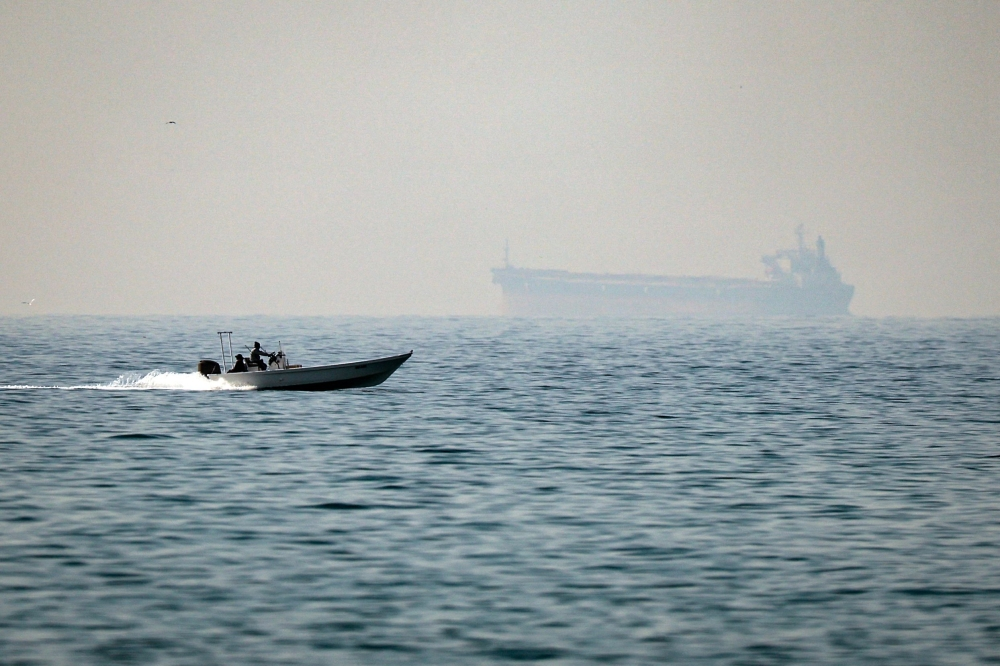
The US military announced in an official statement that Tehran's ability to threaten the Strait of Hormuz has been significantly diminished following a targeted military operation this week that struck a secret underground Iranian facility. This fortified facility was used to store an arsenal of cruise missiles and other advanced weapons that pose a direct threat to strategic waterways.
In detailing the operation, Admiral Brad Cooper, commander of U.S. Central Command in the Middle East, explained in a video posted on the X platform that U.S. forces not only destroyed the main facility but also targeted intelligence support sites and advanced missile-guided radar systems used to monitor and track the movements of commercial and military vessels. Central Command had announced last Tuesday that it had carried out this precision strike on the Iranian coast using specialized bunker-buster bombs, each weighing over two tons, designed specifically to penetrate and destroy deep underground targets.
The historical roots of attempts to threaten the Strait of Hormuz
The Strait of Hormuz is one of the world's most strategically important waterways, through which approximately one-fifth of the world's daily oil supply passes. Historically, Iran has used the threat of threatening the Strait of Hormuz as a tool of political and military pressure in the face of international sanctions and tensions with the West, particularly since the Iran-Iraq War in the 1980s, known as the Tanker War. Since then, Tehran has consistently sought to bolster its arsenal of anti-ship missiles and fast attack craft, aiming to possess the capability to close the strait or disrupt navigation when necessary. This has made the region a constant flashpoint requiring a significant international military presence to guarantee freedom of navigation.
Neutralizing anti-ship missiles and securing navigation
In connection with the recent operation, Admiral Cooper explained that the Iranian regime had been using this fortified underground facility to secretly store anti-ship cruise missiles, mobile missile launchers, and other military equipment that posed a serious threat to international navigation. Cooper added unequivocally: “Iran’s ability to threaten freedom of navigation in and around the Strait of Hormuz has been diminished as a result of this strike, and we will not cease pursuing these destabilizing targets in the region.”.
Regional and international repercussions of declining Iranian capabilities
This military development is of paramount importance and has far-reaching implications on several levels. Regionally, the destruction of these capabilities sends a reassuring message to the Gulf states, which rely heavily on this vital waterway for their energy exports, thus contributing to a reduction in security concerns in the region. Internationally, securing the Strait ensures the stability of global energy prices and prevents economic shocks that could result from any disruption to supply chains. This event also underscores the commitment of the United States and its allies to maintaining freedom of navigation and deterring any powers seeking to impose their military dominance over critical international waterways.
Concurrently with these developments on the ground, US President Donald Trump announced for the first time on Friday that Washington is currently considering a gradual reduction of its military operations in the Middle East against the Iranian regime. These remarks came just hours after he completely ruled out the possibility of reaching a ceasefire agreement with Tehran, indicating a US strategy based on precise, targeted strikes to contain threats.