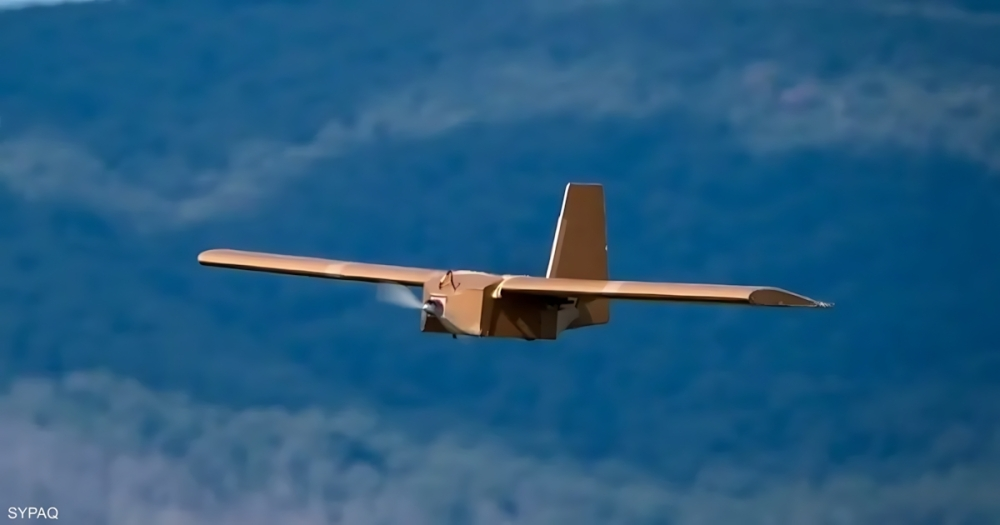
In a significant security development on the southern border of the United States, a US official announced on Wednesday that drones belonging to Mexican drug cartels had violated US airspace, prompting a US military response. The official, who spoke on condition of anonymity, confirmed that US forces "took action to disrupt the drones," an incident that led to the temporary and sudden closure of El Paso International Airport in Texas before it was reopened.
Historical context: The evolution of cartels' use of technology
The use of drones by Mexican drug cartels is not a new phenomenon; it is part of a technological arms race that has been ongoing for years. Initially, these aircraft were used for surveillance and reconnaissance missions to monitor the movements of security forces and rival groups on both sides of the border. However, with time and technological advancements, drones have become a key tool in drug trafficking operations, used to transport small but high-value quantities of narcotics across the border, bypassing ground patrols and traditional surveillance equipment. Even more alarming is the conversion of these aircraft into offensive weapons. Cartels like the Jalisco New Generation Cartel (CJNG) have modified commercial drones to carry and drop explosive devices, using them in their bloody wars against rival cartels and Mexican security forces.
The importance of the incident and its potential effects
The incursion of these drones into US airspace and the military's response represent a dangerous escalation that goes beyond mere smuggling to pose a direct challenge to US sovereignty and national security. The significance of this event lies in several aspects:
- At the local level, the incident raises serious concerns among residents of border areas like El Paso, highlighting the extent of cartel influence and their ability to operate within the United States. The disruption of a vital civilian facility like an international airport also demonstrates the direct impact of this threat on the lives of citizens and the local economy.
- At the regional level, this development increases the strain on bilateral relations between the United States and Mexico. While Washington demands that Mexico do more to curb the cartels, the Mexican government finds itself confronting criminal organizations with paramilitary capabilities. This incident could lead to enhanced security and intelligence cooperation between the two countries, or it could trigger new diplomatic tensions.
- At the international level, the incident demonstrates how transnational criminal organizations have become more sophisticated and audacious, employing tactics once the preserve of armies and terrorist groups. This presents a new challenge to the international community in how to counter unconventional threats that do not recognize national borders.
In conclusion, the confrontation with Mexican cartels is no longer just a war on drugs, but has turned into a complex conflict in which crime is intertwined with advanced technology, forcing the United States and its allies to reassess their security strategies to keep pace with this evolving and growing threat.