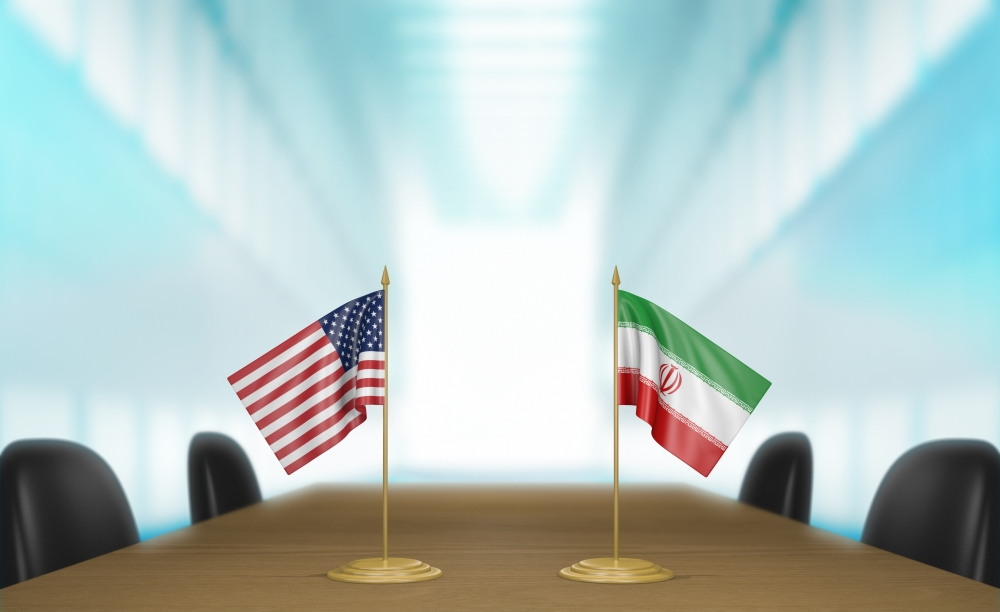
The Swiss Foreign Ministry announced that Geneva will host a new round of talks between the United States and Iran next week, under the auspices of the Sultanate of Oman. This announcement underscores the ongoing diplomatic efforts aimed at containing escalating tensions in the Middle East, which are centered on the Iranian nuclear program and Tehran's regional activities.
A spokesperson for the Swiss Foreign Ministry affirmed Switzerland's continued readiness to offer its "good offices" to facilitate dialogue between the two sides, noting that "Switzerland welcomes and supports these talks." Switzerland plays a unique diplomatic role, representing US interests in Iran since the severing of diplomatic relations between Washington and Tehran following the 1979 Islamic Revolution, making it a trusted and impartial channel of communication.
Historical context and the role of Omani mediation
This round of talks follows up on previous discussions hosted by the Omani capital, Muscat, earlier this month. The Sultanate of Oman has a long and successful history of playing the role of a neutral and trusted mediator between Iran and the West, particularly the United States. Muscat was the venue for the initial secret talks that paved the way for the landmark nuclear agreement (the Joint Comprehensive Plan of Action – JCPOA) in 2015. Since the United States unilaterally withdrew from the agreement in 2018 under former President Donald Trump, and subsequently reimposed sanctions, international and regional actors have been seeking a new formula to prevent the region from sliding into a full-blown military confrontation.
The importance of the talks and their expected impact
These talks are of exceptional importance given the current circumstances. Regionally, they coincide with escalating tensions in the region stemming from the war in Gaza, attacks by Iranian-backed groups in Yemen, Iraq, and Syria, and threats to international shipping in the Red Sea and the Strait of Hormuz. These meetings, described as “indirect,” aim to establish mechanisms for de-escalation and to prevent military clashes that could spiral out of control.
Internationally, the greatest concern revolves around the progress of Iran’s nuclear program. Reports from the International Atomic Energy Agency indicate that Tehran has increased its uranium enrichment levels to near-weapon-grade levels. Therefore, the Biden administration is pursuing diplomatic channels to curb the nuclear program in exchange for understandings that may include limited sanctions relief or the release of frozen Iranian assets. Even partial success in these diplomatic efforts would send a message of stability to global energy markets and reduce the likelihood of a wider conflict that could have disastrous consequences for the international economy and security.