Announcement of a new strategic economic partnership
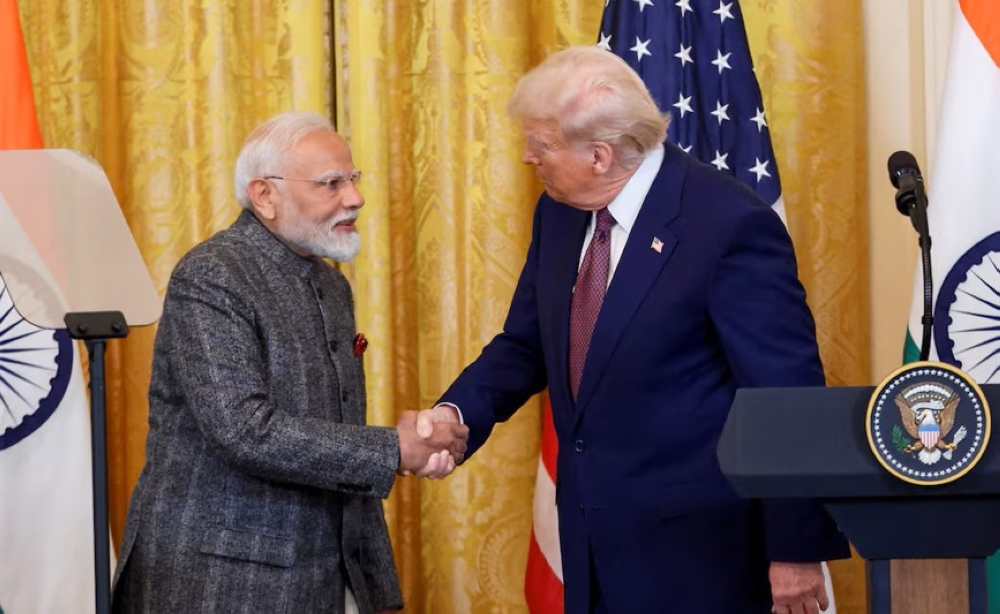
In a move that could reshape trade relations between two of the world's largest economies, former US President Donald Trump announced on Monday a major trade deal with India. The announcement followed a phone call with Indian Prime Minister Narendra Modi, during which key provisions aimed at boosting trade and resolving outstanding customs disputes between the two countries were agreed upon.
According to what Trump posted on his Truth Social platform, the agreement stipulates India's commitment to purchasing more than $500 billion worth of American goods. The agreement also includes New Delhi's pledge to cease purchasing Russian oil and shift towards other energy sources, primarily the United States, with the possibility of importing oil from Venezuela as an additional alternative.
The historical context of strained trade relations
This agreement follows a period of trade tensions between Washington and New Delhi, which escalated during Trump’s first term. In 2018, his administration imposed tariffs on steel and aluminum imports from several countries, including India, as part of his “America First” policy. India retaliated with tariffs on a number of American products. In 2019, the United States also revoked trade privileges granted to India under the Generalized System of Preferences (GSP), impacting billions of dollars in Indian exports. Therefore, if fully implemented, the new agreement represents a significant shift from previous protectionist trade policies and the beginning of a new era of cooperation.
The importance of the agreement and its expected impact
This agreement holds significant strategic and economic importance for both countries. For the United States, it will help reduce its trade deficit with India and boost its exports, potentially creating thousands of jobs in the industrial and energy sectors. It also strengthens Washington's position in the Indo-Pacific region and reinforces its alliances to counter China's growing influence.
For India, the agreement provides better access for its products to the world's largest consumer market, especially with the reduction of US tariffs from 25% to 18% on Indian imports. Furthermore, diversifying energy sources away from Russia aligns with Western pressure and brings New Delhi closer to the Western camp. Prime Minister Modi welcomed the agreement via the X platform, describing it as a step that benefits the people of both countries and opens up tremendous opportunities for joint cooperation.