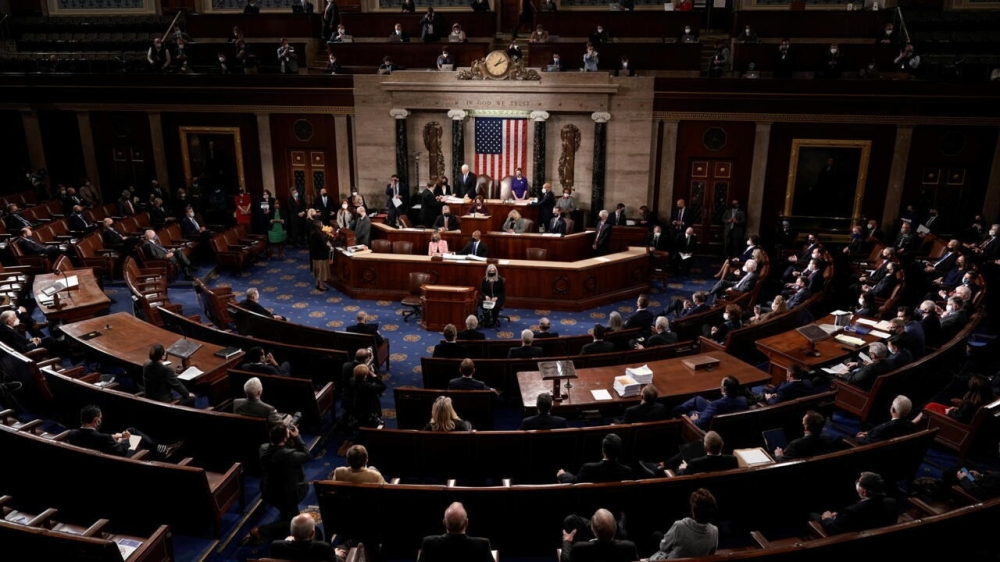
In a move reflecting a clear divergence in strategic visions between the legislative branch and the White House, the US House of Representatives passed the National Defense Authorization Act (NDAA) for fiscal year 2026. The bill includes explicit provisions aimed at restricting the ability of the US administration to reduce its military presence in Europe, in direct response to recent signals and directions issued by President Donald Trump.
Budget details and the crucial vote
The massive bill, exceeding 3,000 pages, received broad bipartisan support, passing by a vote of 312 to 112. The current version recommends a total defense budget of over $900 billion, a $5 billion increase from the previous year, reflecting lawmakers' desire to bolster U.S. defense capabilities amid global geopolitical tensions.
Strengthening the American presence in Europe
The clause concerning US forces in Europe is one of the most significant points of contention with the presidential vision. The new legislation explicitly prohibits the Department of Defense (Pentagon) from reducing the number of US troops deployed in Europe below 76,000. The law requires the administration to provide convincing security and strategic justifications to Congress before taking any steps to reduce this number, effectively creating a legislative veto against any abrupt withdrawal.
Context of the dispute: the "America First" strategy
This legislative move comes just days after the Trump administration unveiled a new national security strategy that calls for shifting America’s strategic focus to its regional neighborhood (the Western Hemisphere). The strategy document included pessimistic language toward Europe, warning of what it termed the “collapse of European civilization,” which sparked a wave of criticism and concerns among European allies about the future of the American commitment to NATO security.
Strategic and historical importance
This move by the House of Representatives carries significant weight that extends far beyond the financial dimension. The American military presence in Europe, which has persisted since the end of World War II, is a cornerstone of Western deterrence strategy and the backbone of NATO. The military establishment and Congress view the American bases in Germany, Italy, and Poland not only as a line of defense but also as vital logistical hubs for operations in the Middle East and Africa. The House vote is interpreted as a message of reassurance to allies that American institutions remain committed to transatlantic collective security despite the fluctuations in executive policy.
The bill is scheduled to be referred to the Senate for discussion and voting, where it is expected to undergo further rounds of negotiations before its final approval and submission to the President for his signature before the end of this year, to become an effective law that sets the course of US defense policy for 2026.