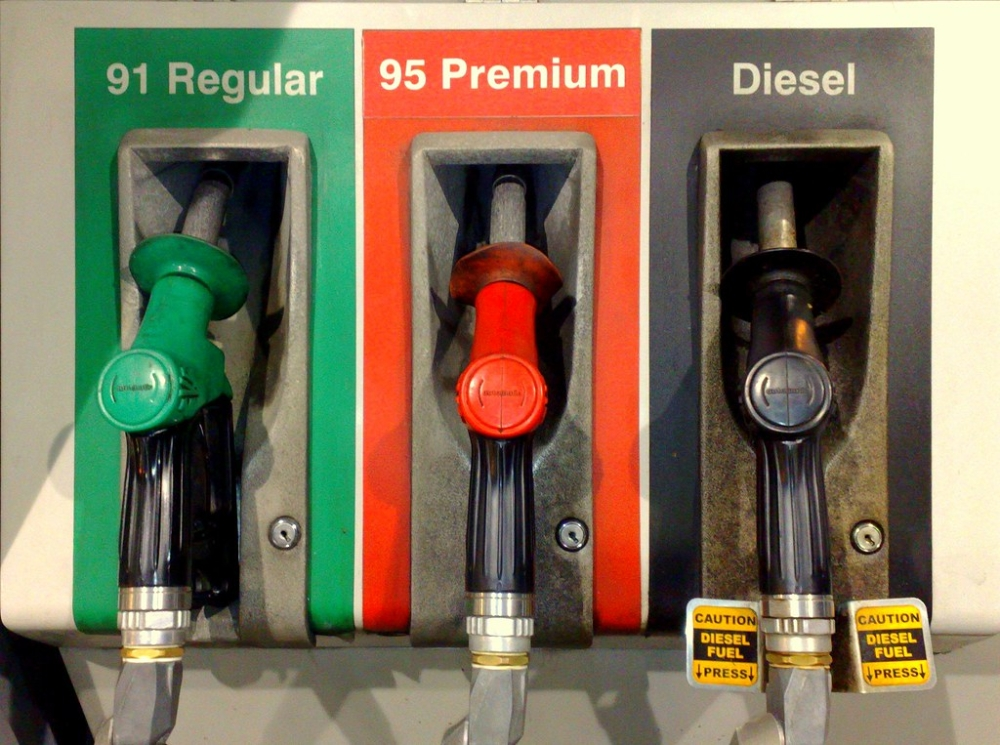
Fuel prices in the US have seen an unprecedented surge, with a significant increase that has alarmed both consumers and financial markets. According to the latest fuel price data, gasoline prices in the US have risen by 27%, while diesel has climbed by 34% since the escalation of military and geopolitical tensions began last month.
Details of rising fuel prices in America and their direct impact
According to the American Automobile Association (AAA), the average price of a gallon of gasoline in the United States reached approximately $3.79, while diesel broke the $5 barrier, reaching $5.044, its highest level in three years. The severity of this increase becomes clear when compared to previous prices; just a year ago, gasoline was priced at $3.078 and diesel at $3.592. Even a month ago, prices were relatively stable at $2.917 for gasoline and $3.651 for diesel. This rapid change is placing immense pressure on the transportation sector and supply chains that rely heavily on diesel fuel.
The historical roots of tensions and their impact on energy markets
This surge didn't occur in a vacuum; it's a direct result of escalating geopolitical tensions in the Middle East. Historically, energy markets have been highly sensitive to any conflicts in this vital region. The current crisis has been exacerbated by the recent tit-for-tat attacks and military escalation involving the United States, Israel, and Iran, coinciding with the stalled negotiations over Iran's nuclear program. These rapidly unfolding events, along with the targeting of key figures, have led Tehran to threaten to effectively close the Strait of Hormuz to ships linked to Washington and Tel Aviv. It's worth noting that the Strait of Hormuz is one of the world's most strategically important waterways, through which approximately 20% of global oil supplies pass, making any threat to navigation there a direct shock to the global economy.
Global and local economic repercussions of the price surge
These security threats were immediately reflected in global oil markets, with crude oil prices rising by more than 2% amid growing doubts about the ability of the US administration, led by Donald Trump, to form an effective international coalition to secure and protect oil tankers transiting the Strait of Hormuz. As a result, the international benchmark Brent crude jumped 2.35% to $102.56 a barrel, while US crude rose 2.22% to $95.58 a barrel.
Domestically, this continued rise is expected to trigger a new wave of inflation that will hit the prices of basic goods and services in the US market. Regionally and internationally, this crisis is redrawing the map of strategic alliances and pushing major energy-consuming nations to seek more sustainable and secure alternatives in an effort to reduce their dependence on conflict zones and ensure the stability of their economies.