In a move eagerly awaited by global markets, the US Federal Reserve on Wednesday to maintain its benchmark interest rate. This decision comes at a sensitive time as policymakers seek to curb high inflation amid mixed labor market indicators and escalating geopolitical tensions, including conflicts in the Middle East and US-Iranian tensions. The Federal Open Market Committee voted 11-1 to keep the federal funds rate unchanged in its target range of 3.5% to 3.75%.
The historical context of monetary tightening policies
This measure was not a spur-of-the-moment decision, but rather an extension of a series of stringent monetary policies initiated by the central bank to combat the highest levels of inflation the United States has seen in decades. Historically, the Federal Reserve has resorted to raising or maintaining high interest rates to reduce liquidity in the markets, thereby slowing the pace of spending and consumption, and consequently lowering prices. However, this policy carries the risk of slowing economic growth, placing policymakers in a position where they must carefully balance fighting inflation with avoiding recession.
Wall Street turns red
Global and local markets reacted differently to the official announcement of the interest rate decision. In the stock market , Wall Street saw a sharp decline across its major indices. The Dow Jones Industrial Average fell by approximately 750 points, reaching its lowest level since the beginning of the year. This decline followed new US economic data and statements from the Federal Reserve Chairman, which fueled concerns about the potential for continued high inflation.
Precious metals lose their luster in the face of the dollar's strength
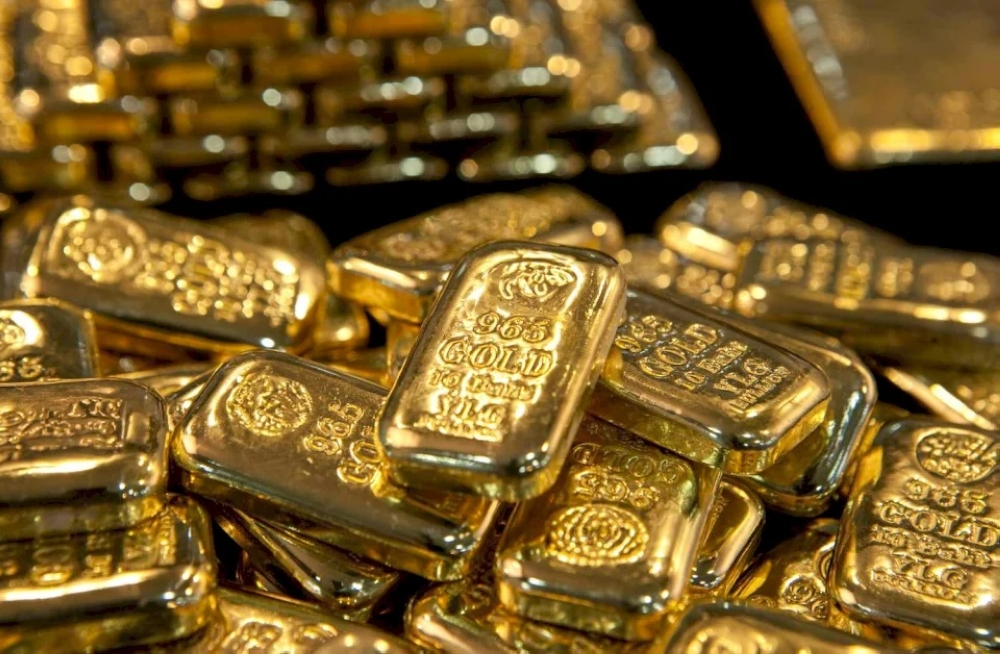
It is traditionally known that there is an inverse relationship between gold and interest rates. The precious metal tends to appreciate more in a low-interest-rate environment. Consequently, the spot price of gold fell by nearly 4% to $4,818 per ounce. Silver also declined, with the price of the white metal dropping by 5% to $75 per ounce. On the other hand, this decision boosted the US dollar index, reinforcing its status as a safe haven and making dollar-denominated gold more expensive for holders of other currencies.
Oil prices soar amid geopolitical tensions
In a related development, and contrary to the downward trend of most assets, oil prices jumped by 5%. This surge is attributed to escalating geopolitical tensions and concerns about a potential conflict with Iran, which threatens energy supplies. This has exacerbated fears of prolonged inflation due to soaring energy costs. Brent crude futures rose 5% to $108.56 a barrel, while US West Texas Intermediate crude climbed $2.17, or 2.3%, to $98.38.
Cryptocurrencies continue to bleed losses
Digital assets were not immune; cryptocurrencies , led by Bitcoin, came under heavy selling pressure. They fell 3.7% to $71,100, after nearly reaching $75,000 at the start of the session. This decline reflects the sensitivity of high-risk assets to monetary tightening.
Economic dimensions and expected impact of the US Federal Reserve's decision
The US Federal Reserve's decision carries significant implications that extend far beyond the United States to encompass the entire global economy. Domestically, maintaining high interest rates means continued high borrowing costs, which could slow the pace of economic expansion. Regionally and internationally, the strength of the dollar puts immense pressure on emerging market currencies, increasing their debt costs and raising their import bills. Furthermore, ongoing geopolitical tensions, coupled with tight monetary policies, create an uncertain economic environment, prompting investors to reassess their strategies.