The world’s attention is focused on Washington today, where high-level strategic talks are taking place between officials from the United States and the European Union, in an attempt to chart a new roadmap for securing supplies of rare metals and vital raw materials, and reducing near-total dependence on China in this strategic sector.
General context: A global race for future resources
These talks come amid escalating geopolitical tensions and a profound Western awareness of the fragility of global supply chains, a vulnerability starkly revealed by the COVID-19 pandemic. Critical raw materials, particularly rare earth elements (a group of 17 chemical elements), are no longer merely economic commodities but have become instruments of geopolitical influence. These metals are the lifeblood of advanced technology industries, playing a role in virtually everything from smartphones and computer screens to wind turbines, electric vehicles, and sophisticated defense systems such as Tomahawk missiles and F-35 fighter jets.
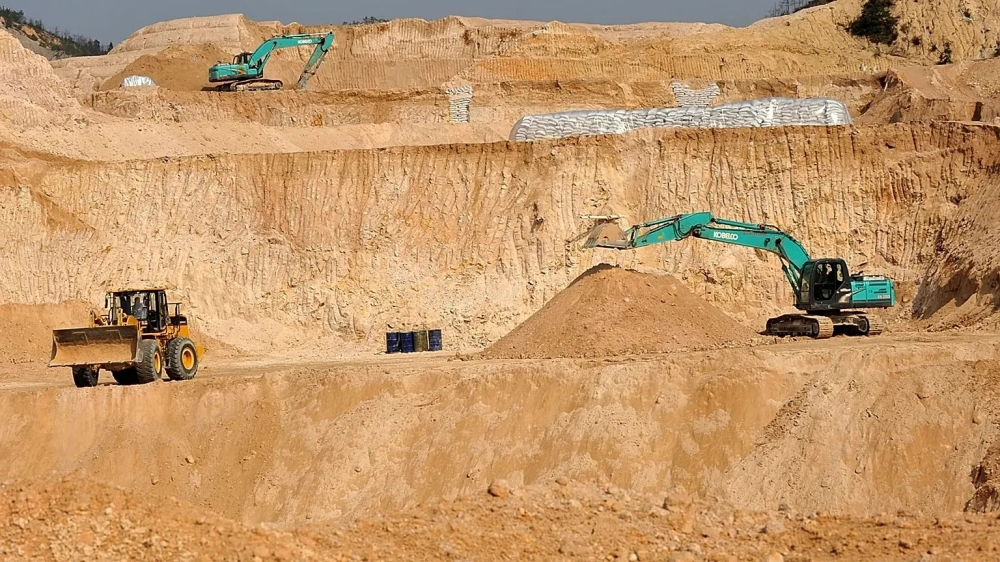
Historically, the United States was a leader in rare earth metal production, but since the 1980s, China has gradually come to dominate this market, benefiting from lower production and labor costs and less stringent environmental regulations. Today, China not only controls the majority of mining operations but also virtually monopolizes the complex processing and refining stages, giving it near-total control over the global market.
The importance of the event and its expected impact
The meeting aims to move beyond diagnosis and establish joint working mechanisms. The European Union and the United States seek to coordinate their strategies to avoid fierce competition for resources in mineral-rich third countries such as Australia, Canada, and countries in Africa and Latin America. Instead of competing, the two sides aspire to establish joint investment partnerships in sustainable mining and refining projects, and to develop recycling technologies to create a circular economy for these valuable materials.
Internationally, this rapprochement represents a pivotal step toward forming a “rare earth alliance” among major industrialized democracies, including the United States and the European Union, as well as countries like Japan, Canada, and Australia. Such an alliance would create a counterweight to Chinese dominance, enhance the stability of global markets, and ensure that these resources are not used as a political weapon, as happened in 2010 when China restricted its exports to Japan during a diplomatic dispute.
Regionally, the European Union seeks, through this partnership, to bolster its Critical Raw Materials Act, which aims to strengthen the bloc’s mining, processing, and recycling capabilities. For the United States, this move aligns with the objectives of the Inflation Reduction Act and the Chip Act, which aim to relocate critical industries and enhance national security. The success of these negotiations will not only secure supply chains but also advance the green agendas of both sides, as the transition to clean energy relies heavily on the availability of these minerals.