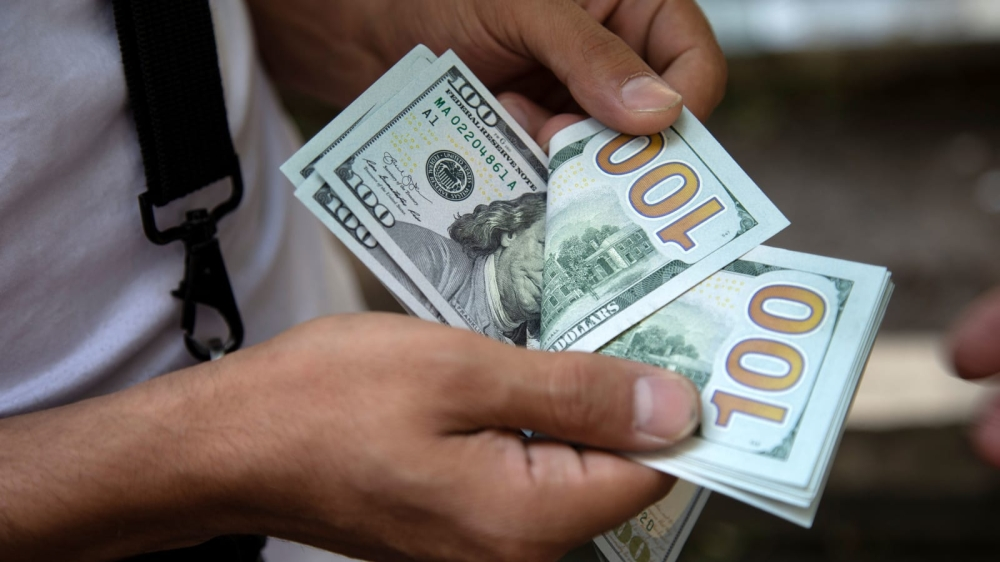
The US dollar index saw a notable rise today, recovering from its lowest level in four years, following decisive remarks from US Treasury Secretary Scott Bisent, who reaffirmed the United States' commitment to its traditional "strong dollar" policy. This rise halted a recent downward trend in the greenback.
The dollar index, which measures the performance of the US currency against a basket of six major currencies (the euro, Japanese yen, British pound, Canadian dollar, Swedish krona, and Swiss franc), rose 0.5% to 96.391 points. This rise comes after the index had fallen yesterday to 95.86 points, its lowest level since February 2022.
The general context of the dollar's decline
This recovery comes after a period of significant pressure on the dollar, with the index falling by about 2% since the beginning of the year, following a sharp decline of 9.4% last year. This decline in its value is attributed to several global economic factors, most notably the expansionary monetary policies pursued by the Federal Reserve (the US central bank) to counter the economic fallout from the coronavirus pandemic. These policies included low interest rates and massive asset purchase programs, which reduced the dollar's attractiveness as an investment asset.
The importance of a "strong dollar" policy
The “strong dollar” policy is a long-standing cornerstone of US monetary policy, intended to reassure international markets and investors that the United States will not deliberately devalue its currency to gain a competitive trade advantage. The Treasury Secretary emphasized that Washington pursues a policy that supports sound economic fundamentals, categorically denying any US intervention in foreign exchange markets aimed at influencing the value of the Japanese yen or any other currency. This policy reflects the US administration’s confidence in the strength of its economy, as a strong dollar helps attract foreign capital and keeps borrowing costs low for the US government and businesses.
Local and international impacts
Fluctuations in the dollar's exchange rate have far-reaching effects. Domestically, a strong dollar helps curb inflation by making imported goods cheaper for American consumers. However, it also hurts U.S. exports by making them more expensive for foreign buyers, potentially impacting the trade balance. Internationally, a strong dollar increases the cost of dollar-denominated commodities, such as oil and wheat, for importing countries. It also increases the burden of dollar-denominated debt on emerging markets, potentially causing financial strain in those economies. Other major currencies also saw notable movements during this period, with the euro surpassing $1.20 for the first time since 2021, the pound sterling reaching its highest level in nearly four and a half years, and the yen approaching its strongest monthly performance since April.