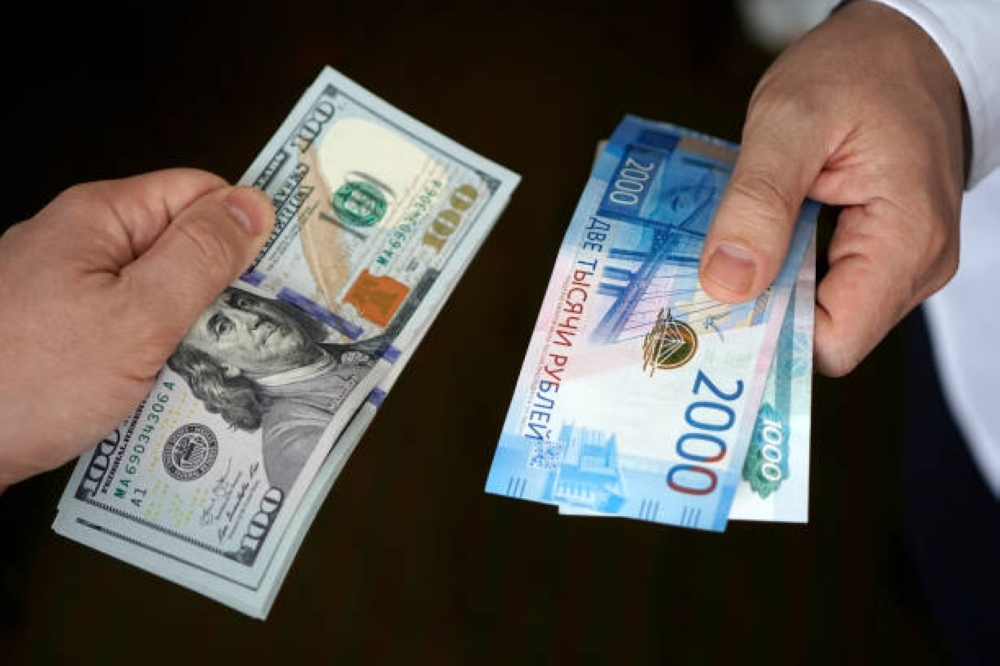
The US dollar is on track for its biggest weekly decline since the start of the year, reflecting a cautious mood among investors and continued volatility in global financial markets. This decline comes as markets await crucial monetary policy decisions from major central banks, adding a layer of uncertainty and dampening risk appetite among traders.
General context and reasons for the decline:
The dollar index, which measures the greenback against a basket of six major currencies (the euro, Japanese yen, British pound, Canadian dollar, Swedish krona, and Swiss franc), saw a notable decline of about 1% during the week. This weak performance is primarily attributed to a series of weaker-than-expected US economic data, which has fueled speculation that the Federal Reserve (the US central bank) may begin a cycle of monetary easing and interest rate cuts sooner than previously anticipated. Historically, the Fed's monetary tightening policy over the past two years to curb inflation has significantly boosted the dollar, but with inflation slowing and signs of slowing growth emerging, markets have begun pricing in the opposite scenario.
Performance of other major currencies:
With the dollar weakening, other major currencies found room to rise. The euro held near multi-week highs, supported by comments from European Central Bank members indicating caution about cutting interest rates quickly. Sterling also maintained its gains near a two-week high, benefiting from domestic economic data and expectations of the Bank of England's monetary policy. On the other hand, the Japanese yen remains under pressure as investors await the Bank of Japan's monetary policy decision. Despite a historic rate hike earlier, the significant interest rate differential between Japan and the United States continues to weaken the yen, which is on track for another weekly decline.
Importance and expected effects:
The decline in the dollar's value has broad implications both domestically and internationally. Domestically , a weaker dollar can enhance the competitiveness of US exports, making them cheaper for foreign buyers, which could support the manufacturing sector and improve the trade balance. Internationally , a weaker dollar is good news for many economies, particularly emerging markets with dollar-denominated debt, as it reduces the burden of servicing that debt. Furthermore, commodity prices, such as oil and gold, which are priced globally in dollars, tend to rise when the dollar weakens, as they become less expensive for holders of other currencies. This shift in the dollar's strength is reshaping global capital flows and may encourage investors to seek opportunities in markets outside the United States.