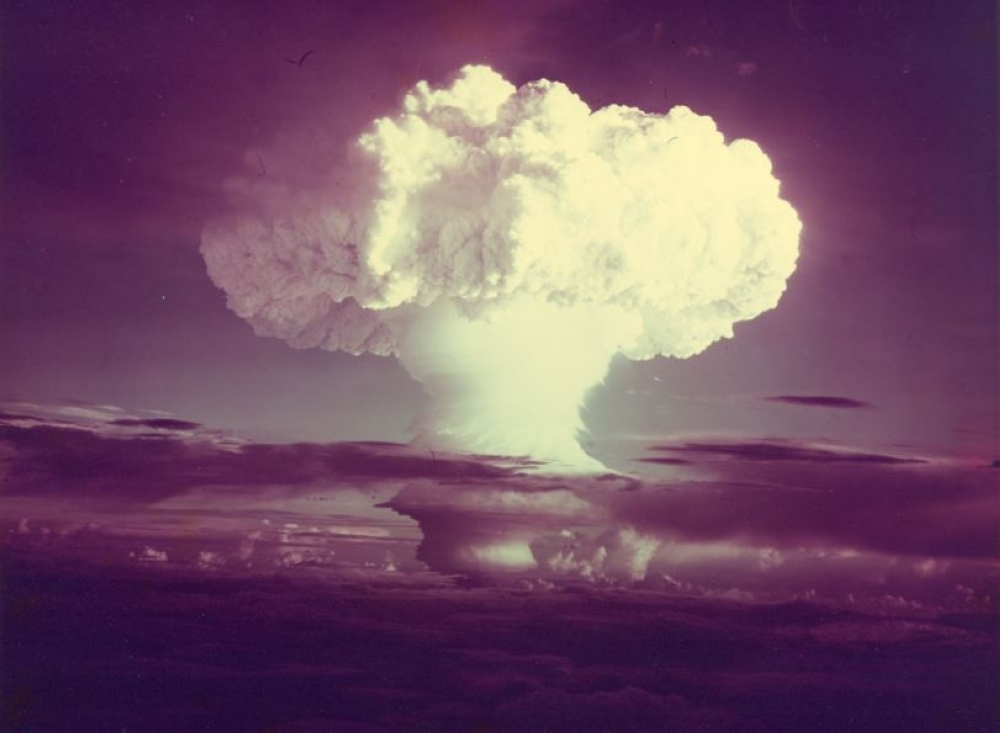
In a move that could reshape the global balance of power and end decades of nuclear restraint, a senior US official announced that the United States is prepared to resume low-yield nuclear testing. This announcement effectively ends the self-imposed moratorium Washington has maintained since 1992 and opens the door to a new arms race amid escalating tensions with Russia and China.
Historical background: From the Cold War to voluntary suspension
The world entered the nuclear age with the first successful U.S. nuclear test (Project Trinity) in 1945. Over the following decades, nuclear powers, primarily the United States and the Soviet Union, conducted more than 2,000 nuclear tests, both atmospheric and underground, to develop and improve their arsenals. As awareness of the catastrophic environmental and health risks grew, along with a desire to curb the arms race, international efforts to limit these tests began to take shape. These efforts culminated in the signing of the Comprehensive Nuclear-Test-Ban Treaty (CTBT) in 1996. Although the United States was a signatory to the treaty, the U.S. Senate never ratified it, thus maintaining its commitment to a moratorium on nuclear weapons. The last U.S. nuclear test was conducted on September 23, 1992, at the Nevada Test Site.
The importance of the event and its expected impact
The US threat to resume testing comes in a complex geopolitical context. Several arms control treaties that formed the cornerstone of global stability during and after the Cold War, such as the Intermediate-Range Nuclear Forces (INF) Treaty, have collapsed. The fate of New START, the last major agreement between Washington and Moscow to limit nuclear warheads, is also uncertain. Christopher Ford, then US Assistant Secretary of State for International Security and Nonproliferation, stated that President Donald Trump was serious about his call for a new trilateral agreement that would include China, which Washington accuses of expanding its nuclear arsenal and conducting secret, low-yield tests.
Potential international repercussions
A resumption of U.S. nuclear testing, even on a limited scale, would send a powerful message to the world and could have serious consequences. Internationally, it would likely prompt Russia and China to retaliate by resuming their own testing programs, potentially triggering a three-way nuclear arms race. It would also significantly undermine the global nonproliferation regime and could encourage other countries to pursue nuclear weapons, arguing that major powers are no longer adhering to international norms. Ford explained that any future tests would be conducted on a "comparable basis" with adversaries, noting that the final decision rests with the president. However, he emphasized that it would not be a return to the massive testing of the 1950s, but rather aimed at ensuring the effectiveness and reliability of U.S. nuclear deterrence against evolving threats.