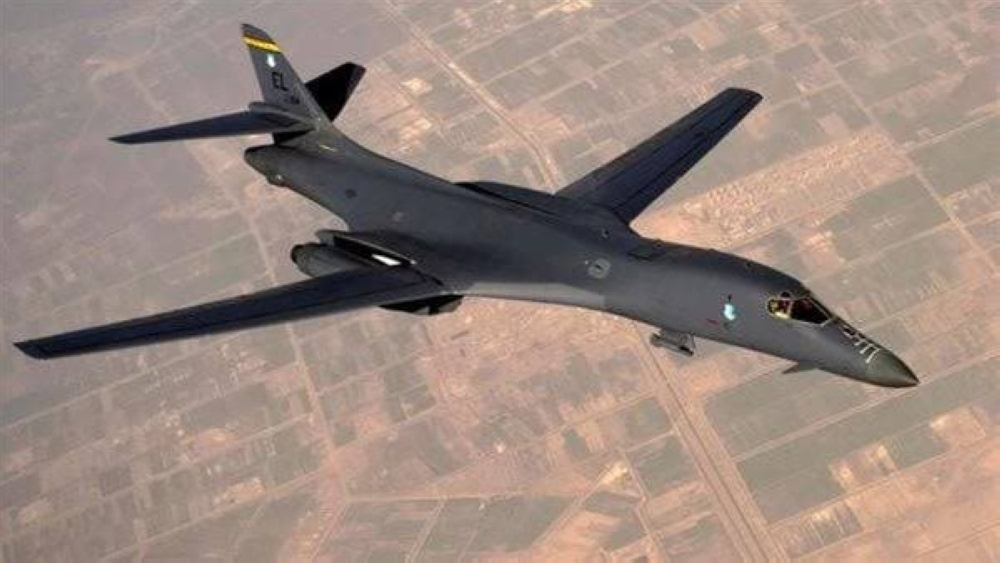
The US Central Command (CENTCOM) officially announced that it had conducted airstrikes against Iran using B-1 strategic bombers, a significant military development indicating a major escalation in the region. This announcement coincided with statements by US President Donald Trump, who asserted that US forces had successfully inflicted devastating blows on Tehran's naval and command capabilities.
Details of the airstrikes on Iran and the reported losses
According to reports, the US strikes targeted highly sensitive sites. President Trump, in a televised address, asserted that US forces had sunk 10 Iranian warships. In his speech, Trump added decisively, "We eliminated Iran's leadership in an hour," emphasizing the speed and efficiency of the military operation.
For its part, the US Central Command explained in a statement on Sunday that the military operations, which included joint US-Israeli strikes, resulted in the complete destruction of the Iranian Revolutionary Guard Corps' command headquarters. The Command justified these military operations via the "X" platform by citing the Revolutionary Guard's historical record, asserting that it is responsible for the deaths of more than a thousand American citizens over the past 47 years.
The strategic importance of using B-1 bombers
The use of B-1 Lancer bombers in this operation sends a powerful strategic message that goes beyond mere tactical action. These bombers are known for their exceptional ability to carry massive amounts of munitions, fly long distances, and reach supersonic speeds. The deployment of this aircraft type in airstrikes against Iran reflects Washington's desire to demonstrate its capacity to reach deep and fortified targets, delivering intense and precise strikes without the need for a direct ground presence, thus altering the traditional balance of deterrence.
Historical context and escalating tension
These events cannot be separated from the long historical context of strained relations between Washington and Tehran. The American reference to "47 years" recalls the beginnings of the tension since 1979. Throughout the past decades, the region has witnessed proxy wars and naval skirmishes in the Gulf waters, but the direct targeting of the Revolutionary Guard's headquarters and the sinking of naval vessels represents a qualitative shift from indirect conflict to an outright military confrontation targeting key military infrastructure.
Expected regional and international repercussions
This escalation is expected to have far-reaching effects at both the regional and international levels. Regionally, the destruction of Iranian naval capabilities could lead to a temporary shift in the balance of maritime security in vital waterways. Internationally, the direct involvement of major powers in military operations could cast a shadow over global energy markets and exacerbate political polarization, presenting the international community with new challenges in containing the situation and preventing the region from sliding into a full-blown war.