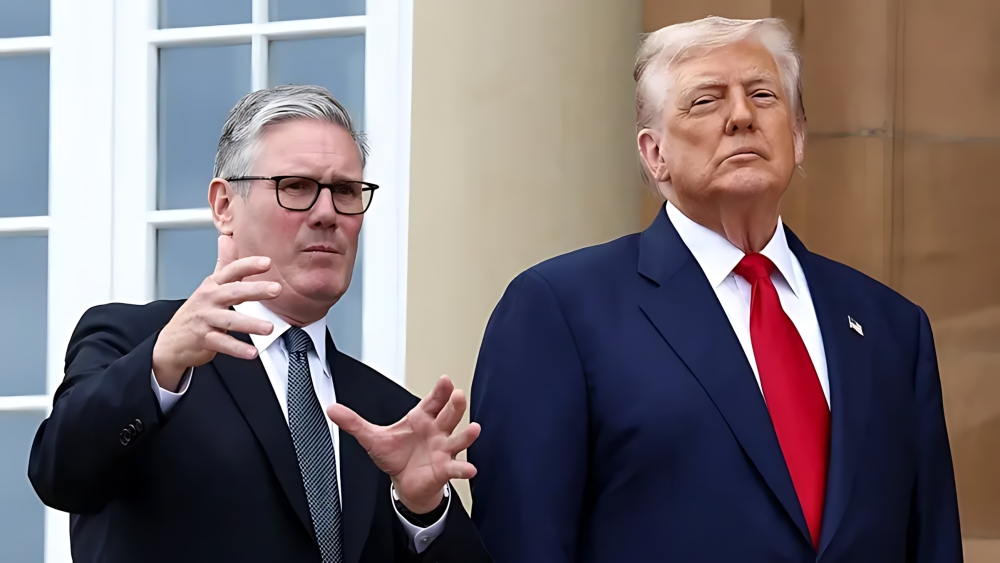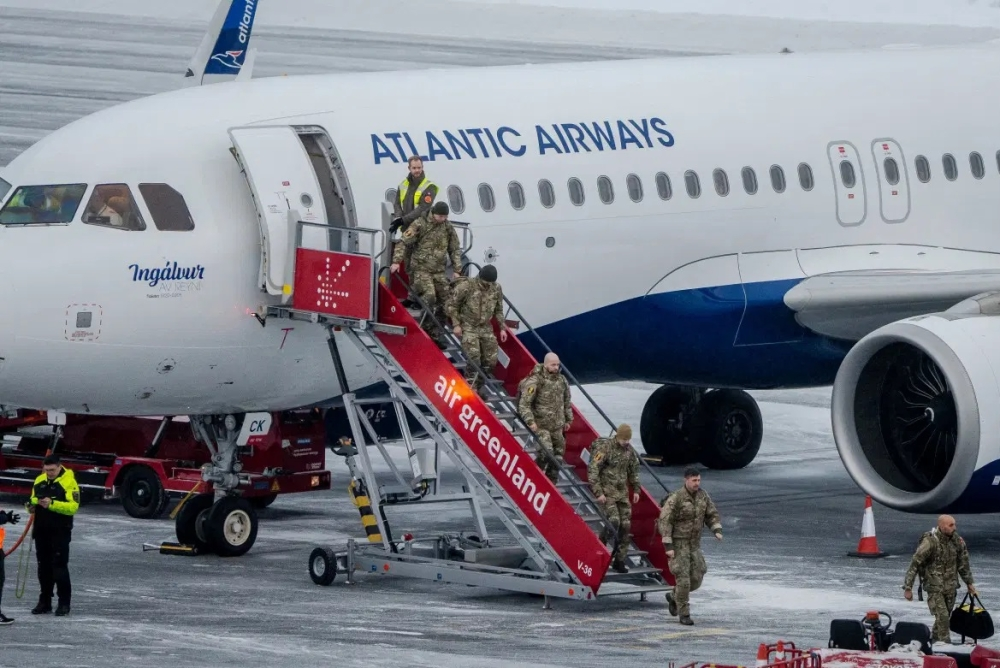
The North American Aerospace Defense Command (NORAD) announced the arrival of US and Canadian military aircraft in Greenland, describing it as a long-planned and scheduled activity. This military deployment comes at a highly sensitive time, amid strained diplomatic relations between Washington and Copenhagen, fueled by renewed efforts by US President Donald Trump to assert control over the self-governing territory under the Danish crown.
Military coordination amid a diplomatic storm
The Combined Joint Task Force confirmed in an official statement that these operations are being conducted in full coordination with the Kingdom of Denmark and the local government of Greenland, noting that all forces are operating with the necessary diplomatic authorizations. According to the statement, these movements aim to enhance "defense cooperation between the United States, Canada, and the Kingdom of Denmark" through continuous, spaced-out operations to defend North American airspace.
The strategic importance of Greenland: historical background
The US military presence in Greenland is not new; defense cooperation between the two countries dates back to the 1951 Defense Agreement, which allowed the United States to establish Thule Air Base (now known as Petavik Space Base). This base is the northernmost US military installation and plays a vital role in ballistic missile early warning and space surveillance, making the island a cornerstone of US national security from the Cold War era to the present day.
Dimensions of the geopolitical conflict and its international impact
These maneuvers take on added significance in light of escalating international competition in the Arctic. With melting ice and the opening of new shipping lanes, the region has become an arena for strategic rivalry among major powers, particularly Russia, China, and the United States. Analysts believe that the increased Western military presence in Greenland is not merely a routine exercise, but rather a reaffirmation of NATO's commitment to protecting the alliance's northern flank and ensuring that no single power gains exclusive control over the region's vast natural resources and strategic waterways.
Trump's pressure and the European position
On the political front, President Trump's insistence on "acquiring" Greenland is causing widespread concern in Europe. Tensions escalated after Trump threatened to impose tariffs on European countries that opposed his ambitions, prompting Denmark to take steps to strengthen its military presence and exercises in the Arctic and North Atlantic, in coordination with its NATO allies, to assert its sovereignty and its ability to defend its territory against any external pressure.