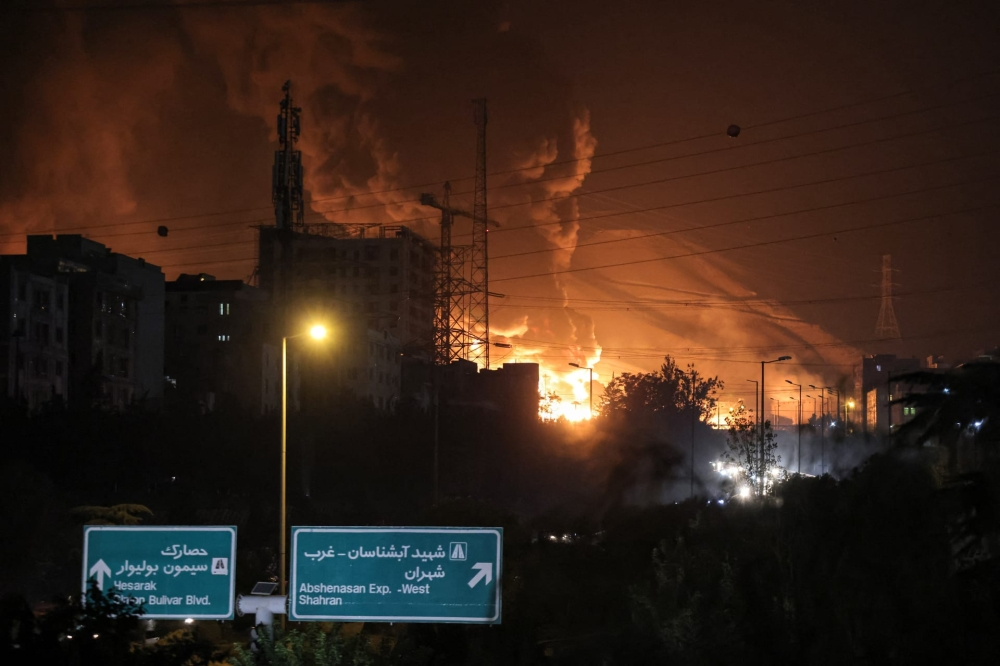
In a rapid and unprecedented military development, the US military officially announced a series of extensive airstrikes targeting more than 1,250 strategic sites deep inside Iran since the start of the latest military operation. This announcement coincides with fiery statements by US President Donald Trump, in which he revealed Washington's new strategy to neutralize the Iranian threat and change the rules of engagement in the region, according to a breaking news report by Al Arabiya.
Objectives of the military operation and Trump's statements
From the White House, President Trump outlined four key objectives for this major military campaign on Monday, emphasizing his country's determination to dismantle Tehran's military infrastructure. He stated, "First, we will destroy Iran's ballistic missile capabilities," referring to the missile arsenal that Washington has long considered a direct threat to American interests and bases in the Middle East.
Trump added, explaining the second objective of the operation: "We will completely destroy their naval power," a clear reference to securing international waterways and ensuring freedom of navigation in the Arabian Gulf. Regarding the third objective, the US president emphasized the necessity of preventing Tehran from acquiring nuclear weapons, stating: "Third, we want the world's leading state sponsor of terrorism to never be able to acquire nuclear weapons." He concluded by outlining the fourth objective: crippling the Iranian regime's ability to "arm, fund, and command terrorist armies beyond its borders," referring to Iranian-backed militias in the region.
Context of escalation: A strategic shift in the confrontation
The US military strikes did not come out of nowhere; they are the culmination of years of escalating tensions between the United States and Iran. Historically, relations have deteriorated sharply since Washington withdrew from the nuclear agreement, and tensions have intensified further with continued attacks on commercial vessels and oil facilities in the region. This operation is considered one of the largest direct military actions, marking a shift by Washington from a policy of "maximum economic pressure" to direct and intensive military targeting of the Islamic Revolutionary Guard Corps' infrastructure.
Military analysts point out that targeting 1,250 sites reflects the existence of a precise target bank that was prepared in advance, including missile launch platforms, command and control centers, and ports used by speedboats, which poses an existential challenge to the Iranian regime's defense capabilities.
Regional and international repercussions of US military operations
This large-scale attack raises serious questions about the future of stability in the Middle East. Regionally, neighboring countries are following these developments with extreme caution, fearing an open conflict that could affect global energy security and trade. The success of the US military in neutralizing Iran's naval and missile capabilities could reshape the region's geopolitical landscape for years to come and drastically reduce Tehran's regional influence.
Internationally, global markets are closely monitoring the reactions, particularly regarding oil prices and supply chains, which could be affected by any retaliatory action. The world remains on tenterhooks, awaiting the outcome of this massive military operation and whether it will achieve Trump's stated objectives of ending Iran's nuclear and military ambitions, or whether it will usher in a new phase of conflict in the region.