US forces launched a series of intense airstrikes and nighttime military operations against multiple locations in Syria, killing at least five members of the Islamic State (ISIS), in a direct and decisive response to the attack that targeted US forces a week earlier and killed three Americans in the city of Palmyra in the center of the country.
Details of the military operation and casualties
The Syrian Observatory for Human Rights reported on Saturday that US airstrikes precisely targeted strongholds and active cells of the terrorist organization. Rami Abdel Rahman, the Observatory's director, told AFP that the list of those killed included prominent figures, among them "the commander of a cell responsible for the organization's drones" in Deir Ezzor province in eastern Syria, representing a significant blow to the group's technological capabilities.
Syrian security sources confirmed that the geographical scope of the operations was wide, as the American raids targeted locations in the governorates of Homs, Deir ez-Zor (east) and Raqqa (northeast), which are areas that are still witnessing activity by the organization’s sleeper cells.
The American response: “A powerful retaliatory strike.”
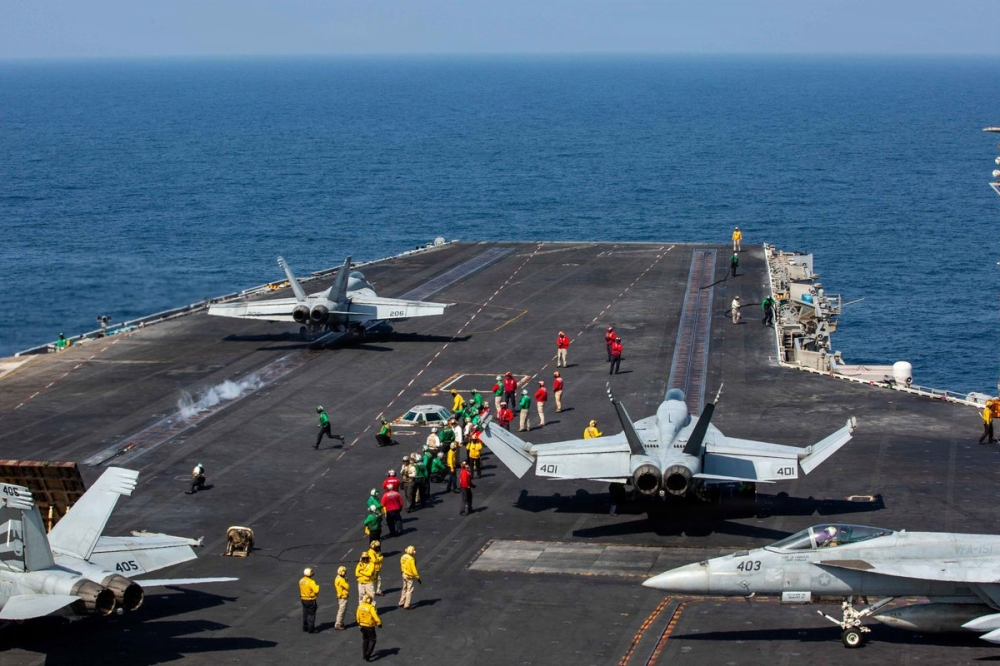
In a related development, the United States officially announced that it had carried out strikes against more than 70 targets across central Syria. The US forces used a combination of firepower in the operation, including fighter jets, attack helicopters, and concentrated artillery fire. President Donald Trump described the strikes as a “very powerful retaliatory strike” in response to the killing of two US service members and a civilian contractor in a previous attack.
General context: Challenges after the “alleged caliphate”
These developments highlight the ongoing security challenges in Syria, despite the official declaration of the elimination of ISIS's territorial control in March 2019 following the Battle of Baghouz. Although the group lost its territory, it has shifted to a guerrilla warfare strategy, relying on sleeper cells that use the vast Syrian desert as a base to launch hit-and-run attacks against military forces and civilians.
The area between Homs and Deir ez-Zor is of great strategic importance, as it forms a vital corridor and rugged desert terrain that allows militants to hide and maneuver, making the final elimination of the remnants of the organization a complex task that requires continuous intelligence and military effort by the international coalition.
Strategic importance and international messages
These strikes carry implications that extend beyond the immediate military dimension; they reaffirm the United States' commitment to protecting its forces operating in the region as part of the international coalition against terrorism. They also send a clear message of deterrence: any targeting of American interests or lives will be met with a disproportionate and severe response.
On a regional level, these operations highlight the continued instability in eastern Syria and the overlapping spheres of influence between different international and local powers, which keeps the Syrian file open to multiple escalation possibilities as long as the roots of the terrorist threat remain.