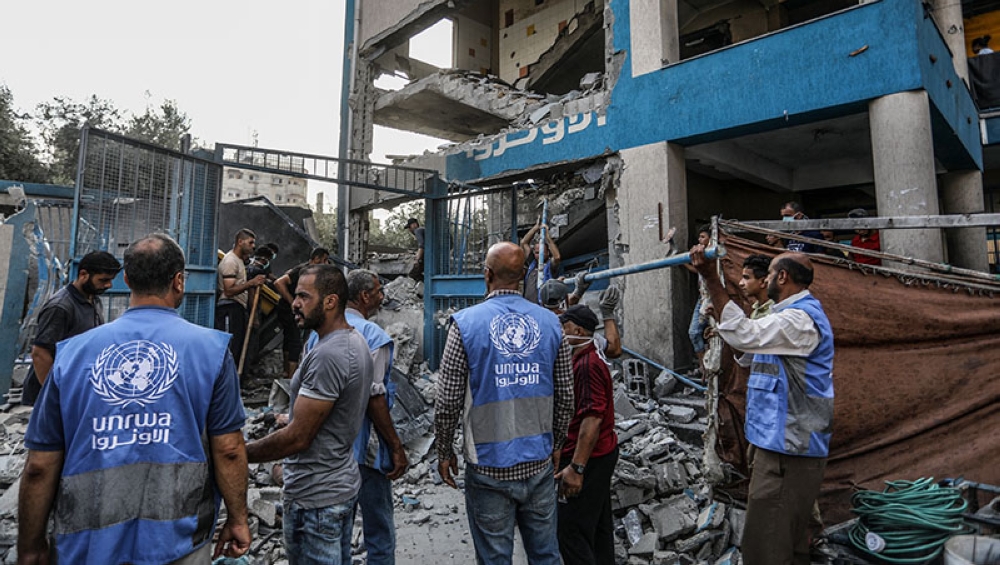
The United Nations Relief and Works Agency for Palestine Refugees (UNRWA) announced drastic administrative measures, terminating the contracts of hundreds of its local staff in the Gaza Strip, amid an unprecedented financial crisis gripping the international organization. The agency confirmed that this decision stemmed from a severe funding shortage that threatens the continuation of its operations, noting that the decision affected 571 employees who had previously left the Gaza Strip and were residing abroad.
Details of the shocking decision
In an official statement, a UNRWA spokesperson told AFP that the 571 local staff members affected had been informed of the decision to terminate their services, effective immediately. This measure comes at a particularly sensitive time, as these employees and their families are already struggling with displacement and hardship after leaving the besieged Gaza Strip, adding further economic and social burdens to their already precarious situation due to the loss of their primary source of income.
Context and background of the financial crisis
This decision is not an isolated event, but rather part of a series of financial challenges that the UN agency has faced for years, challenges that have intensified significantly recently. UNRWA was established in 1949 by a resolution of the UN General Assembly to provide assistance and protection to Palestinian refugees in its five areas of operation (Jordan, Syria, Lebanon, the West Bank, and the Gaza Strip). The agency relies almost entirely on voluntary contributions from UN member states.
The past period has witnessed the suspension of funding to the agency by several major donor countries, following allegations and accusations against a limited number of its staff, creating a massive funding gap. Although some countries later resumed their funding after independent reviews, the accumulated deficit and ongoing financial pressures have left the agency in a precarious position, unable to cover its operating expenses and staff salaries.
Humanitarian and political repercussions
This decision carries serious implications that extend beyond the administrative sphere; it reflects the fragility of the international humanitarian situation regarding the refugee issue. Locally, this decision means that hundreds of Palestinian families will lose their financial safety net at a time when they need it most. Institutionally, the reduction in staff could negatively impact the agency's ability to provide its vital services, particularly in the education, health, and social relief sectors.
Observers warn that the ongoing financial crisis at UNRWA could undermine regional stability, as the agency is a lifeline for millions of refugees, and any disruption to its services could lead to further humanitarian disasters, especially given the tragic conditions in the Gaza Strip and the urgent need for every possible relief effort.